
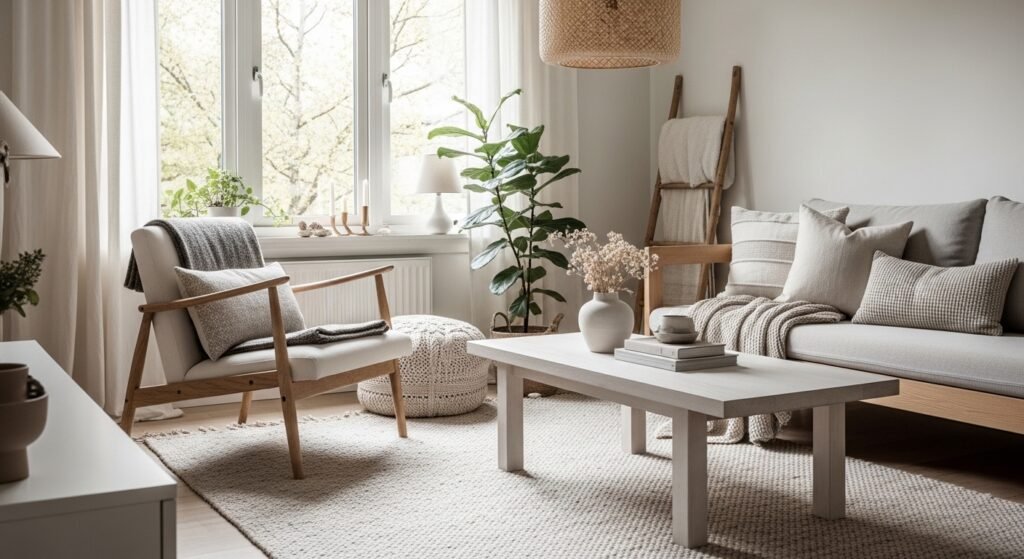
My living room had nice furniture and decent lighting but it still felt like a waiting room. Took me embarrassingly long to figure out it was missing texture. Every surface was smooth, every color was flat, and nothing invited you to actually sit down.
These ideas lean Japandi with a soft, lived-in edge. I kept most changes under $100, with two splurges that were worth it. They work in living rooms, bedrooms, entryways, and small apartments that need warmth without clutter.
Layered Neutrals With One Warm Accent For Living Rooms
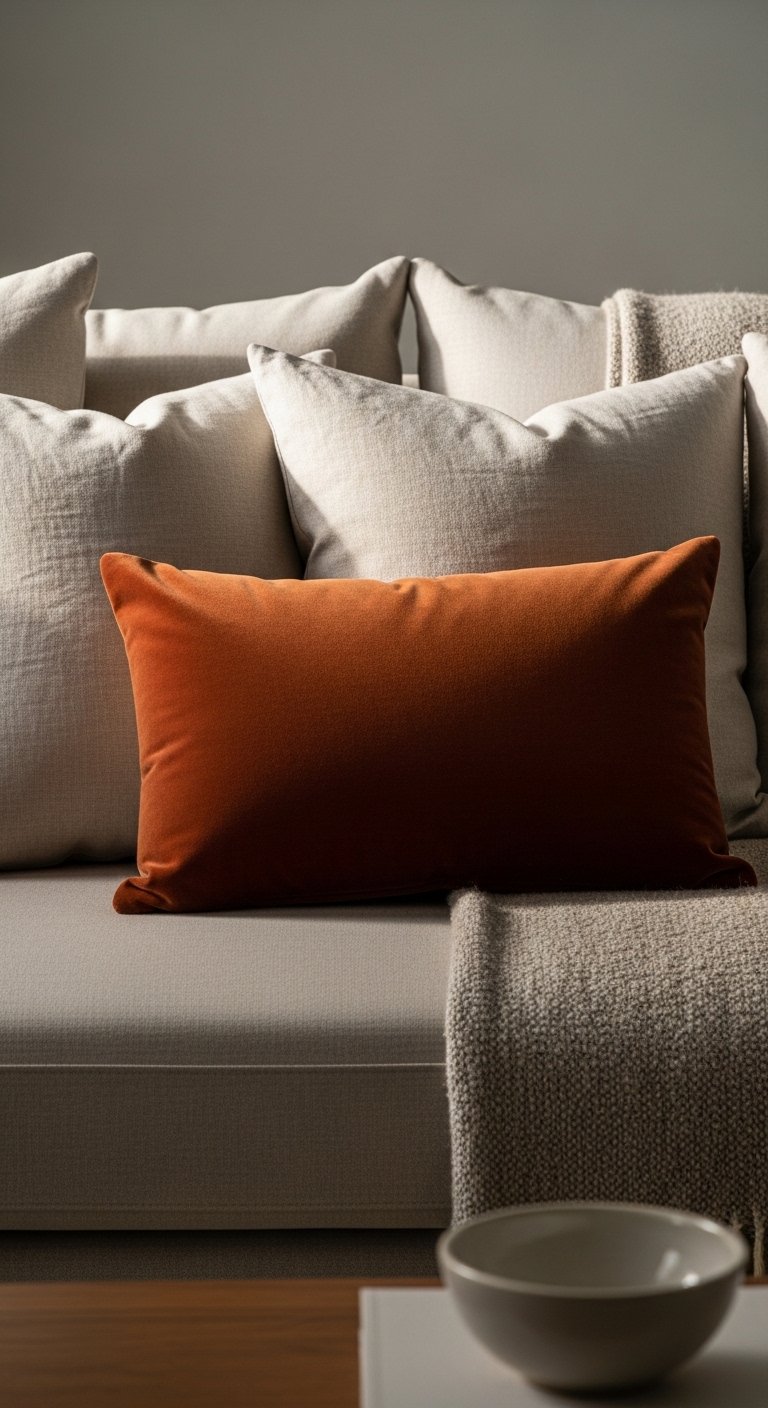
The moment I draped a chunky knit throw over the arm of my gray sofa, the whole room stopped looking flat. Japandi is about calm neutrals with a single warm accent. Try an 80/20 color ratio, 80 percent soft beiges, whites, and warm woods, and 20 percent rust or deep olive. Budget: $30 to $120. I use 22-inch down-filled linen pillow covers for the base layer and a single velvet cushion as the accent. Velvet pillow covers, set of 2 sit well in the middle of a pillow trio. Common mistake is making every pillow the same depth. Use one large 22-inch, one 18-inch, and one lumbar for the rule of three. A tiny detail most guides skip is leaning the largest pillow at a 10-degree angle. It reads casual, not staged.
Low Furniture, Varied Heights For Cozy Flow
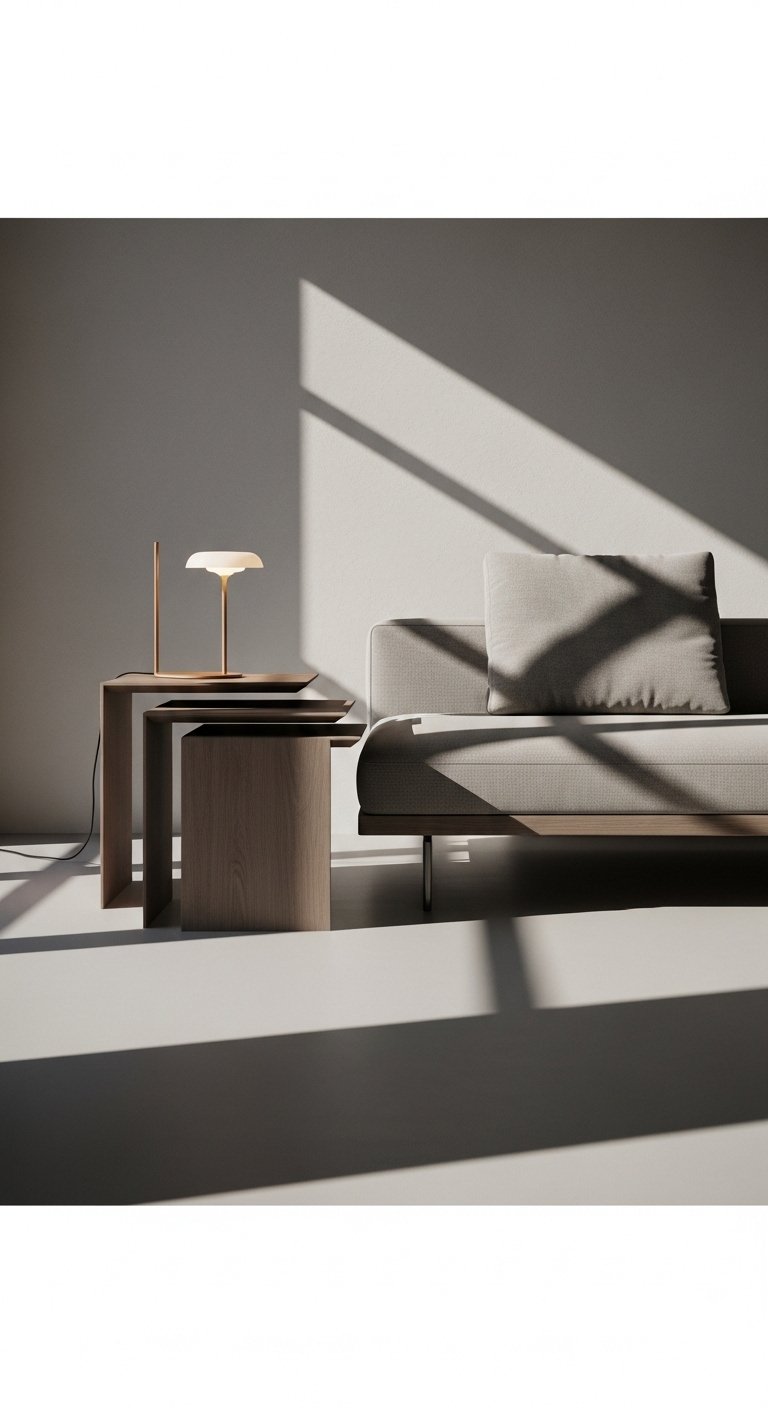
Most people pick furniture all the same height and the room reads predictable. I swapped one tall lamp for two low side tables to create staggered sightlines. It makes rooms feel intentional and relaxed. Budget for this trick is $50 to $300. Nesting side tables in oak and metal let you experiment before committing. The specific ratio I used was 2:3:4 for table heights in inches, that keeps the eye moving. Mistake to avoid is matching every wood tone. Mix a light white oak table with a darker tabletop to keep it Japandi. Pair this with the curtain trick below for a room that finally reads like home.
Floor-to-Ceiling Linen Curtains To Add Height
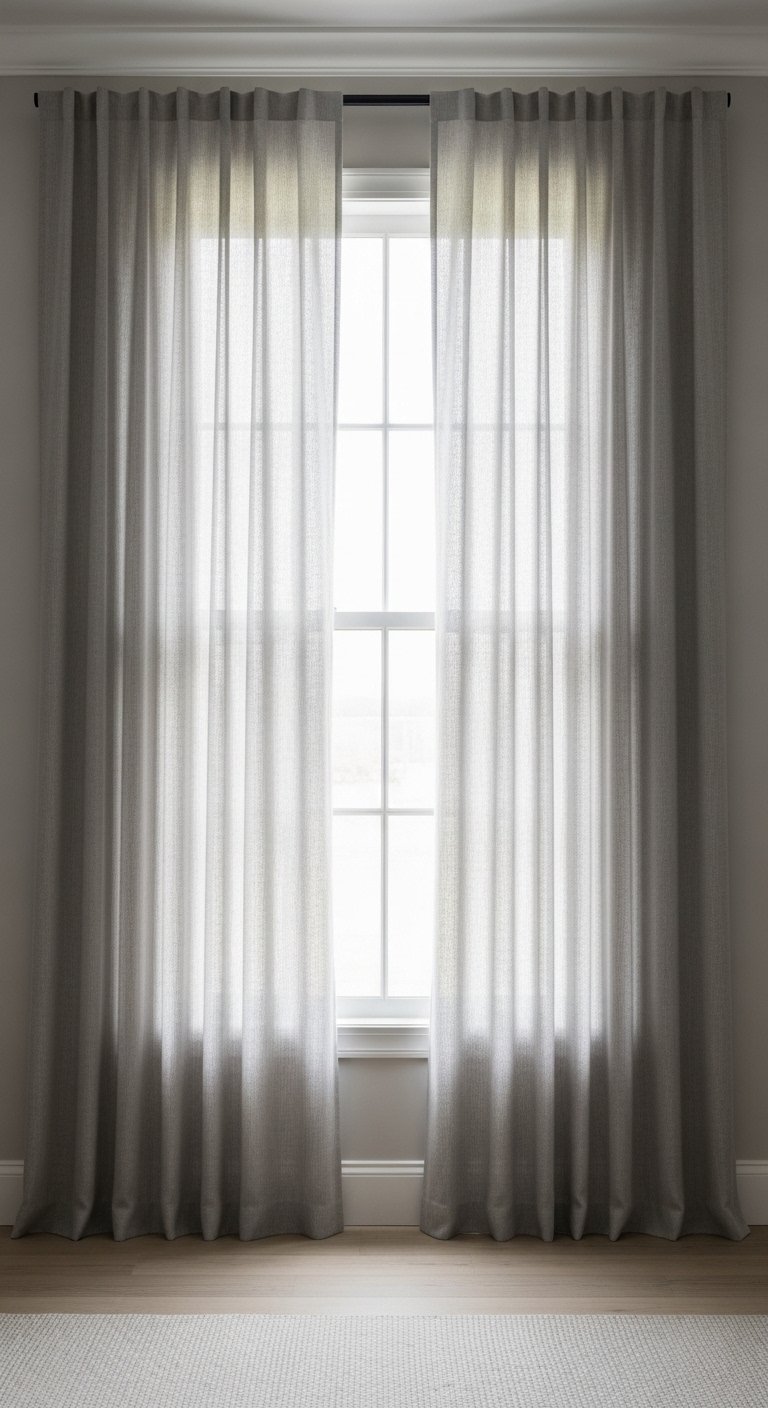
Most people hang curtains right at the window frame. That is why their rooms look shorter than they are. Hang panels 4 to 6 inches above the frame and extend them 3 inches past the trim on each side. I use 96-inch linen panels in light oatmeal for standard 8 to 9-foot ceilings. Linen curtains 96-inch panels are my go-to. Budget: $30 to $60 per panel. A mistake I used to make was buying too-heavy fabric. For Japandi keep the drape airy so natural light filters through. Little detail most articles skip, measure the rod to the floor and subtract 1 inch for a "kiss the floor" finish. It visually lengthens the room.
White Oak Shelves Styled With Negative Space
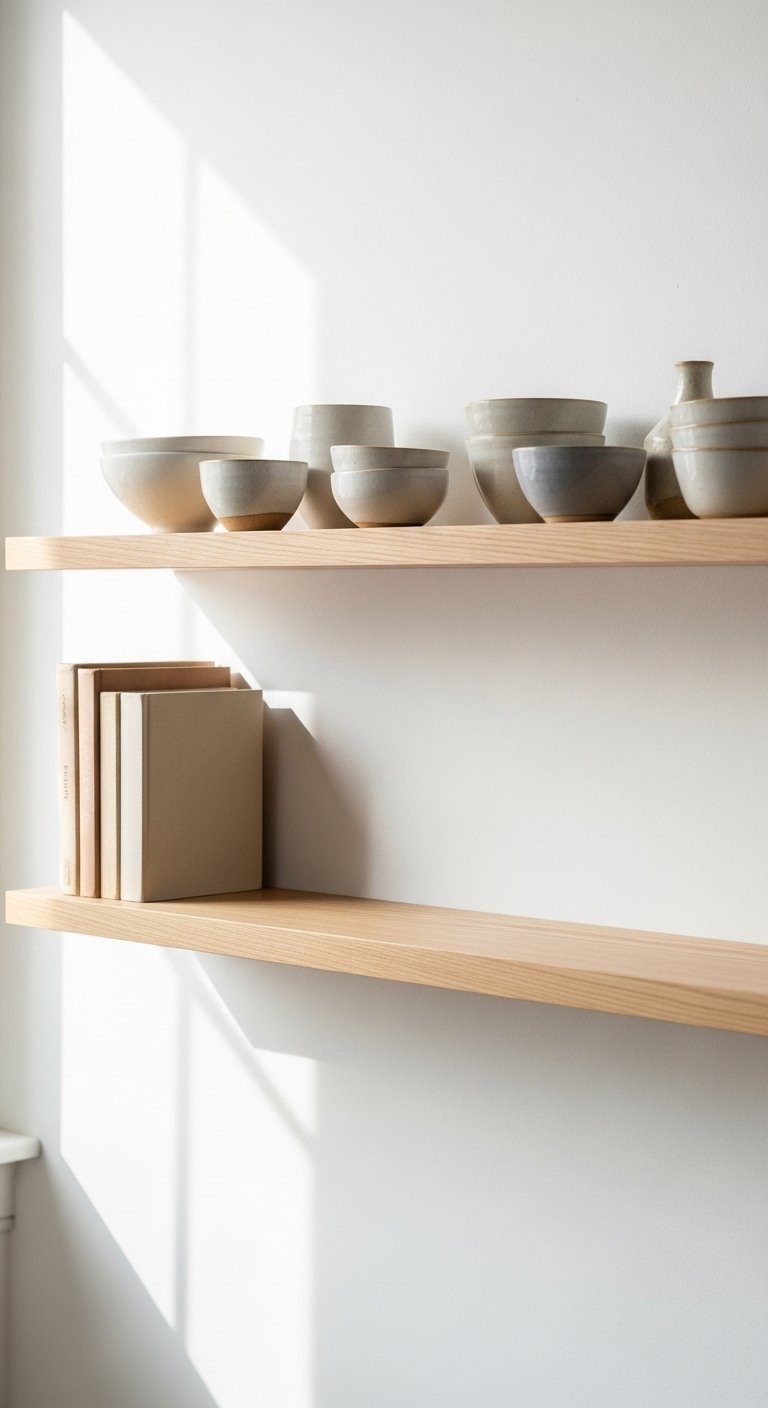
White oak shelves are everywhere this year but the styling matters more than the wood. Keep one-third objects, two-thirds negative space on each shelf. I style shelves with one small vase, one stack of books laid horizontally, and one occasional ceramic bowl. White oak floating shelves, set of 2 are easy to mount and look current. Budget for good brackets is $30 to $80. A rookie mistake is filling every inch. The detail I use is to leave 2 inches of space at the front edge so dusting is simple and it reads airy in photos and real life.
Soft Layered Lighting For Even Glow
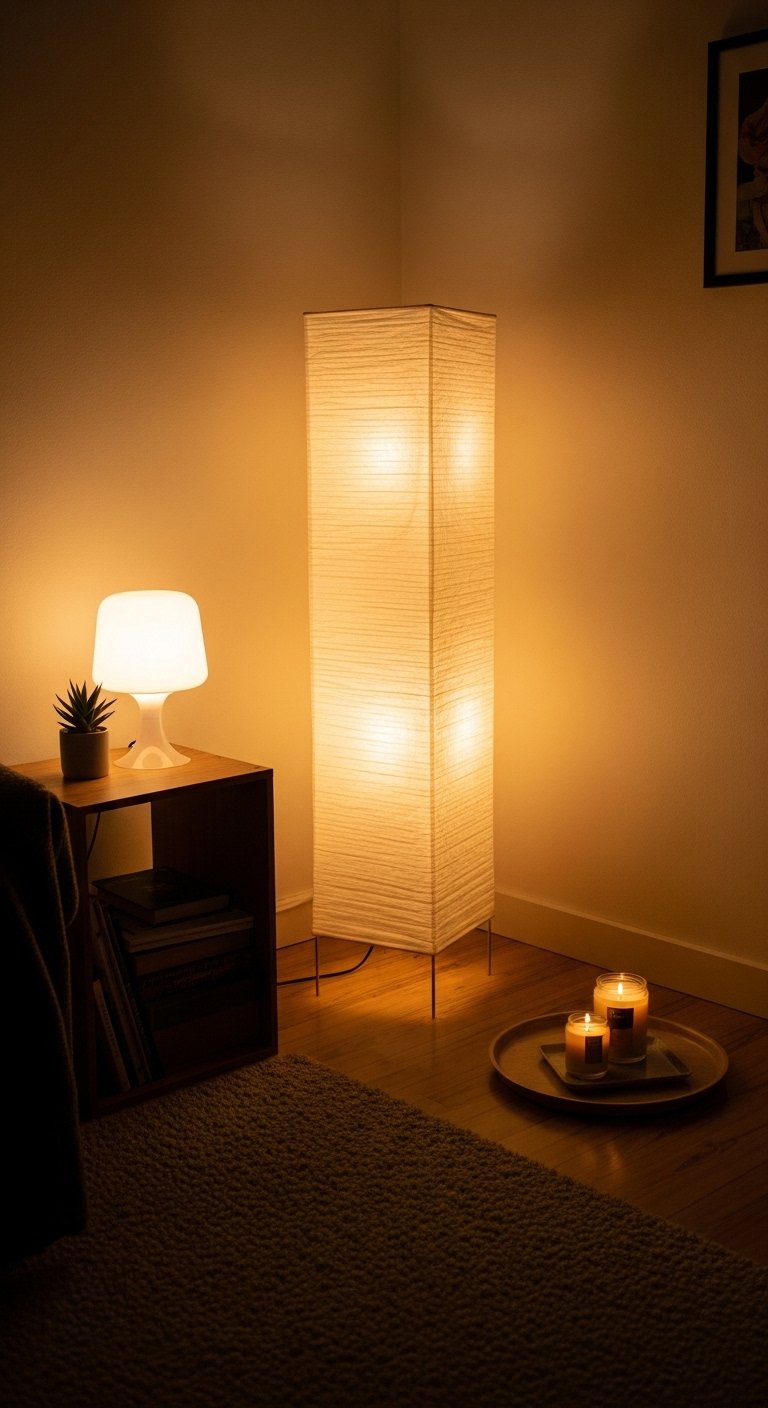
There is something about a reading nook with layered pillows that makes you want to cancel your plans. Lighting makes that feeling happen. Layer a floor lamp, a table lamp, and a few candles for depth. I swapped a single overhead fixture for warm 2700K bulbs and a paper floor lamp for soft diffusion. Rice paper floor lamp plus warm dimmable bulbs cost under $120 total. Mistake people make is matching brightness between fixtures. Dimmer switches and bulbs with similar color temperature keep everything cohesive. A tiny trick I love is pointing one lamp at a wall to wash texture into the room.
Layered Rugs For Texture And Zoning
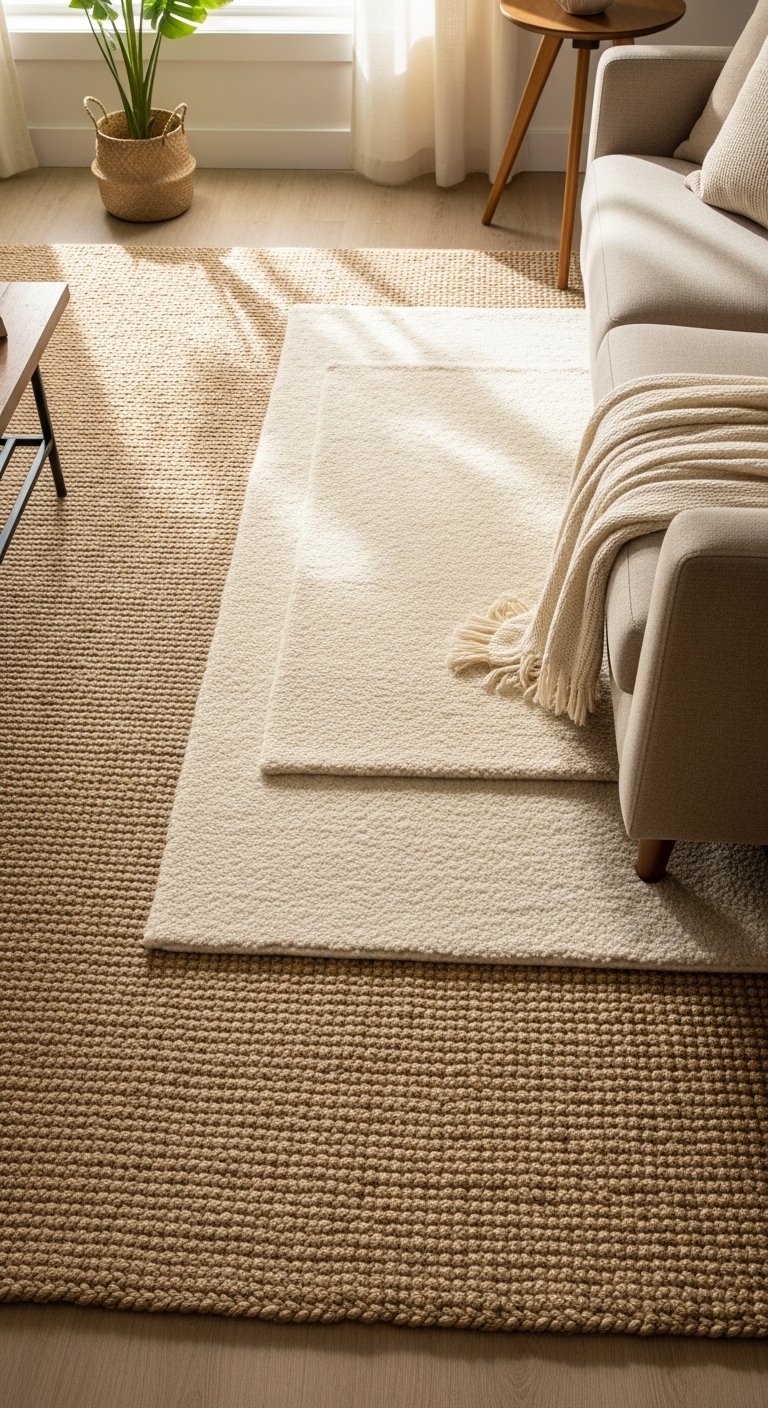
My entryway used to be a dumping ground for keys and shoes. One layered rug layout fixed the flow and defined the space. For living rooms use a large base rug and a smaller, softer rug on top. Make sure the top rug sits under the front legs of seating. I use an 8×10 natural jute as the base and a 5×8 wool rug on top. 8×10 jute area rug plus 5×8 wool area rug are a durable combo under $300. Common mistake is buying two rugs that read the same material. Contrast a coarse base with a soft pile. A measurement detail many guides skip, leave at least 10 inches of the base rug visible on all sides for balance.
Minimalist Gallery Wall For Bedrooms Or Hallways
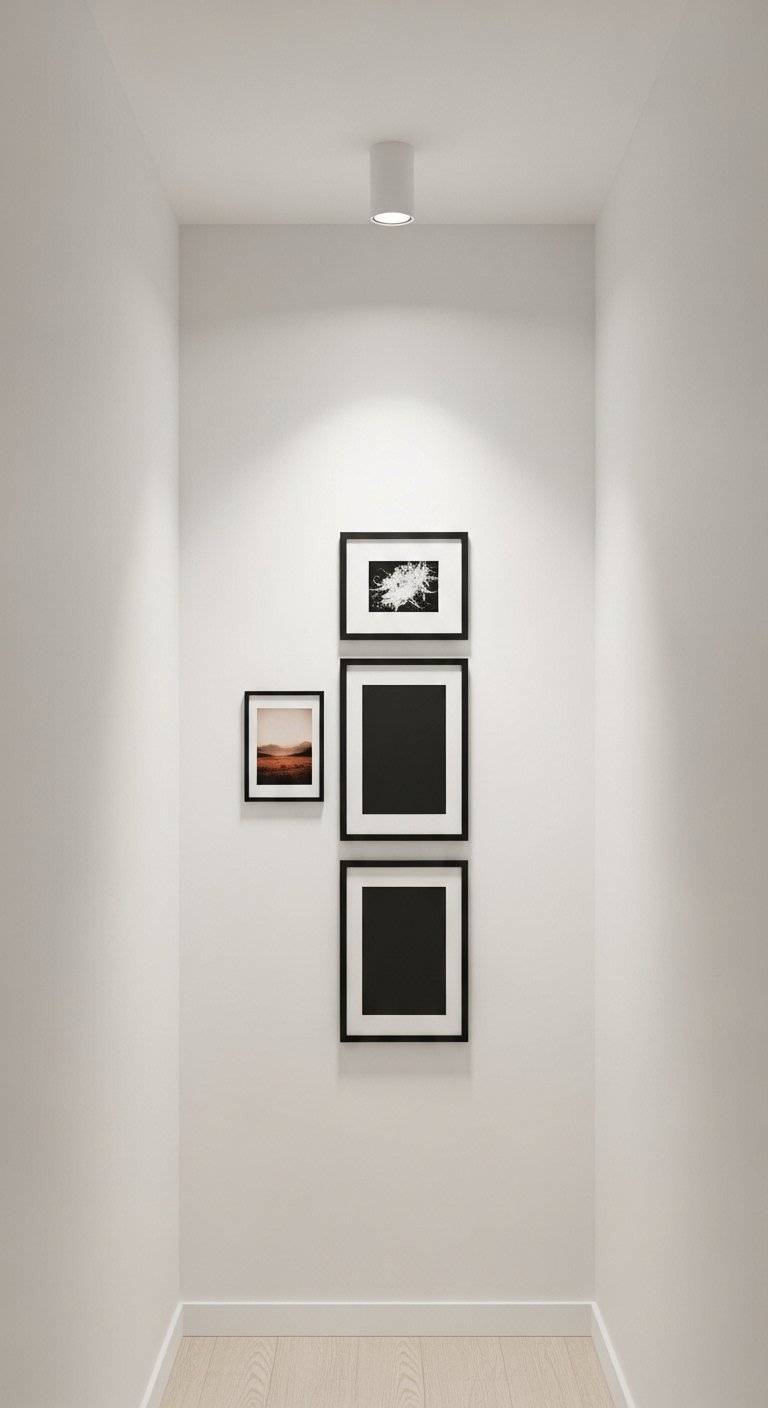
I found these brass picture ledges on Amazon for under $20 and they solved my gallery wall commitment problem. A minimalist gallery uses the rule of three and consistent matting. Use one warm print among three black and white pieces to keep the soft aesthetic. Brass picture ledges allow you to swap art without new holes. Budget: $15 to $80. Mistake: hanging frames randomly. Aim for 2 to 3 inches between frames and keep the center line at eye height, about 57 inches. A detail I love is a single shelf with a small ceramic "Home Sweet Home" print leaned against the wall for a lived-in look.
Plants, Pottery, And One Tall Statement Piece
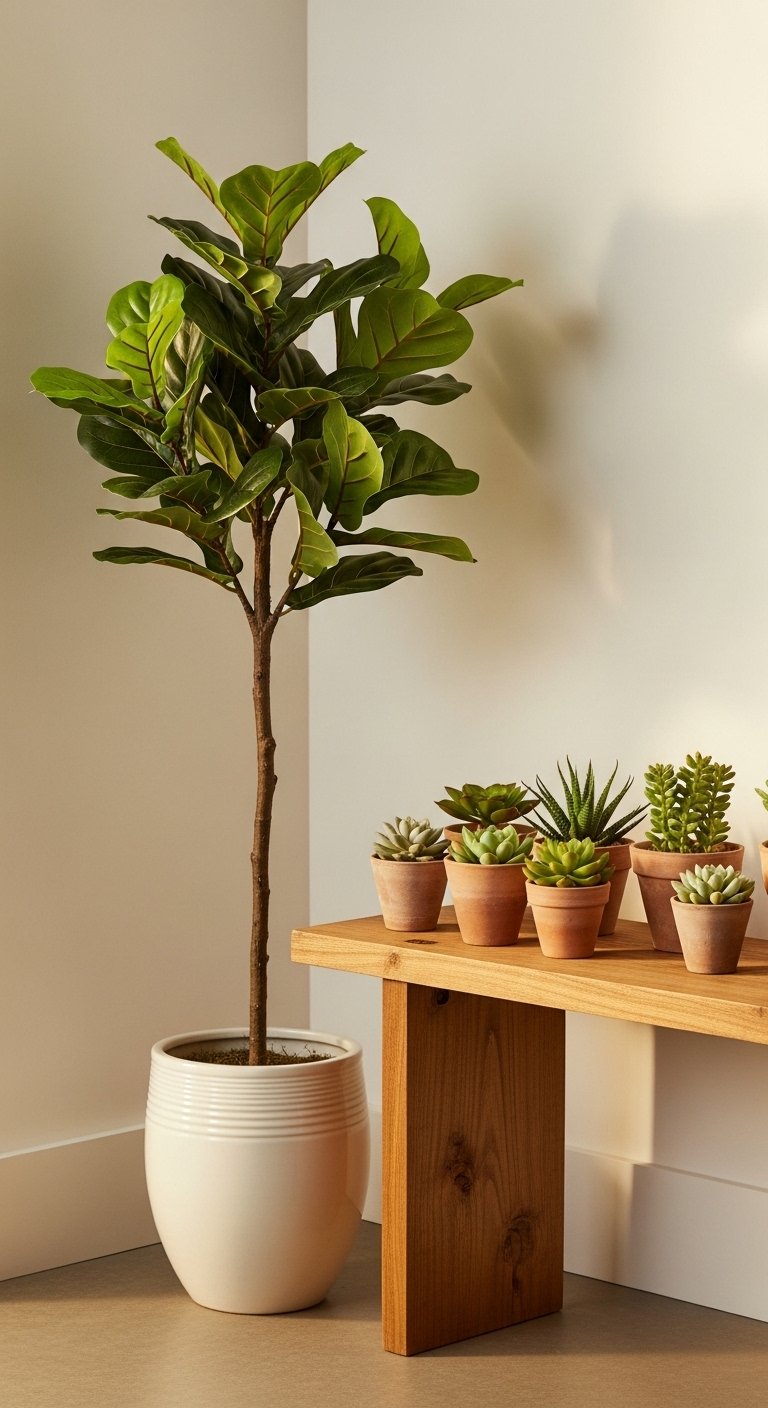
A friend walked into my apartment last month and said "this looks like a real adult lives here." Highest compliment I have ever received. Plants add height and softness, but the mixing matters. One 6-foot statement plant, like a fiddle leaf fig, paired with three smaller real plants creates balance. Artificial fiddle leaf fig 6ft is perfect where light is low. Budget for a real 6-foot plant is higher, expect $80 to $200. Mistake is buying five small succulents and calling it done. I also use matte ceramic planters to keep the look tactile. Measurement tip, place the tallest plant within 12 to 18 inches of seating so it reads intentional not random.
Your Decor Shopping List
Textiles
- Honestly the best $40 I have spent. Chunky knit throw in cream in 50×60 inches, perfect for draping.
- 22-inch linen pillow covers, set of 2, down-filled, light oat color. Similar at Target.
Wall Decor
- Brass picture ledges, set of 2 (~$18-25). Use for rotating prints.
- Black wood picture frames, 11×14 with mats for the minimalist gallery.
Lighting
Rugs & Plants
Shopping Tips
White oak beats dark wood in 2026. Design feeds have shifted completely. White oak floating shelves look current, not dated.
Grab these linen curtain panels 96-inch for $30 each. Hang them 4 to 6 inches above the window frame and extend 3 inches past the trim for height.
Curtains should puddle or kiss the floor, never hang halfway up. Weighted curtain clips help you test length without new hardware.
Lead with texture when you shop secondhand. A soft sheepskin or a jute rug can rework an entire room. I bought a faux sheepskin rug for $50 and it warmed the sofa area instantly.
Frequently Asked Questions
Q: What size rug do I actually need for the layered rug look?
A: Bigger than you think. For a standard living room use an 8×10 as a base and a 5×8 on top. All front furniture legs should sit on the top rug for cohesion. This 8×10 jute rug is neutral and durable.
Q: Can I mix real plants with faux ones without it looking fake?
A: Yes. Use one real plant where light allows and one faux in a low-light corner. Keep pot materials consistent, like matte ceramic, to tie them together.
Q: Should I match my metals or mix them in Japandi style?
A: Mix them but keep one dominant finish. I like brass hardware with black lamp bases. Mixed metal picture frames are an easy way to introduce variety.
Q: How high should I hang art above a sofa?
A: Aim for 6 to 8 inches above the back of the sofa. If you have a gallery, keep the center line at about 57 inches from the floor so it reads natural at eye level.
Q: What common mistakes make a Japandi room feel off?
A: Too many small accessories and no grounding piece. Another mistake is matching every textile. Vary scale and material. Use the rule of three when grouping objects.
Q: Can I get the soft Japandi look on a tight budget?
A: Absolutely. Swap one or two textiles first, like pillow covers and a throw. Velvet pillow covers plus a neutral throw can change how you feel in a room without a big spend.