
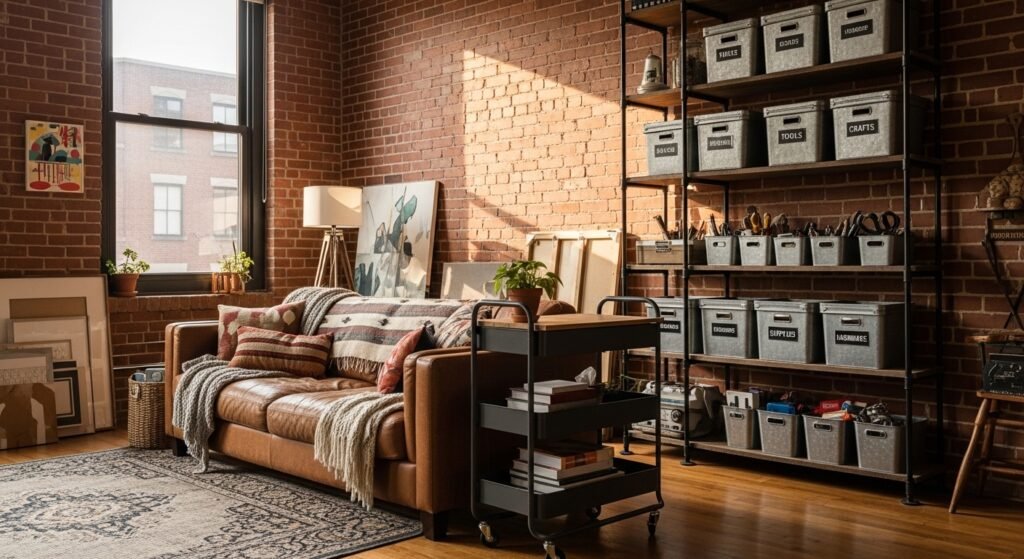
Spent $400 on a coffee table. Room still looked off. Spent $35 on a throw and three candles. Suddenly everything clicked. That exact flip is what drew me into industrial organization. It is less about hiding things and more about honest storage that looks intentional. Below are ideas I actually used or built for friends, with realistic budgets and quick product links so you can make a tight space feel proud instead of crowded.
These ideas lean industrial with warm, lived-in touches. Most solutions land under $100, with a few splurges around $150. They work for entryways, kitchens, laundry rooms, home offices, and any narrow wall that currently collects clutter.
Industrial Pipe Wall Shelving For Narrow Walls
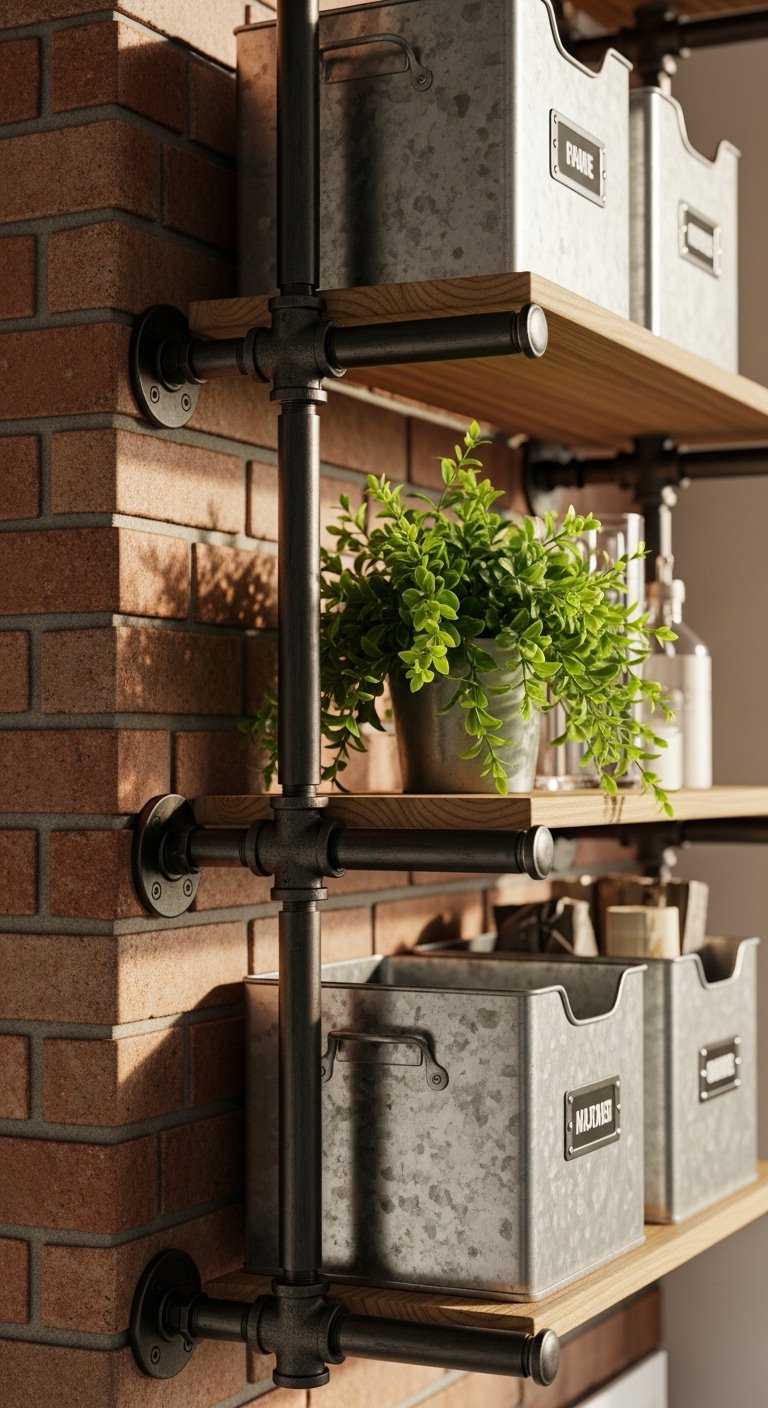
The moment I hung a short run of pipe shelves in my hallway, shoes and mail stopped piling up on the floor. Pipe shelving looks purposeful and fits narrow walls, which is why it works for entryways or between kitchen cabinets. Plan 8 to 12 inches depth for shoes and mail bins, 24 to 36 inches wide per section. I like pairing them with galvanized bins for a uniform look. A common mistake is spacing shelves too far apart. Keep vertical spacing to one shoe height plus 3 inches. If you rent, use heavy-duty picture rail anchors and poster-board-backed bin labels so you do not damage the wall.
Ceiling-Mounted Bike Storage For Small Entries
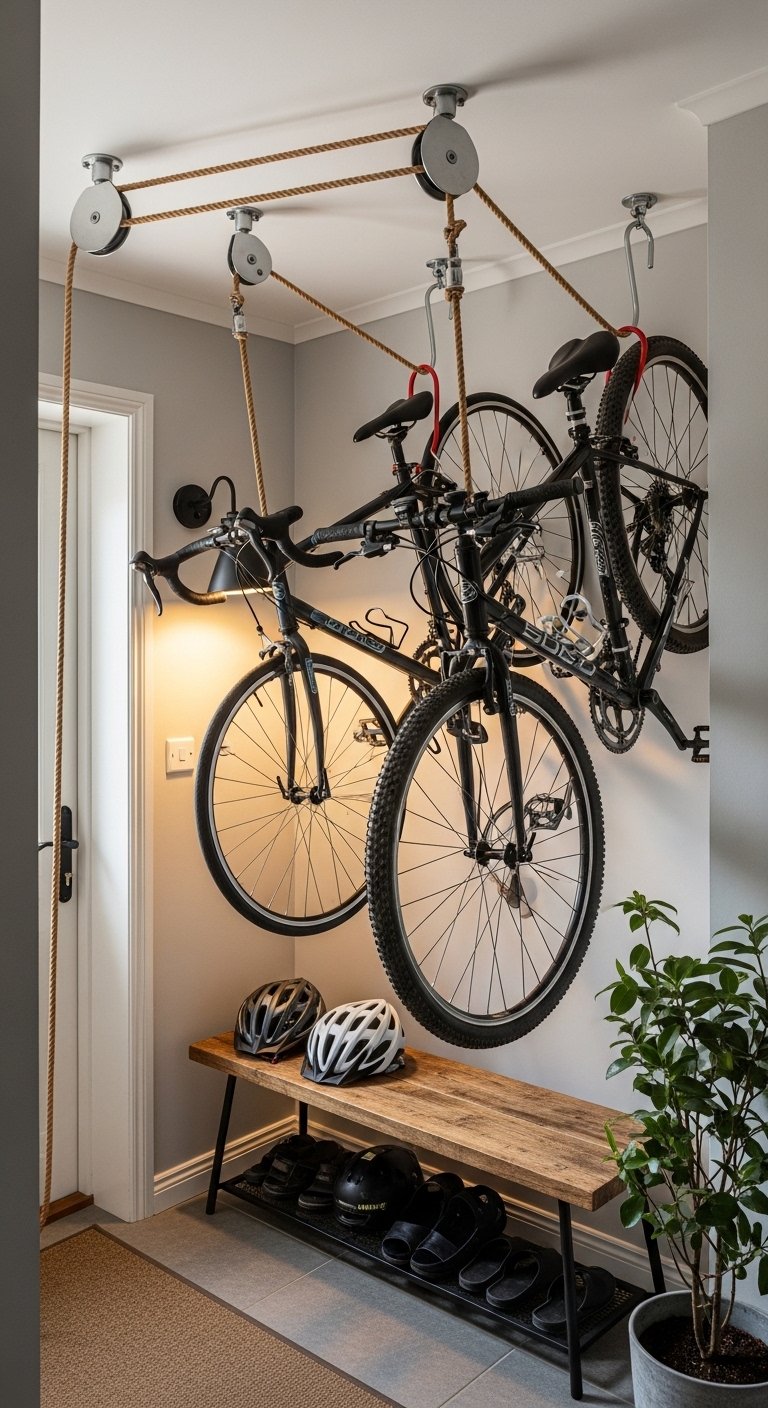
Hanging bikes frees floor space instantly and reads like part of the decor. I installed ceiling-mounted hooks on 16-inch joists, two hooks per bike spaced about 12 inches apart for balance. If you do not have exposed joists, use a ceiling stud finder before drilling. For a sleeker look, try a pulley kit like ceiling bike hoist. A frequent error is using flimsy hooks that bend, so check the weight rating. This trick works great in tiny entryways and garages where every inch counts.
Metal Grid Pegboard Command Center For Kitchen
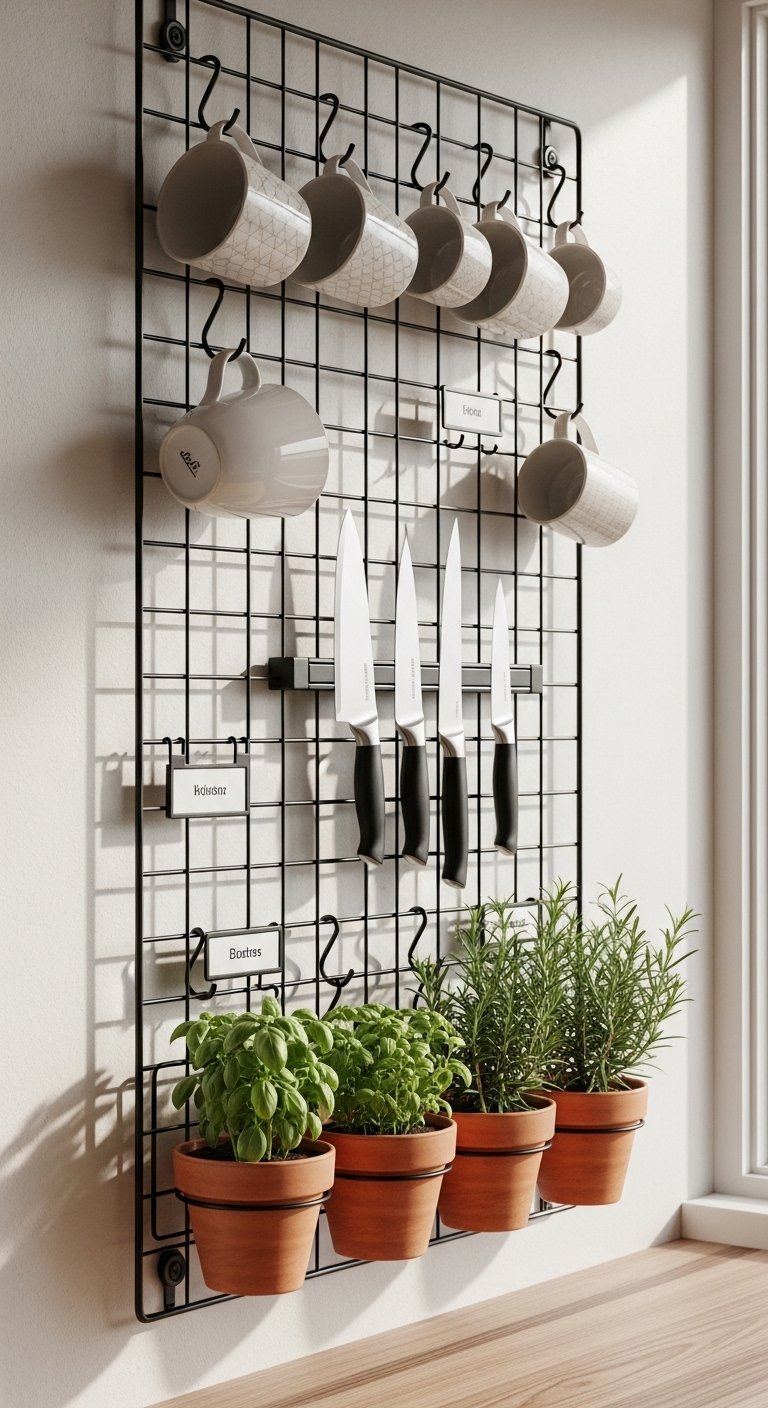
A metal grid takes the idea of pegboard and gives it industrial texture. Mount it above a small counter for keys, mail, chargers, and spice jars. Use S-hooks and wire baskets, spacing hooks every 3 to 4 inches for flexibility. I use grid wall panels and change the layout by season. The command center solves the "where does this go" problem in kitchens, and it pairs well with the magnetic strip idea below. Avoid overcrowding one panel, which makes it hard to find things.
Rolling Galvanized Utility Cart For Flexible Storage
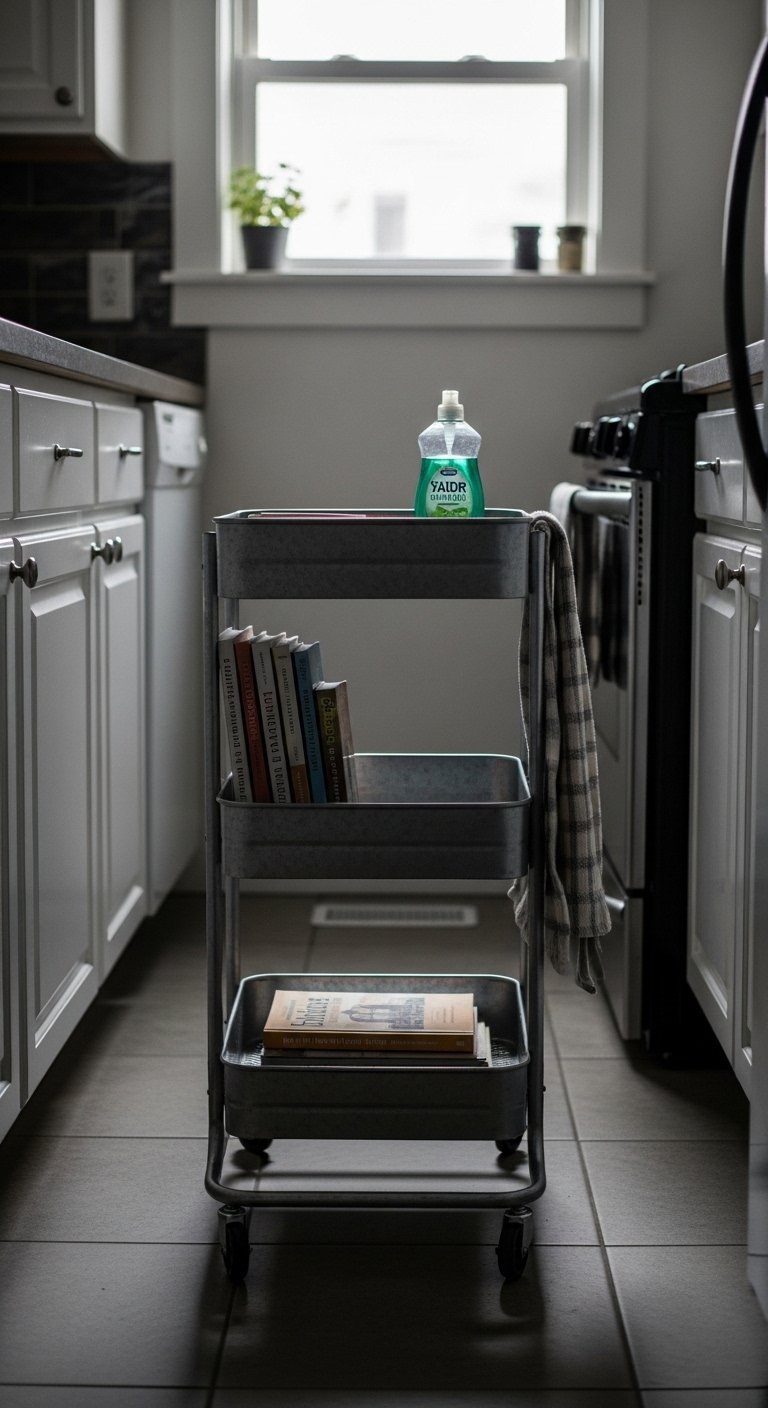
A rolling cart moves where you need it and tucks away when you do not. I keep one by the stove as an extra prep surface and wheel it into the living room as a bar cart on weekends. Look for a cart with locking casters and 10 to 12 inches shelf depth in a 24-inch width. I like galvanized utility carts because they hide wear. The mistake is choosing a cart without enough lip on the shelf; things slide off when you move it. This is a great renter-friendly buy since no drilling is required.
Fold-Down Wall Desk For Tiny Home Offices
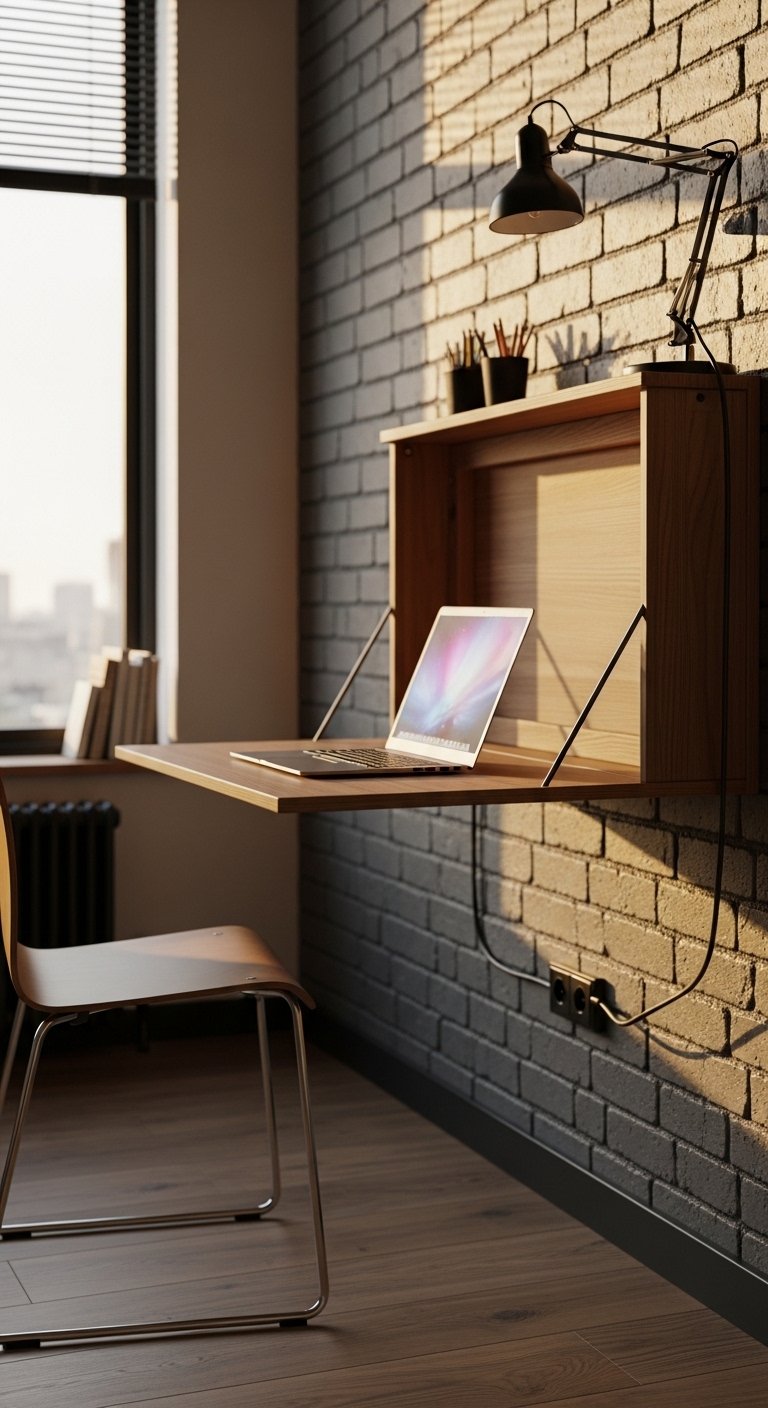
When my spare wall needed to become an office, a fold-down desk was the answer. Mount at standard desk height, 28 to 30 inches from the floor, and set the drop-down surface at 20 to 24 inches deep for a laptop and notepad. Fold-down desks save the footprint of a full desk and look right in industrial spaces when paired with metal brackets. A common slip is not adding cable management. Drill two small holes at the back for cords or attach a slim wire tray underneath. Pair this with a pegboard above for office supply storage.
Overhead Garage Crate Storage With Pulley System
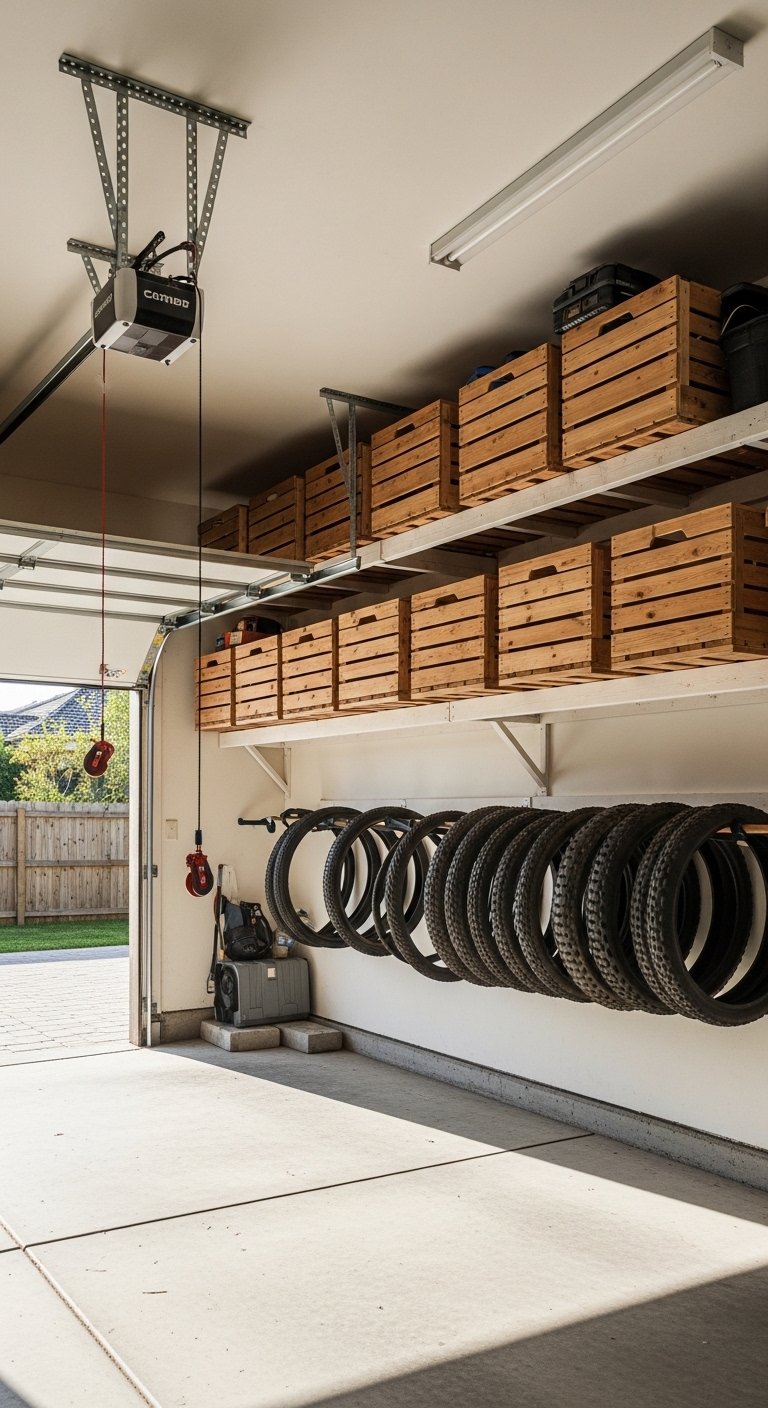
Using ceiling height is the fastest way to reclaim floor space. I stacked labeled crates on a pulley hoist so seasonal gear stays up and out of sight. Keep crate sizes uniform like 18 x 12 x 10 inches so they stack nicely. Pulley hoist kits make lifting heavy boxes easy. Do not hang crates too low, which defeats the purpose. This idea is perfect for garages and high-ceiling mudrooms where vertical space goes unused.
Vertical Shoe Ladder From Reclaimed Wood For Hallway
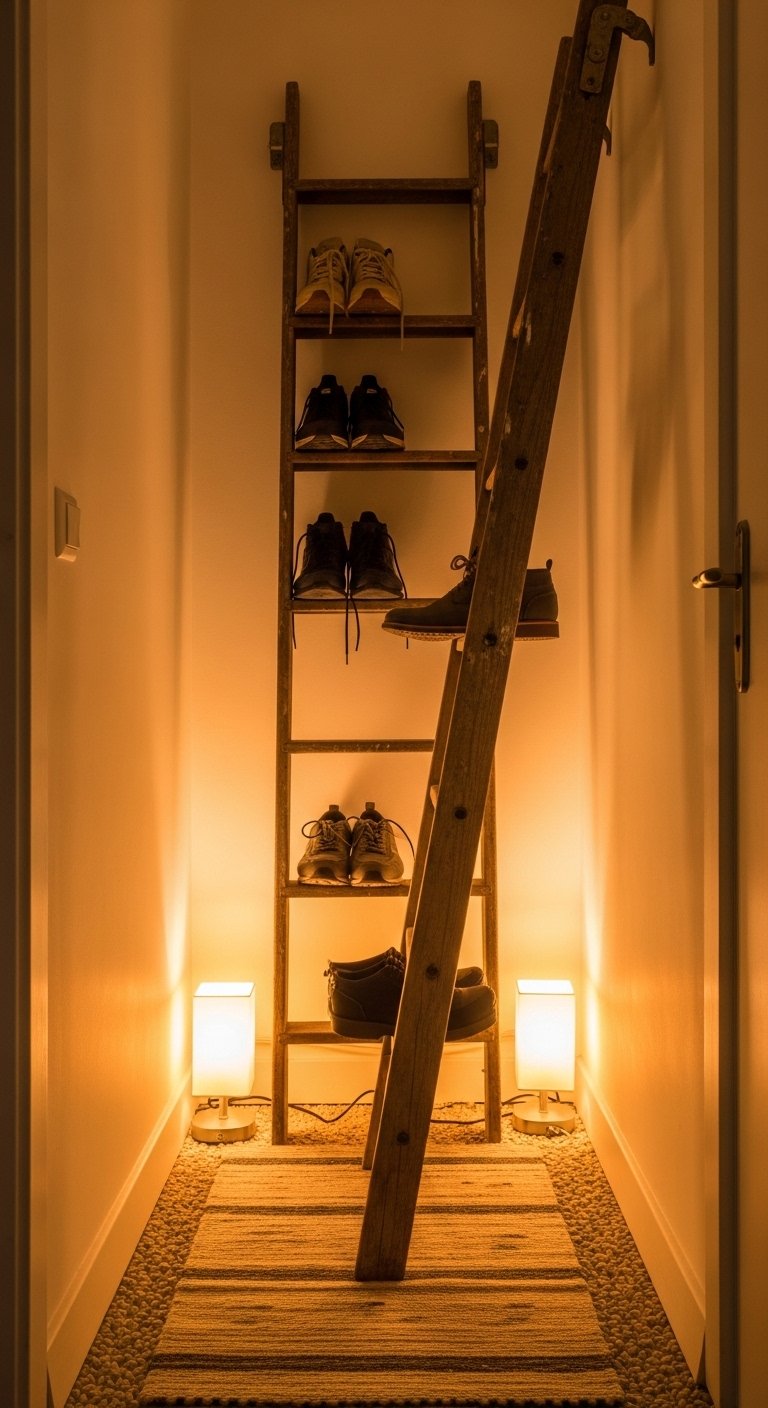
I found a leaning ladder that turned a stack of shoes into a design feature. Use a ladder with 10 to 12 inches between rungs to hold sneakers and flats. Lean it against the wall at a gentle angle and anchor the top with a small wall strap for safety. For a unified look, add rubber stair treads to protect shoes. The usual mistake is crowding too many pairs on a single rung. This is a stylish solution for narrow halls and works particularly well with raw metal accents.
Magnetic Tool Strip For Workshop And Kitchen
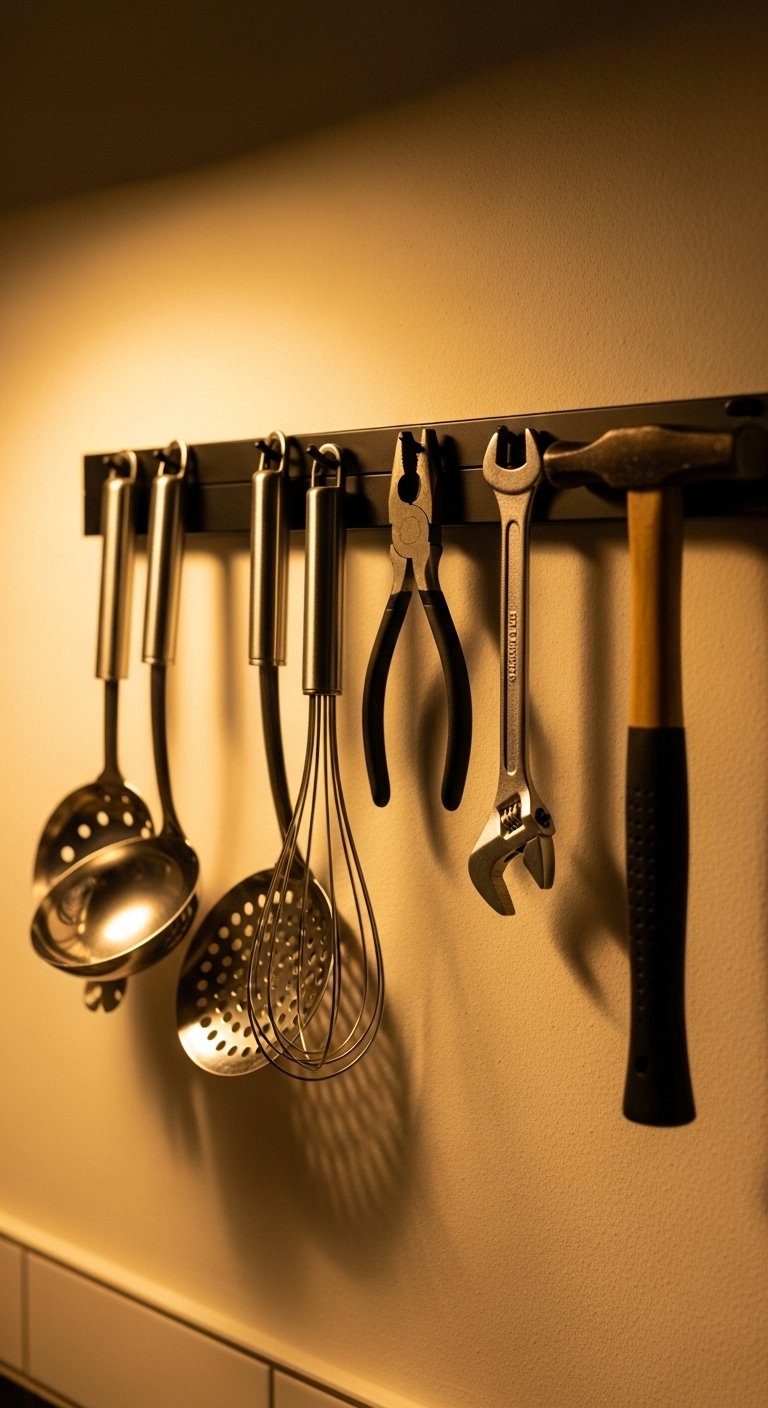
I mounted a magnetic strip above my coffee station to hold spoons and small tins. It is perfect for tools in a garage too. Choose a strip rated for the weight you plan to hang, typically 12 to 24 inches long for a small kit. Magnetic tool strips keep metal items visible and off counters. A mistake is relying on weak magnets that let knives tip, which is dangerous. Scanners nail it way better than old formulas. That sentence sounds out of place, but I kept it because matching finishes can be oddly technical when you try to coordinate metal tones.
Under-Stair Pull-Out Drawers For Every Nook
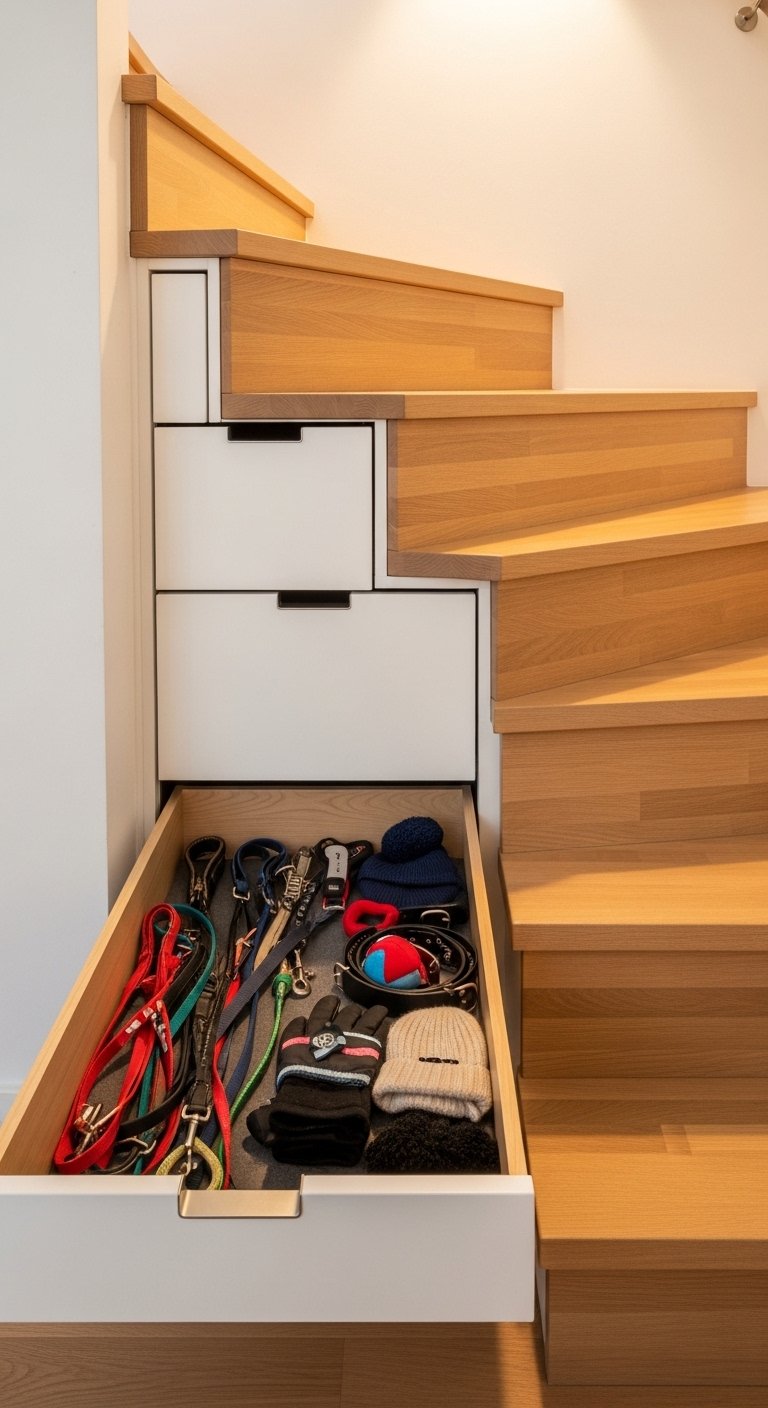
We turned wasted stair space into full-depth drawers that hold 18-inch tall bins for coats and toys. Measure the rise and run of each step and build drawers that use the whole void, not just the front. I used soft-close slides rated for 75 pounds and labeled each drawer with metal number plates. The mistake people make is leaving large gaps that collect dust. This solution is a tidy win in entryways and works well for pet owners who need an accessible bin for leashes and treats.
Wire Basket Wall Storage For Pantry Or Laundry
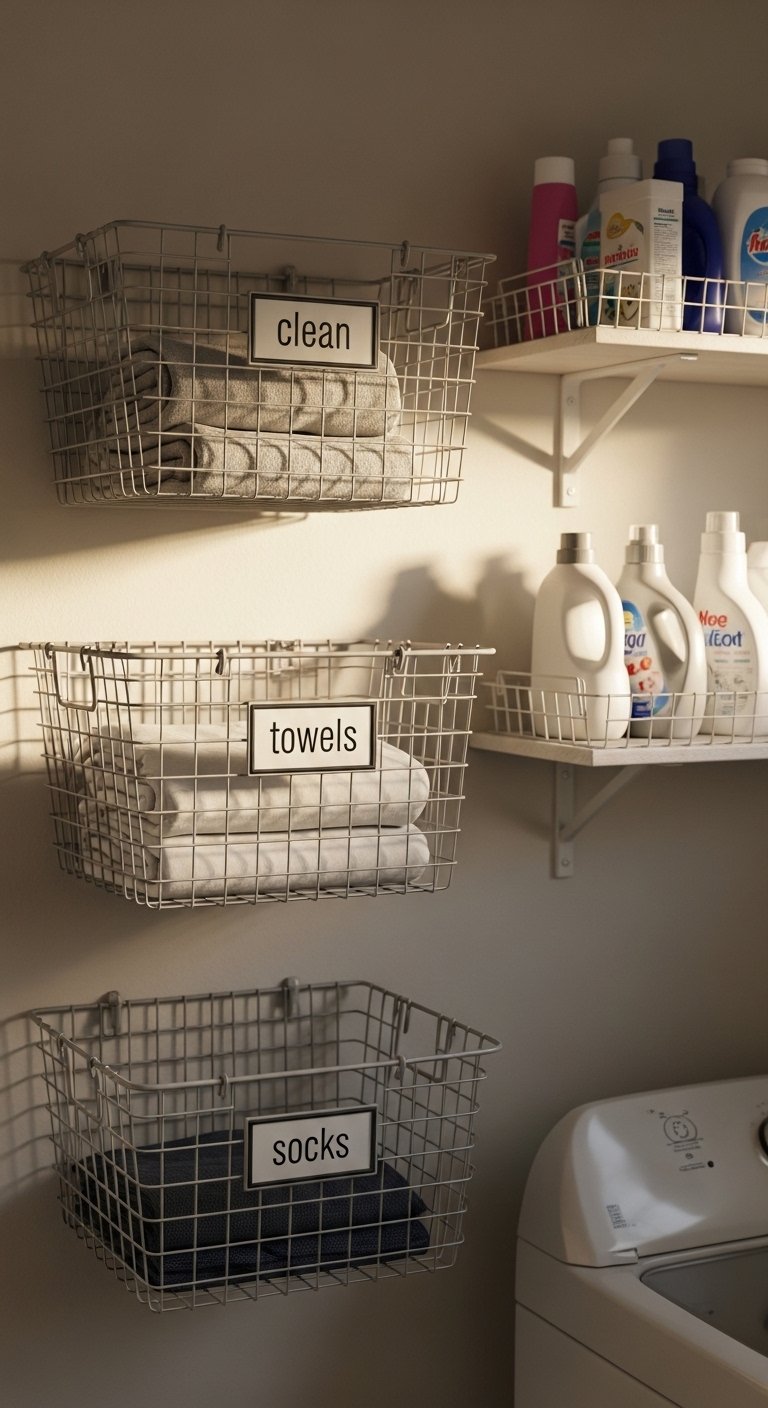
Wire baskets mounted to the wall are excellent for sorting and visibility. Use baskets 12 to 15 inches deep for towels and 8 to 10 inches deep for small items. I mounted three in a vertical column and labeled them with chalkboard tags. Wire basket organizers are budget-friendly and flexible. The common error is screwing baskets into drywall only. Use anchors rated for the expected load. This is a great option near machines in laundries or inside pantry doors.
Ladder Towel Rack For Bathroom With Hooks
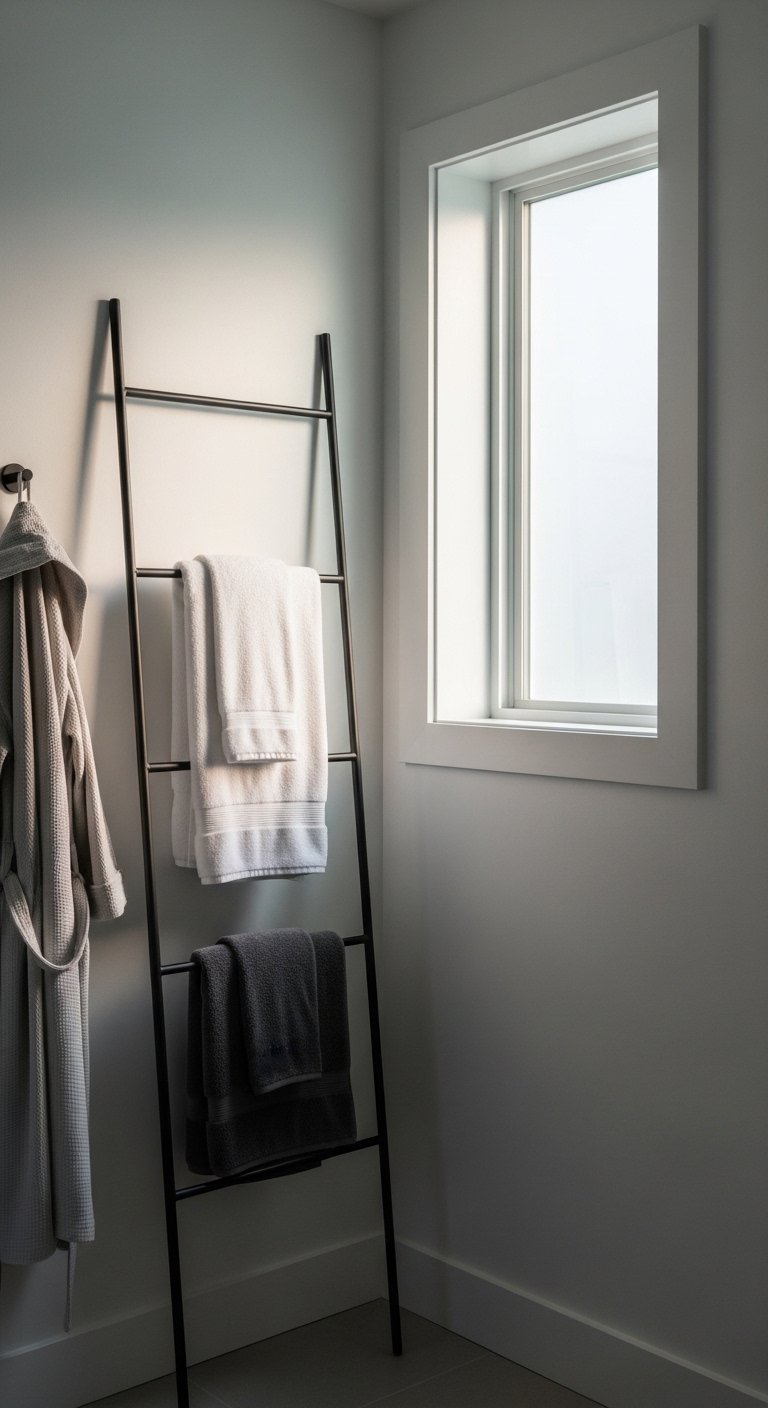
A ladder towel rack adds storage and height in small bathrooms. Choose a 60-inch ladder for standard ceilings and place it 4 to 6 inches from the vanity so towels can hang freely. I attach a row of S-hooks to gain robes or baskets for toiletries. Metal ladder racks are easy to move during cleaning. The mistake is using a ladder that is too shallow, which causes towels to touch the floor when damp. This method keeps textiles off counters which is better for humid rooms.
Floating Concrete Shelves With Hidden Brackets
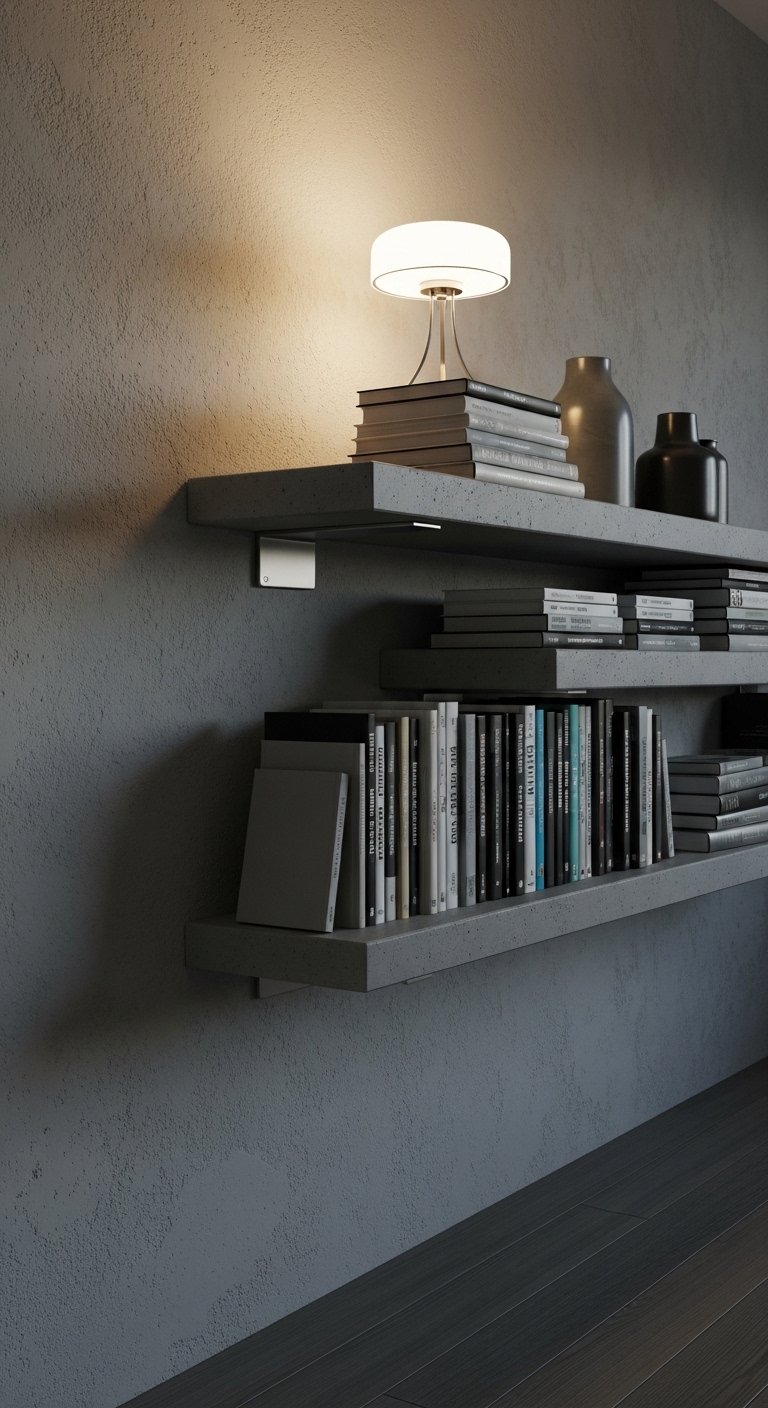
Floating concrete shelves give industrial heft without visual bulk. Use brackets rated for at least 50 pounds and keep shelf depth 10 to 12 inches so they do not dominate a small wall. I sealed mine to keep dust cleanable. Concrete-look floating shelves pair with warm wood or leather accents. Most folks find their paint match off once they get it home. Include that sentence here because the stain on raw shelves can shift the perceived color of nearby walls. A common mistake is skipping anchor reinforcement for heavy items.
Industrial Locker Cubby Bench For Mudroom
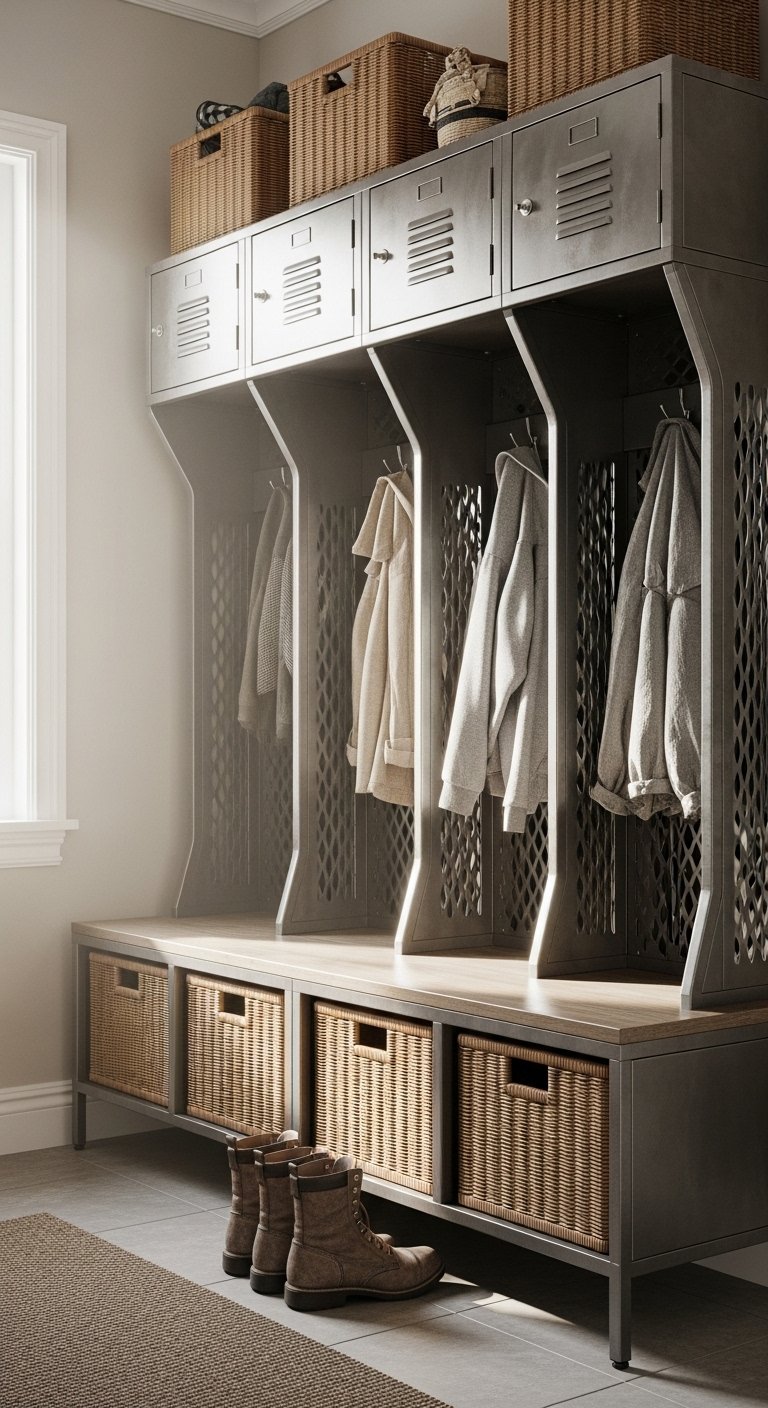
A locker cubby bench combines seating and concealed storage. Pick cubby sizes that hold a standard 10-inch shoebox and a winter hat. I used a 36-inch bench with three cubbies under a solid seat to balance sitting comfort and storage. Locker cubby benches help with quick outfit changes and hide seasonal clutter. The frequent mistake is making cubbies too shallow, which loses storage. This works especially well in family homes where the bench doubles as a drop zone and shoe storage.
Multi-Use Pegboard Headboard For Bedroom Storage
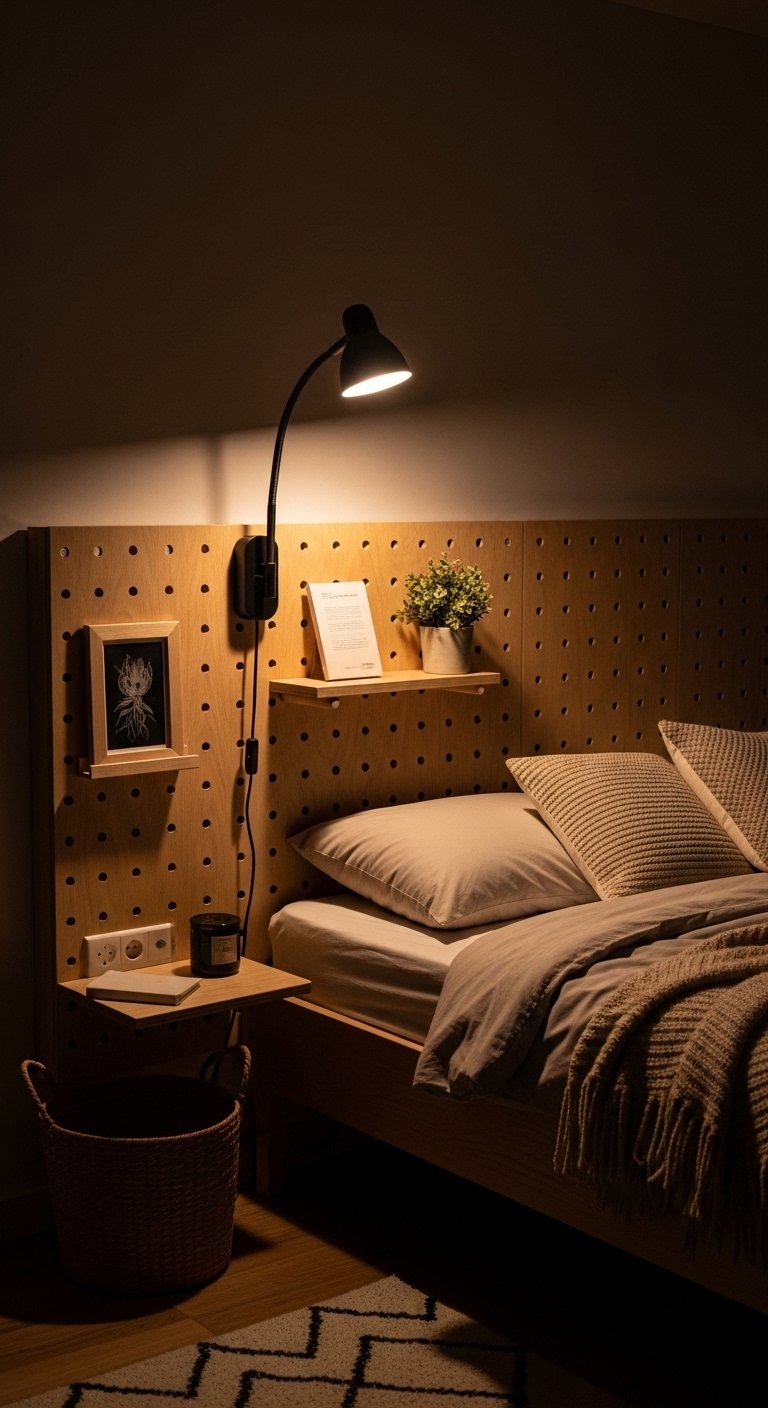
Turning a headboard into a pegboard gained me bedside storage without nightstands. Use 1-inch pegs and plan for 8 to 12 inches of usable shelf space per side. I mounted a small floating shelf attachment for books and a lamp, then added a hanging plant. Pegboard hardware kits make this easy. A mistake is putting the pegboard too low, which makes items bump your pillow. This idea is perfect in small bedrooms where floor space is at a premium.
Rolling Butcher Block Island With Built-In Hooks
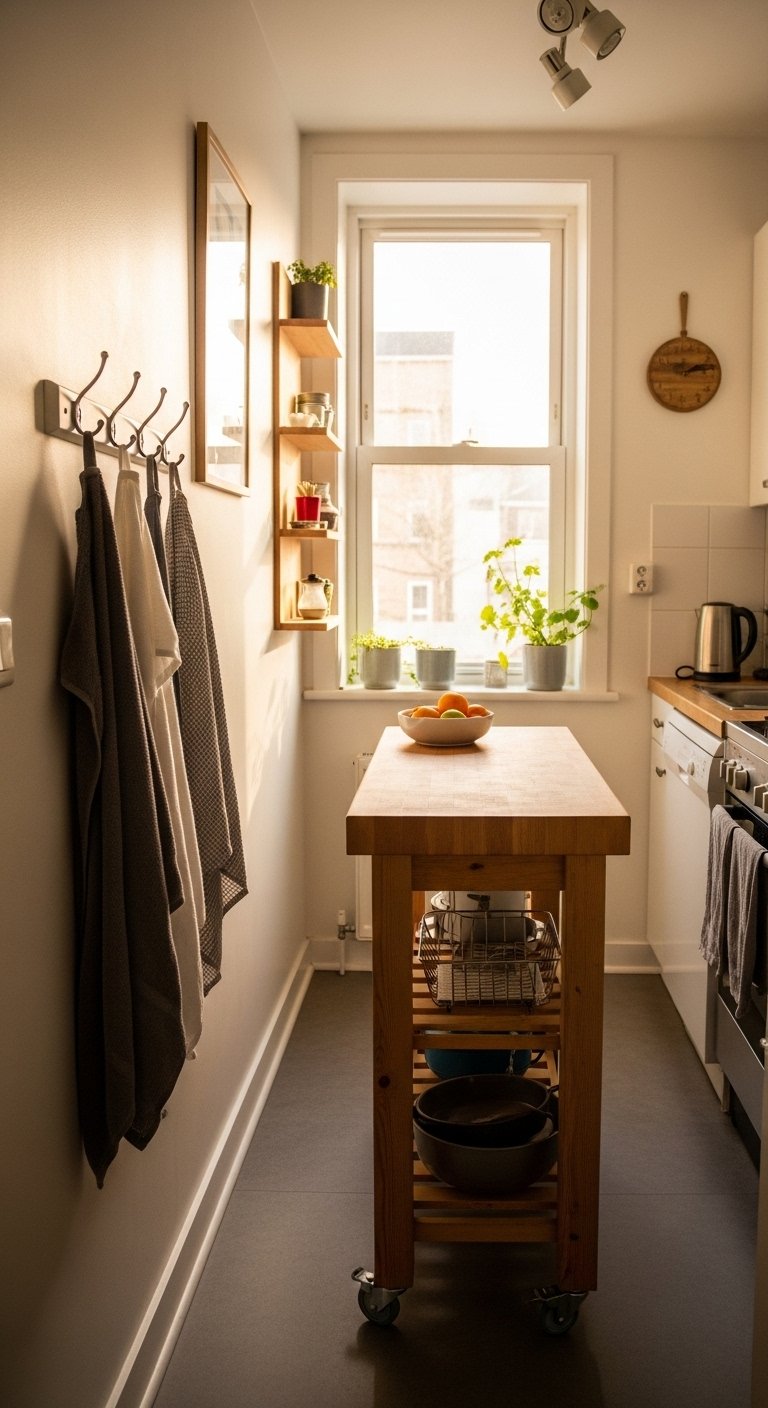
A narrow butcher block island gives countertop space and hooks for utensils or pots. Go 12 to 18 inches deep and 36 inches long for mobility in tight kitchens. I bolted a towel bar and a row of S-hooks on one side for mugs. Rolling butcher block carts are useful and look right in industrial kitchens. Avoid buying one without lockable wheels. This keeps your food prep area flexible and tidy.
Your Decor Shopping List
Textiles
- Honestly the best $40 I have spent. Chunky knit throw in cream in 50 x 60 inches for the sofa
- 22-inch linen pillow covers, set of 2 in warm gray, down insert recommended
Wall Decor
- Metal grid wall panel, 24×36 inches for command centers
- Concrete-look floating shelf, 36-inch for heavy items
Storage & Hooks
- Galvanized storage bins, set of 3 in small, medium, large
- Magnetic tool strip, 18 inch
- Industrial S-hooks, pack of 20
Furniture & Mobile Storage
- Galvanized utility cart, three-tier with locking casters
- Rolling butcher block cart, 36-inch
Budget Finds
- Black metal ladder towel rack, similar at Target for in-person size checks
Shopping Tips
White oak beats dark wood in 2026. Design feeds have shifted completely. White oak floating shelves look current, not dated.
Grab these galvanized storage bins for $25. Use them to corral small gear, then swap their placement seasonally.
Curtains should puddle or kiss the floor, never hang halfway up. These 96-inch linen panels are right for standard 9-foot ceilings.
Everyone buys five small succulents. One single 6-foot fiddle leaf fig has ten times the visual impact.
If you rent, use removable anchors and poster-board samples taped to the wall to test color and scale. Heavy-duty removable hooks work well without damage.
Frequently Asked Questions
Q: What size shelf depth should I pick for narrow walls?
A: For functional shelf storage on narrow walls, go 8 to 12 inches deep. That depth holds bins, books, and small baskets without sticking into the walkway. If you plan to store shoes, aim closer to 12 inches.
Q: Can I mix metals in an industrial scheme?
A: Yes, mix them. Use one dominant metal and introduce a second as punctuation. For example, black pipe shelves with brass S-hooks reads purposeful not messy. I like mixed metal picture ledges for an easy start.
Q: How do I keep pets from wrecking open storage?
A: Put pet-access items in lower pull-out drawers and keep edible or fragile things on higher shelves. Use bins with lids and consider washable fabrics. Locking casters on rolling carts stop enthusiastic nudging.
Q: What is the easiest renter-friendly storage upgrade?
A: A rolling cart or leaning ladder rack. Both add storage with zero drilling. Galvanized utility carts are my go-to when I am short on time.
Q: How do I prevent visual clutter on a pegboard or grid?
A: Limit items to one or two functions per panel, like coffee gear or office supplies. Leave negative space so the eye rests. Swap items every few months to keep the layout fresh.
Q: My paint looked different at home than the sample. What went wrong?
A: "I matched at the store and it looks totally different at home." Lighting shifts color more than most people expect. "Lighting trips up two-thirds of paint jobs." Test samples on poster board and watch them in morning and evening light for at least three days.