
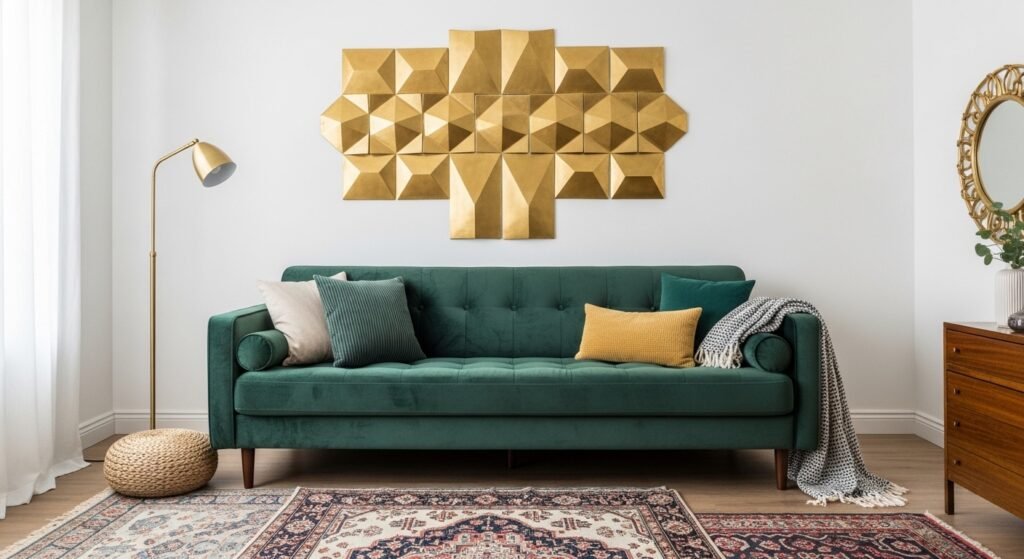
My living room had nice furniture but it still felt like a waiting room. Took me embarrassingly long to realize everything was the same height and the walls were doing nothing. Once I added one gold geometric panel and a couple of layered prints the whole space finally read like a room someone actually lives in.
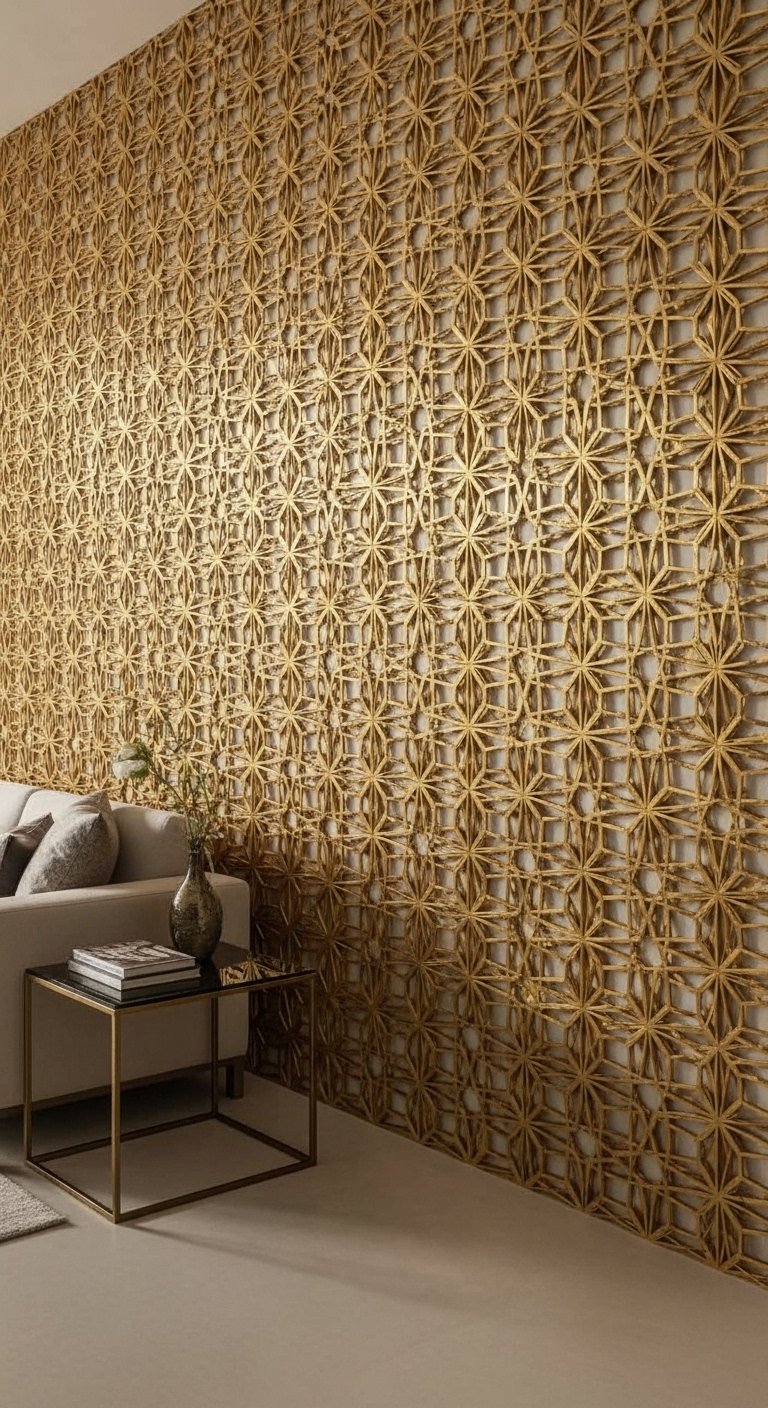
Geometric gold panels scream 1920s glamour without needing custom plaster. I use 4×8 foot panels when I can, but for typical apartment walls I work in 24×48 inch panels overlapped edge to edge until the wall reads as one piece. Most folks grab gold or brass pieces right off the bat. Aim for around 60 percent wall coverage so the pattern anchors the room rather than reads like an accessory. Budget here runs $50 to $200 per panel depending on material. A real mistake is using ultra-gloss gold in north light, it goes flat. I prefer thin hammered metal finishes instead. For renters, Command strips work on small panels, just test one first.
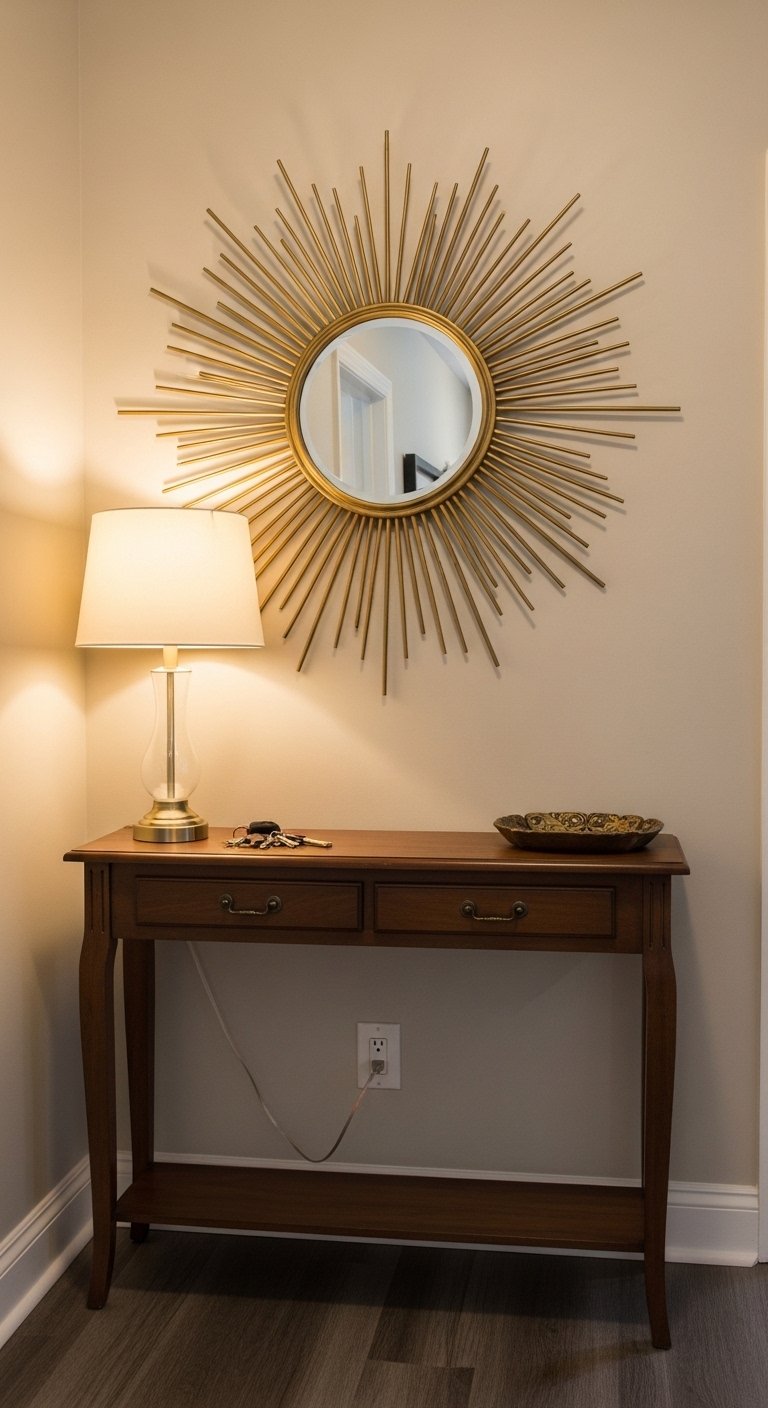
A sunburst mirror makes ceilings feel taller and it solves the lonely-big-mirror trap when you hang it centered at eye level. I use 24 to 36 inch mirrors over consoles or mantels so they read like furniture, not like random wall candy. People drop around $250 to redo one wall proper, so this is a midrange move that gives high return. The common mistake is hanging the mirror too high. Hang so the center sits about 60 inches from the floor unless your ceilings are under eight feet, then go a touch lower. Pair with the geometric panels idea for doubled impact, and mix a matte mirror back with brass spikes to avoid cheap shine. I like a 32-inch brass version for living rooms.
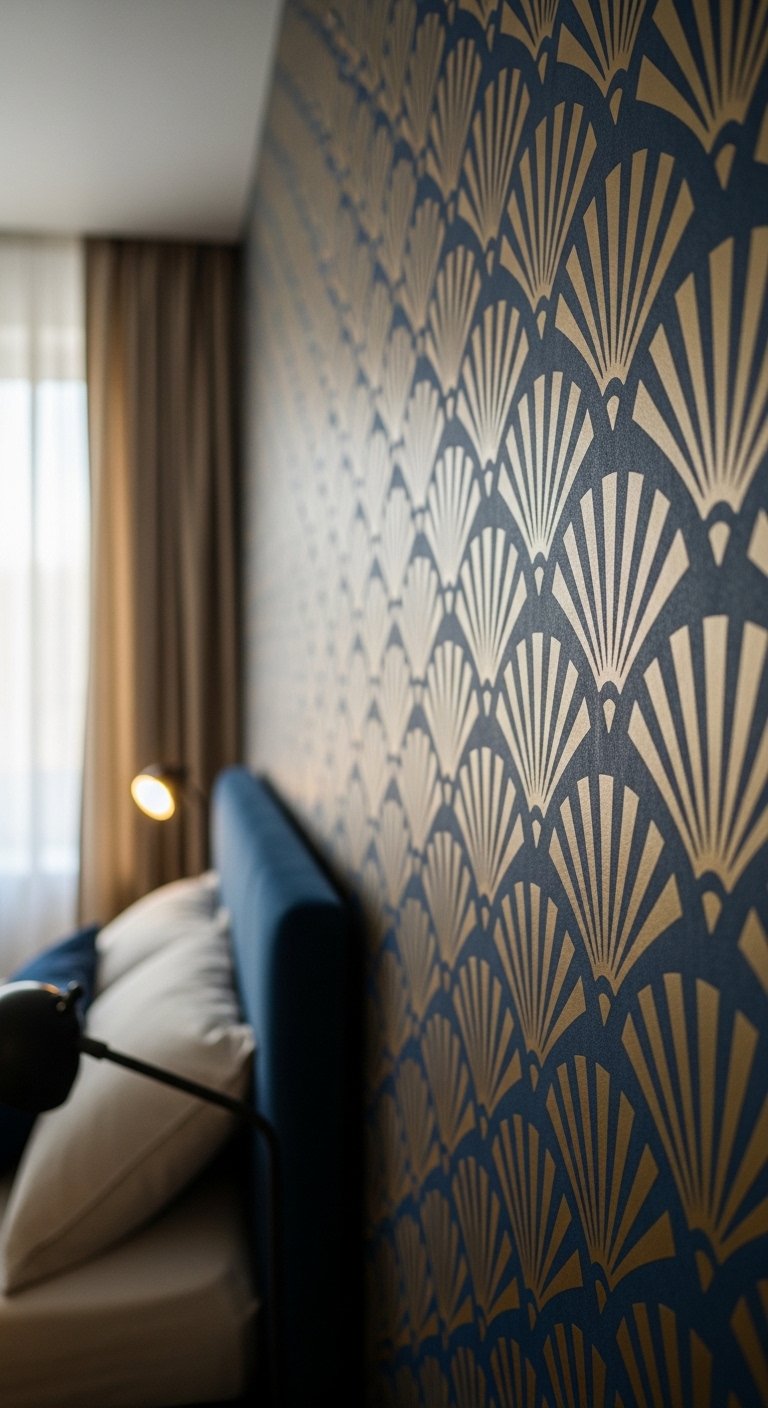
Fan pattern wallpaper is the quickest way to get vintage deco energy without changing furniture. Use peel-and-stick for rental-friendly application and pick one accent wall only. Nearly half want stuff that peels off no trace, so fan pattern peel-and-stick saves headaches. Go for rolls with medium scale fans so the repeat reads luxe. A common error is papering all four walls when the rest of the room is bold too. If you do one wall, stick to 60 percent pattern coverage on that wall and keep the rest calm. Apply vertical alignment guides for perfectly even repeats and buy an extra roll in case your pattern needs matching.
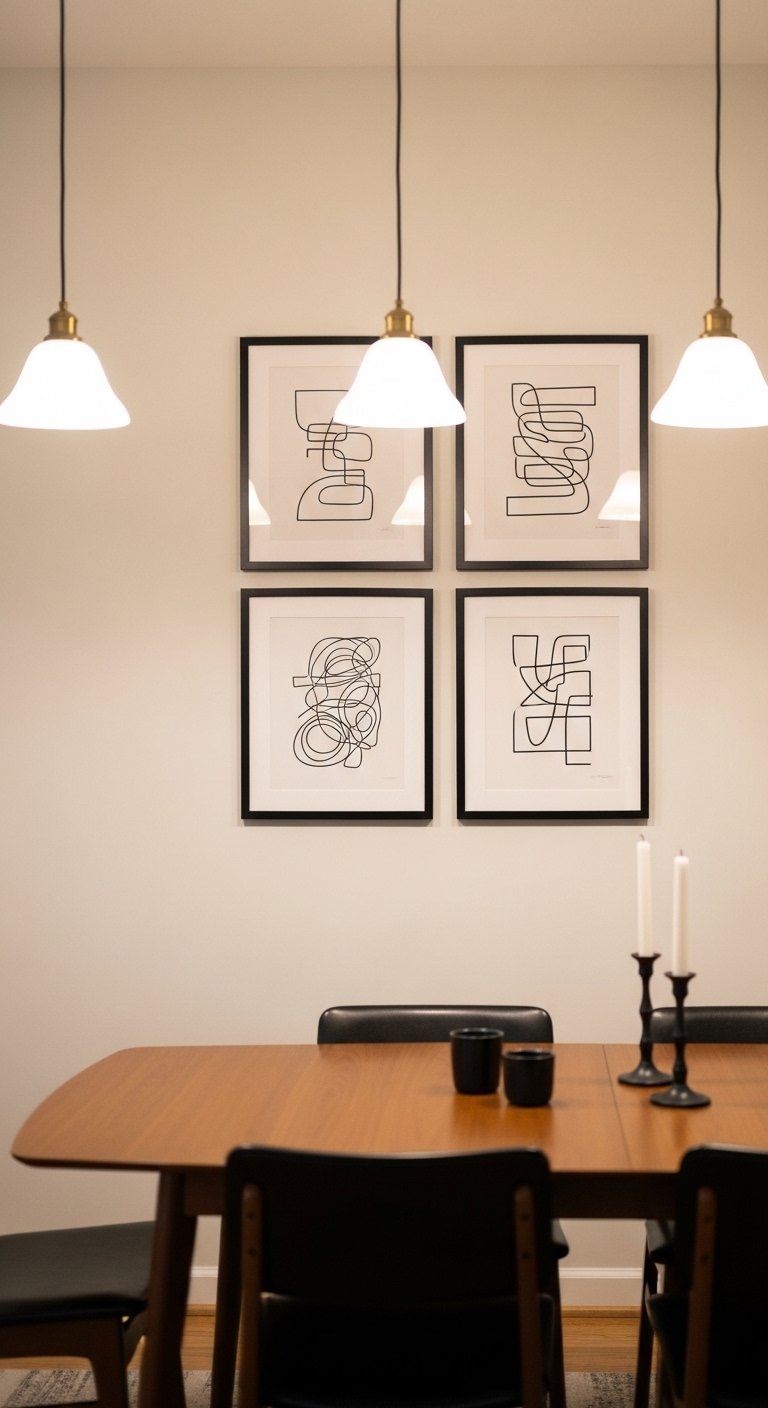
Layered line art in a tight 2-foot grid adds movement and looks intentional. I hang three to five slim prints in a 2-foot square grid so you get flow without chaos. A mistake I see all the time is spreading the frames too far apart. Keep the cluster compact so it reads like a single installation. Use slim brass or black frames to echo nearby metal pieces. For scale, pick prints about 16×20 or 18×24 and leave 2 to 3 inches between frames. This works great in dining rooms or over a sofa. I prefer frames that sit 60 percent down the wall height rather than perfectly centered to the room.
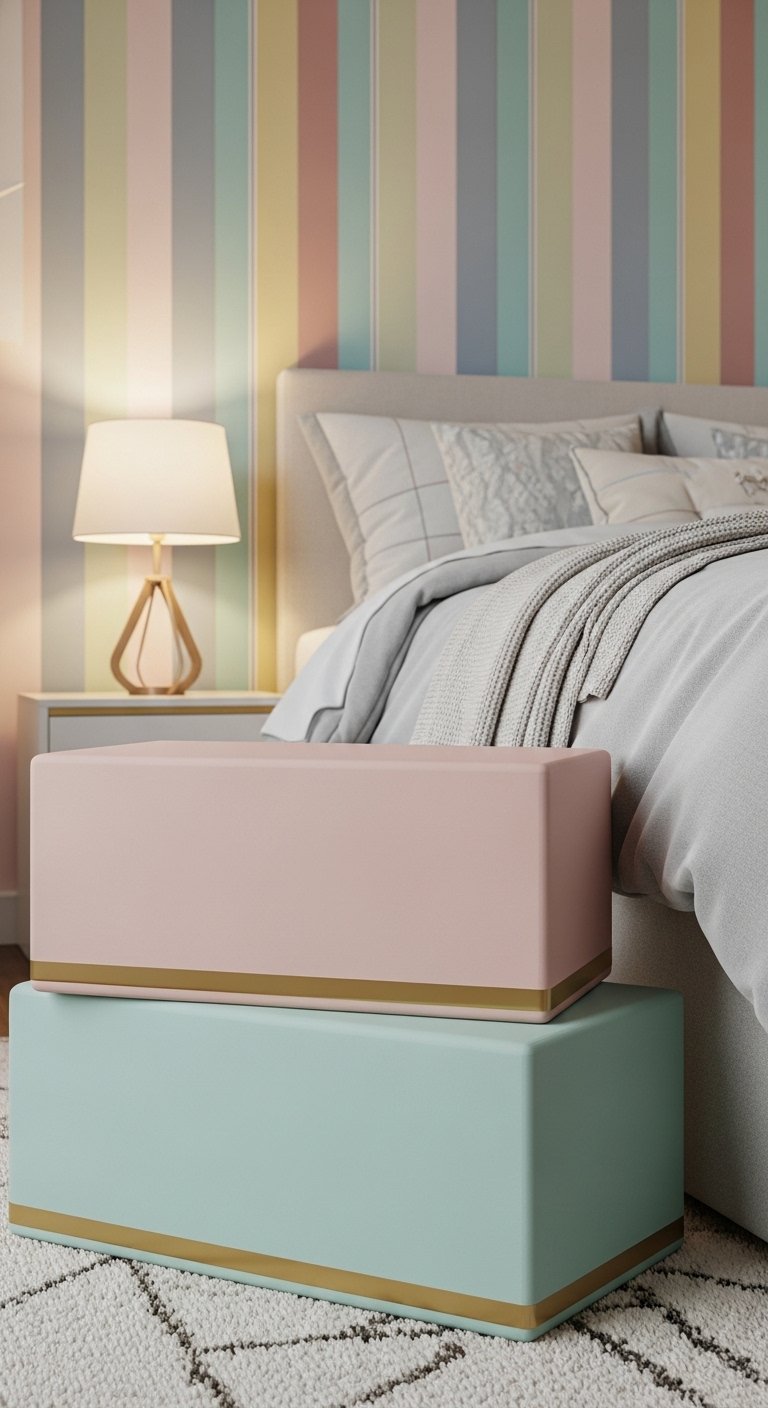
Pastel vertical stripes calm the glam and keep rooms livable. I like 2×3 foot stacked pastel blocks in muted pinks, mint, and cream so the wall reads elegant, not circus-like. Use vertical blocks to make low ceilings feel taller. The sizing rule I follow is blocks roughly a third of the wall width and stacked to cover 60 to 70 percent of the height. A common slip is using stripes that are too thin, which chops the room visually. These are renter-friendly if you choose vinyl decals, and they pair beautifully with a sunburst mirror or line art grid from earlier ideas. Budget runs $40 to $120 depending on custom or off-the-shelf decals.
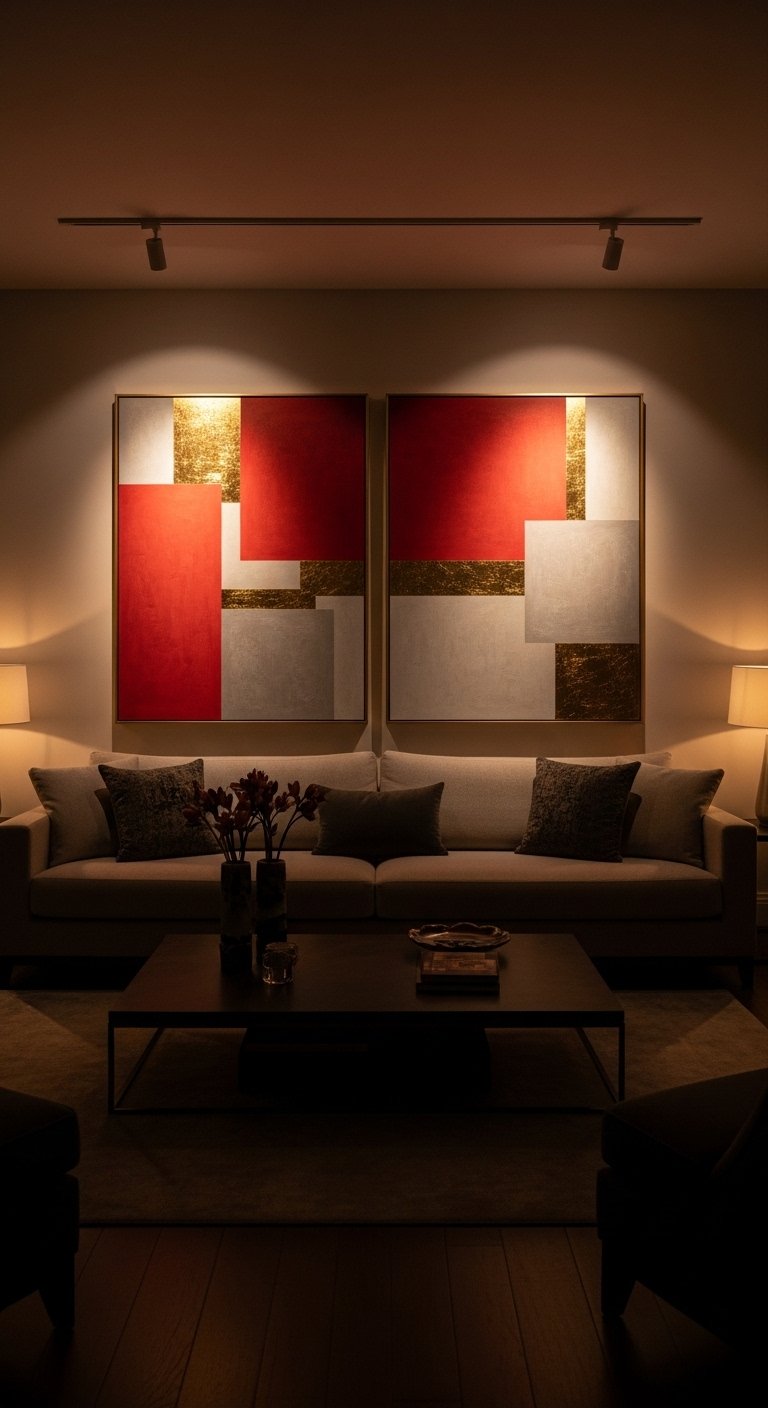
Curved geometric paintings soften hard deco lines and make the room feel more lived in. I hung two large canvases, each 30×40 inches, side by side and the curves balance all the rectilinear furniture. A mistake is buying one massive print that sits too far from your seating. Two canvases create rhythm and let you obey the rule of odd numbers elsewhere. Curves work especially well in transitional living rooms and home offices where you want glamour without a museum vibe. Splurge on subtle gold leaf detail, but mix with matte frames so the gold does not read cheap in direct light.
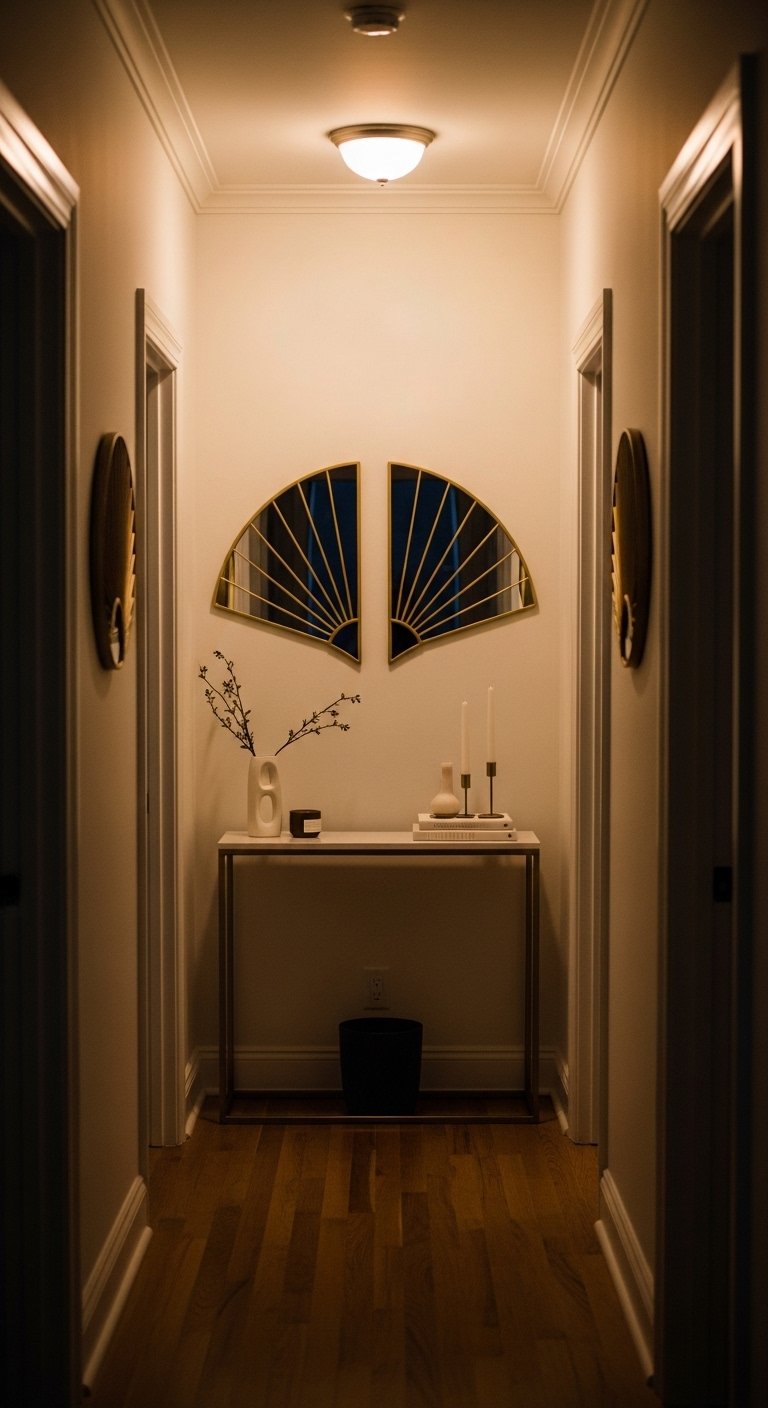
Pairs of fan mirrors create immediate balance for entryways or narrow hallways. I hang them about five feet apart so they breathe, not compete. Symmetry is what gives this trick its power. A common mistake is pairing mirrors of different sizes which reads accidental. Use matching pieces and slightly offset the hang height if your console is taller than average. These mirrors are renter-friendly and easy to install with two screws each. They also reflect pattern from opposite walls, so try them opposite a pastel stripe or geometric panel for layered depth.
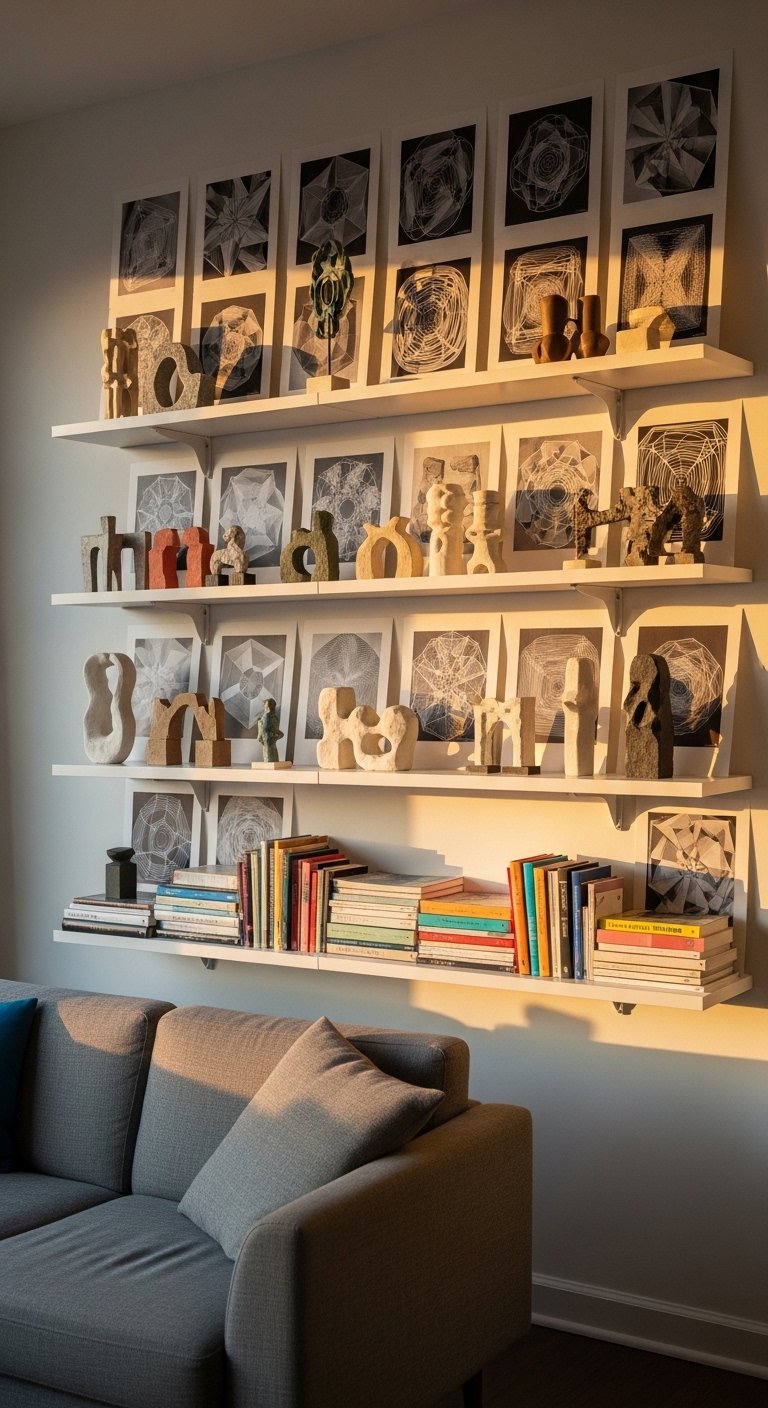
Complex shape collages on floating shelves mimic vintage deco posters without hammering nails into every print. I mix 8×10 and 11×14 prints and overlap them on two 24-inch floating shelves. The trick most people miss is scale. Keep at least one piece near the center that is about 60 percent of the shelf length so the collage reads anchored. Floating shelves let you swap art fast, so they are great for renters. Avoid tiny pieces only, they disappear. Pair this idea with the rectilinear gallery idea for contrast between strict lines and playful shapes.
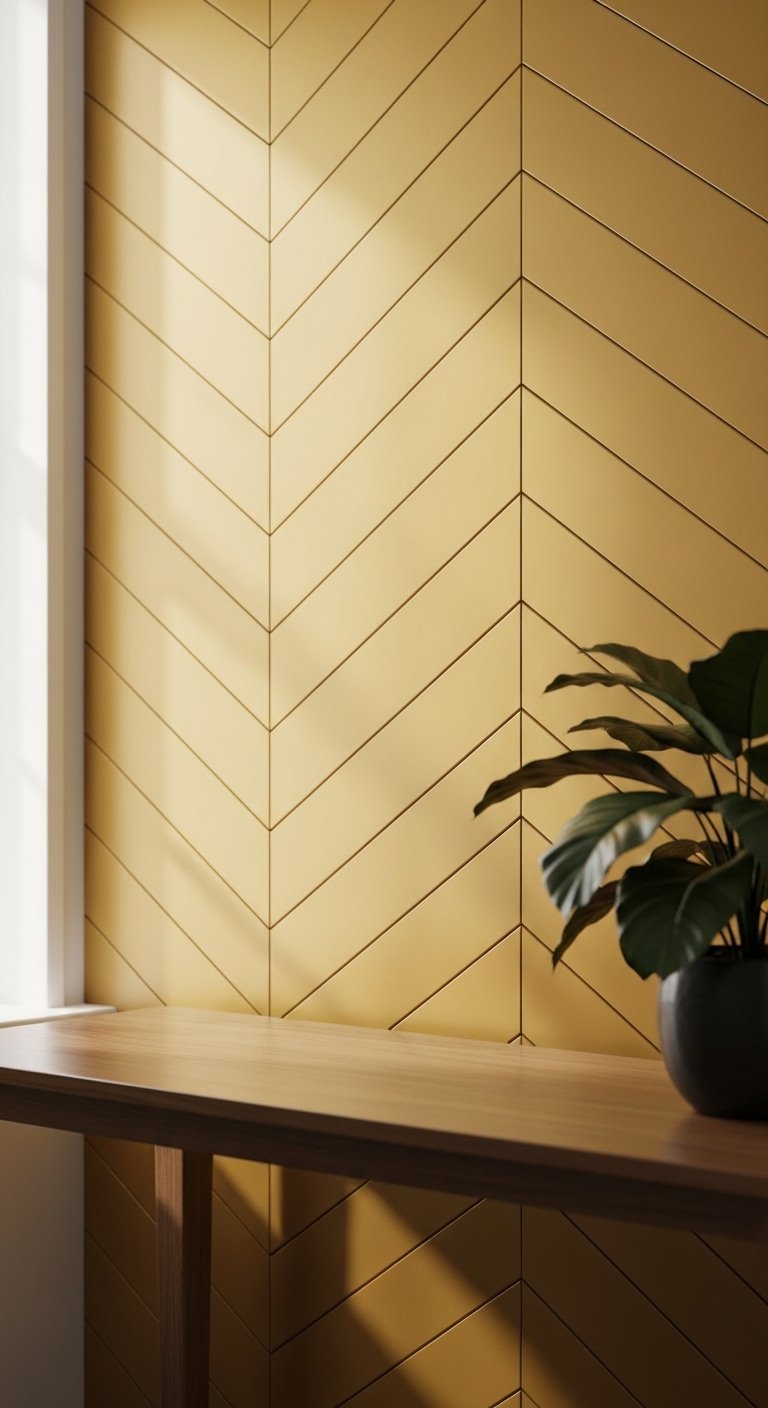
Gold chevron feels retro but fresh when done in a matte finish. I use peel-and-stick chevron tiles across the lower two thirds of a wall for impact without overwhelming the room. A common error is using shiny foil chevrons that scratch easily. If you have pets, matte finishes hide scratches better. For scale, run the chevron paneling across about 60 percent of the wall width and stop at chair-rail height to keep the room feeling open. Pair with rectilinear frames above for a grounded contrast. Budget ranges $90 to $220 depending on coverage.
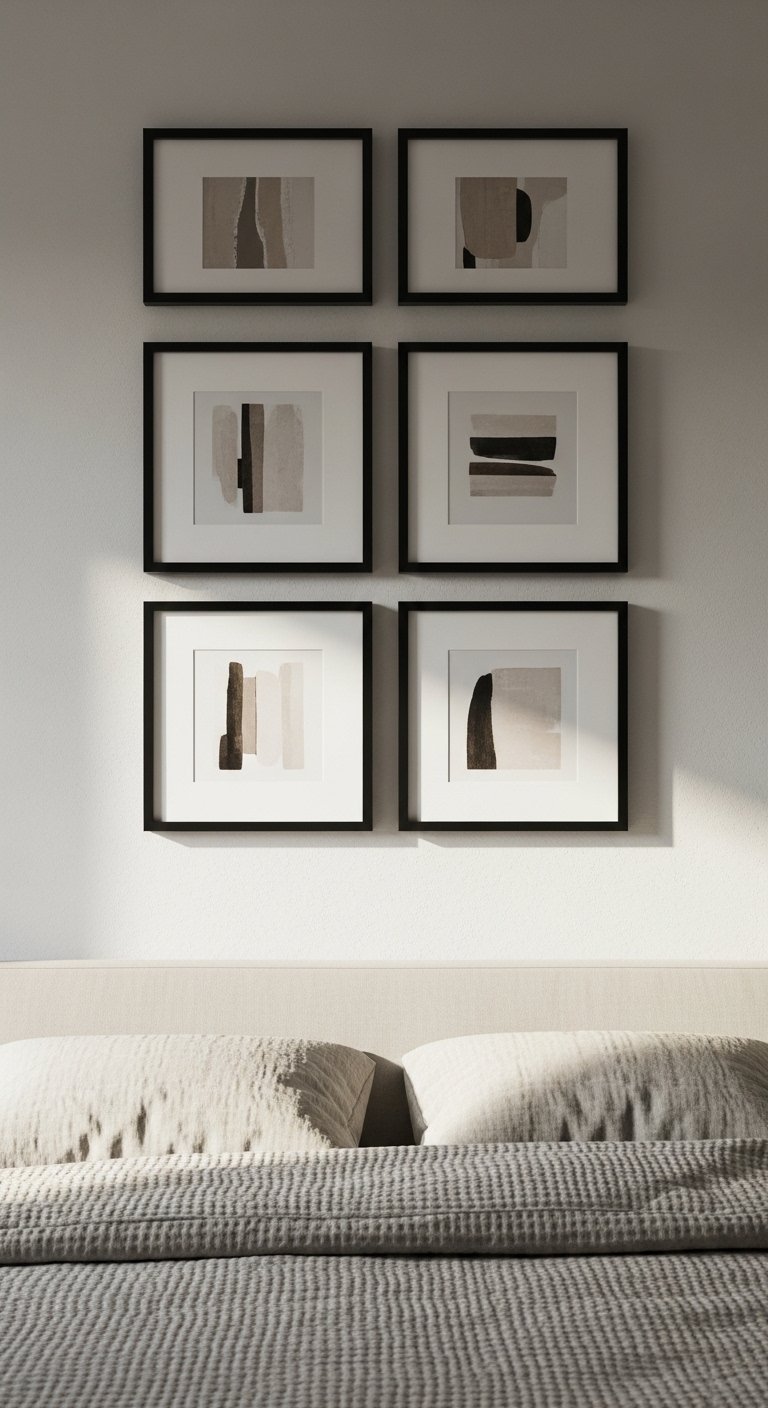
A rectilinear black frame gallery grounds the room and tames deco’s tendency to feel too flashy. I pick four matching frames, each 16×20, and space them evenly in a small grid. The rule of three is handy but four can work when the frames match furniture proportions. The common mistake is mixing different frame depths which makes installation look amateur. Use identical frames and mat colors for cohesion. This setup works over a bed or behind a sofa. If you want a softer look, swap one frame for a curved canvas from the curved geometric idea earlier.
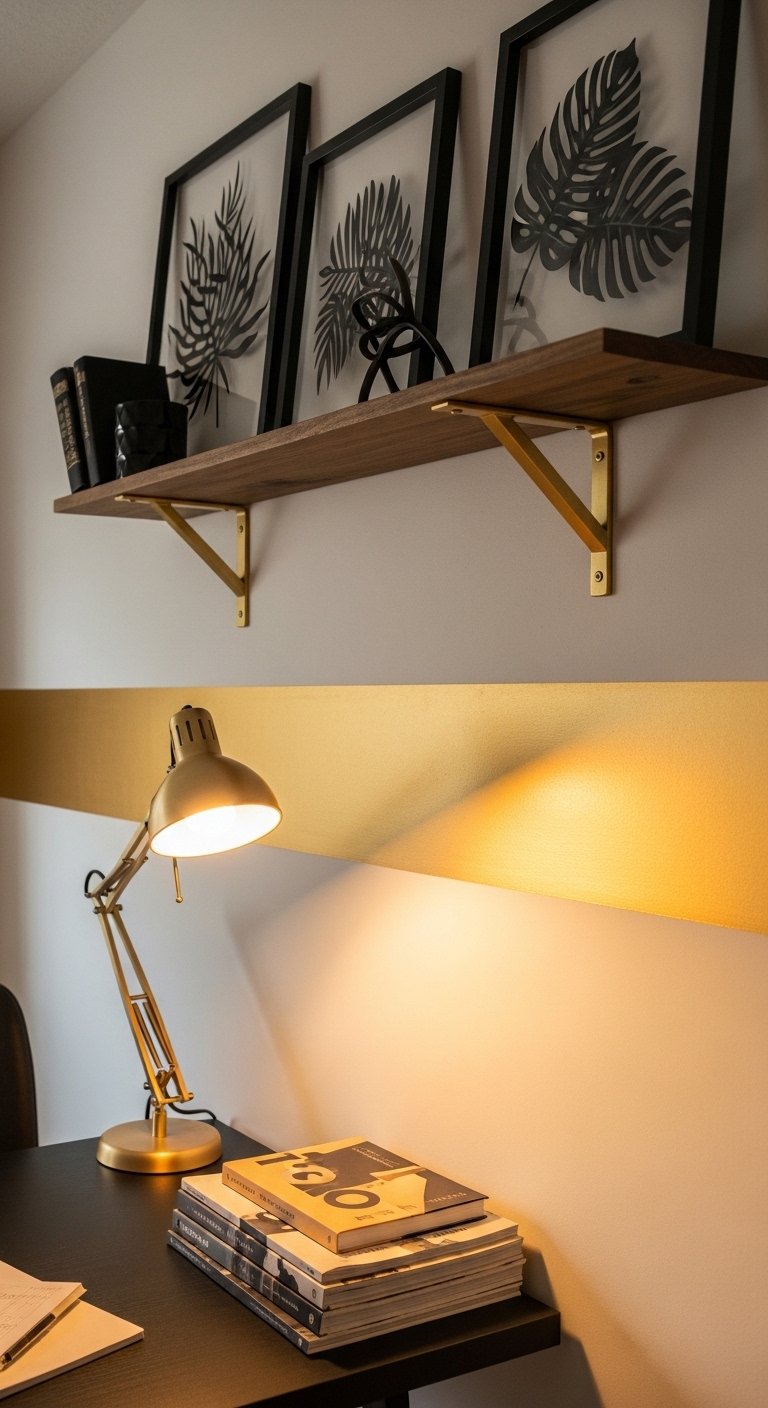
Mixing metallics keeps the room from reading like a prop photo. I pair matte gold wall stripes with black metal frames and a brushed brass lamp. Most folks grab gold or brass pieces right off the bat, so consciously add matte finishes and black accents to keep it layered. A mistake is matching everything to one metal, which can feel flat. For balance, use one shiny piece, one matte piece, and one dark metal piece. This combo works great in home offices or libraries. People drop around $250 to redo one wall proper, so this is a practical midrange update that plays well with existing furniture.
Your Decor Shopping List
- Honest pick for panels, 24×48 inch gold-geometric-wall-panels, hammered finish. Gold geometric wall panels (~$60 each). Use Command strips for renters.
- Statement mirror, 32-inch sunburst-mirror-32-inch-brass in aged brass. Brass sunburst mirror (~$120). Hang center at about 60 inches high.
- Peel-and-stick fan wallpaper, navy-and-gold fan-pattern-peel-and-stick for one accent wall. Fan pattern peel-and-stick wallpaper (~$40 per roll). Buy an extra roll for matching.
- Line art set, three-piece art-deco-line-art-prints-set, 16×20 each. Line art prints set (~$65). Use slim brass frames.
- Pastel vinyl stripes, 2×3-foot pastel-stripe-vinyl-decals in soft pink and mint. Pastel stripe decals (~$35 set). Renter-friendly.
- Floating shelves, white-oak-floating-shelves 24-inch, pair. White oak floating shelves (~$45 each). Good for layered collages.
- Chevron peel tiles, matte-gold-chevron-peel-and-stick, full wall kit for small walls. Gold chevron peel-and-stick tiles (~$95 kit). Pet-proof finish.
- Mixed metal frames, mixed-metal-picture-frames-set in black and brass, four-pack. Mixed metal frames set (~$30). Great for rectilinear galleries.
Shopping Tips
White oak beats dark wood in 2026. Design feeds have shifted completely. These white oak floating shelves look current, not dated.
Grab these velvet pillow covers for $12 each. Swap them every season and the whole room feels different.
Curtains should puddle or kiss the floor, never hang halfway up. These 96-inch linen panels are right for standard 9-foot ceilings.
Everyone buys five small succulents. One single 6-foot fiddle leaf fig has ten times the visual impact and hides a lot of awkward corners.
Mix finishes when you buy mirrors and lamps. Mixed metal frames set is an easy place to start without committing to one look.
Frequently Asked Questions
Q: Can I do art deco walls in a rental without losing my deposit?
A: Yes. Use peel-and-stick wallpapers, decals, and Command-friendly panels. Test a small area first. Floating shelves and picture ledges let you swap art without extra holes.
Q: What size mirror should I pick for above a console?
A: Pick a mirror 60 to 80 percent of the console width. For a 40-inch console, a 24 to 32 inch mirror works. Hang the center of the mirror around 60 inches from the floor for average ceilings.
Q: How do I stop gold from looking cheap?
A: Mix matte and polished finishes, add black metal accents, and avoid tiny foil patterns that show scratches. Matte gold chevron tiles are more forgiving if you have pets.
Q: Will bold patterns make a small room feel smaller?
A: Not if you use vertical elements and mirrors. Vertical pastel blocks or a sunburst mirror will make the room feel taller. Keep pattern coverage at about 60 percent on a single wall.
Q: Can I mix boho textiles with art deco walls without it looking messy?
A: Yes, if you pick one anchor metallic and keep textiles in a unified color palette. Use solids and subtle textures so the wall pattern stays the focal point.
Q: What size prints should I use for a tight grid?
A: Go with 16×20 or 18×24 prints and leave 2 to 3 inches between frames. A tight 2-foot grid reads custom and avoids that random-gallery look.