
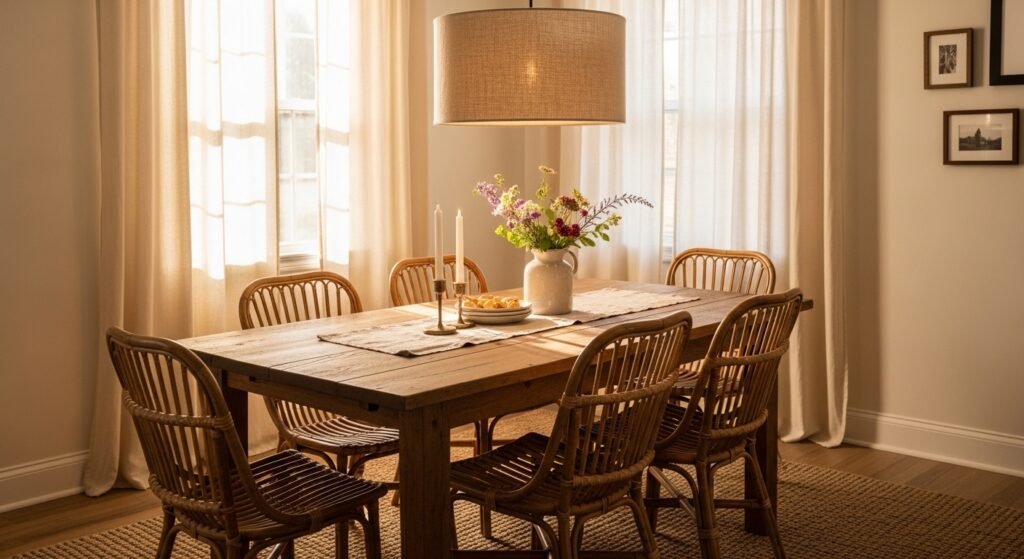
My living room had nice furniture and decent lighting but it still felt like a waiting room. Took me embarrassingly long to figure out it was missing texture. Every surface was smooth, every color was flat, and nothing invited you to actually sit down. Once I started layering wood, woven, and linen pieces the room began to feel used in a good way, not staged.
These ideas lean modern farmhouse with a few boho touches. Most items are under $150, with a few splurges around $250. Great for dedicated dining rooms, small breakfast nooks, or open-plan dining areas that feel chopped off and need flow.
Layered Wood and Wicker Textures Around the Table
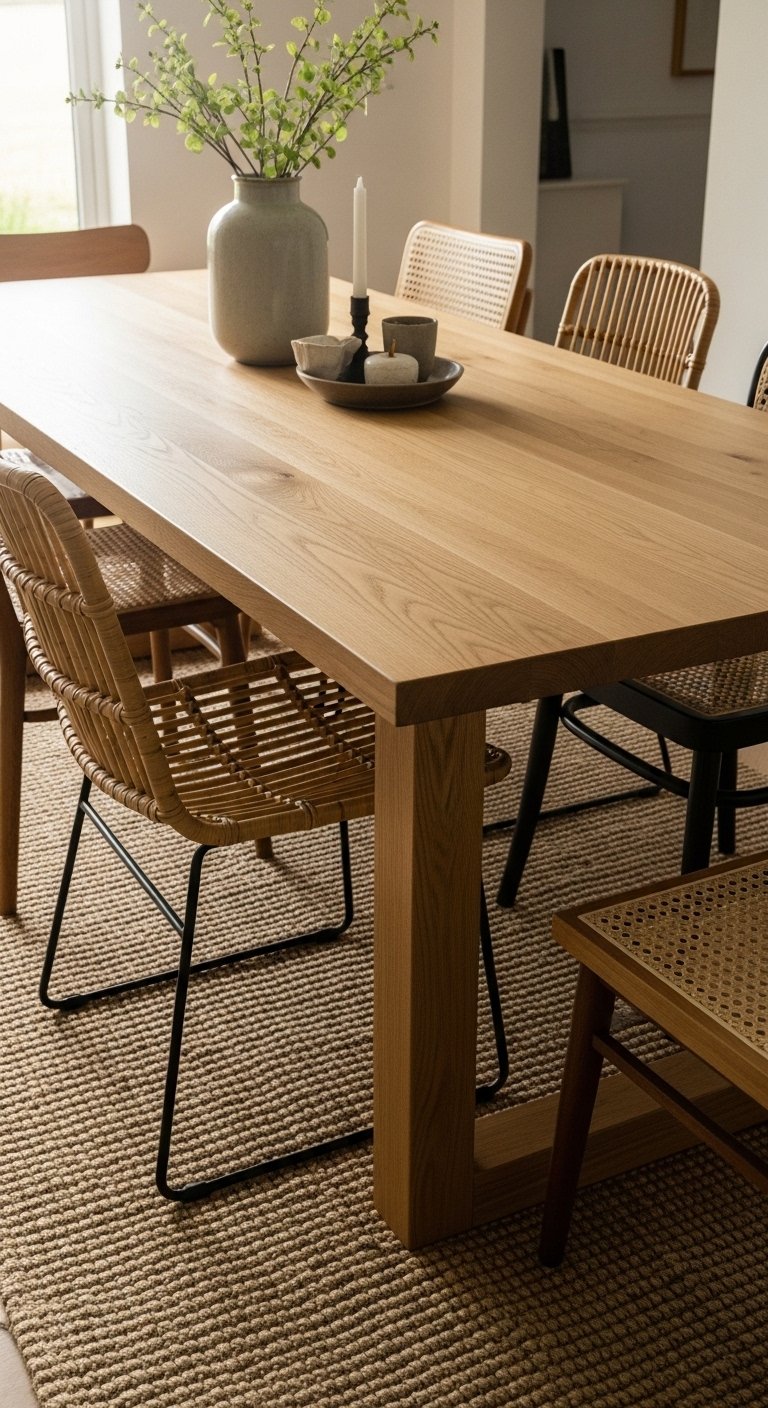
I started with textures because my space felt flat. Most folks start with textures to kill that flat look. Mixing a medium oak table with rattan chairs gives the room a lived-in balance. The trick is to keep wood tones consistent, about 80 percent wood and 20 percent texture pops, so nothing fights. I paired a reclaimed oak table with rattan-dining-chairs that wipe clean easily. Common mistake is matching every wood exactly. Instead, repeat two to three elements like the table tone and chair legs for cohesion. For rugs, keep 8×10 minimum so the table does not look chopped.
Open-Back Slat Chairs for Shared Spaces
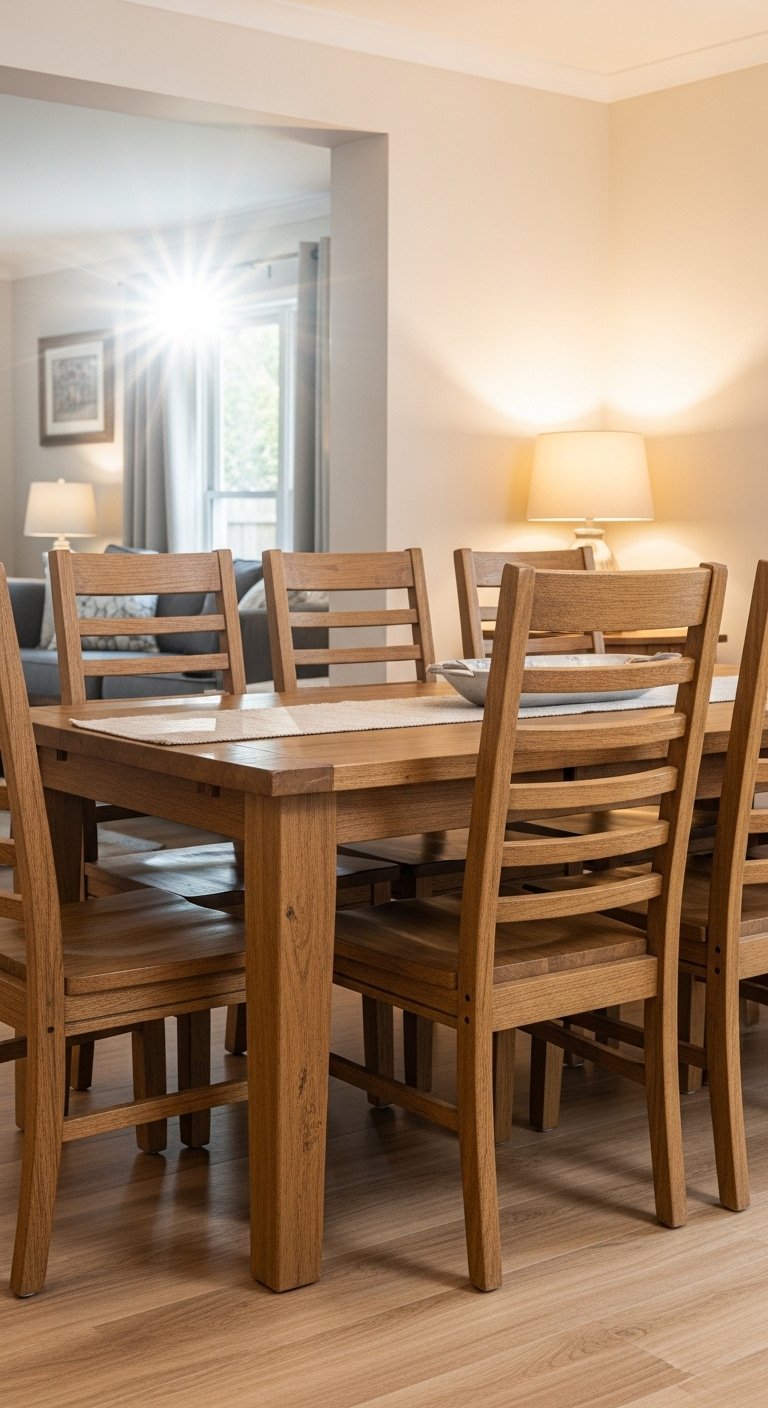
Three in four say slat-back chairs open up the room big time. I swapped a bulky upholstered set for slat-back farmhouse chairs and the whole area stopped feeling boxed in. These chairs slide easily on rugs and let light pass through, which matters in open-plan homes. I grabbed slat-back-dining-chairs under $150 each and used felt pads on the legs to avoid rug snags. A common mistake is choosing chairs too wide for the table; aim for 18-20 inch seat widths. This works well next to the gallery wall idea later.
Woven Rug Underfoot to Tie the Room
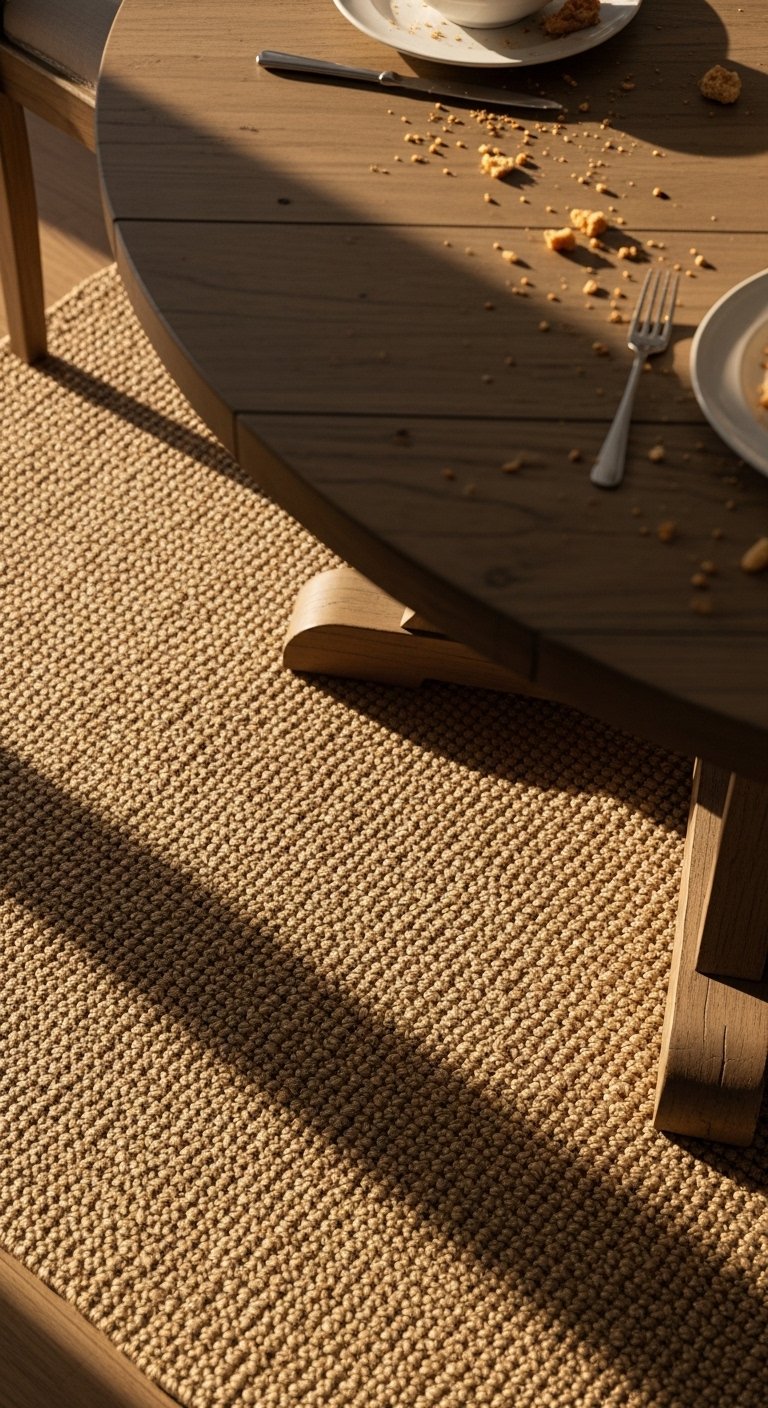
People drop around $350 to rug up their dining right. A woven jute or seagrass rug grounds the table and hides scratches better than plain wool. I use an 8×10 for my rectangular table so all front legs sit on the rug. 8×10-jute-dining-rug is washable in practice if you pick a machine-friendly option. The usual mistake is buying a rug that's too small and watching it float. If you have pets or kids, pick a low-shed weave or a washable rug to avoid fast wear.
Linen Drum Pendant for Soft Overhead Light
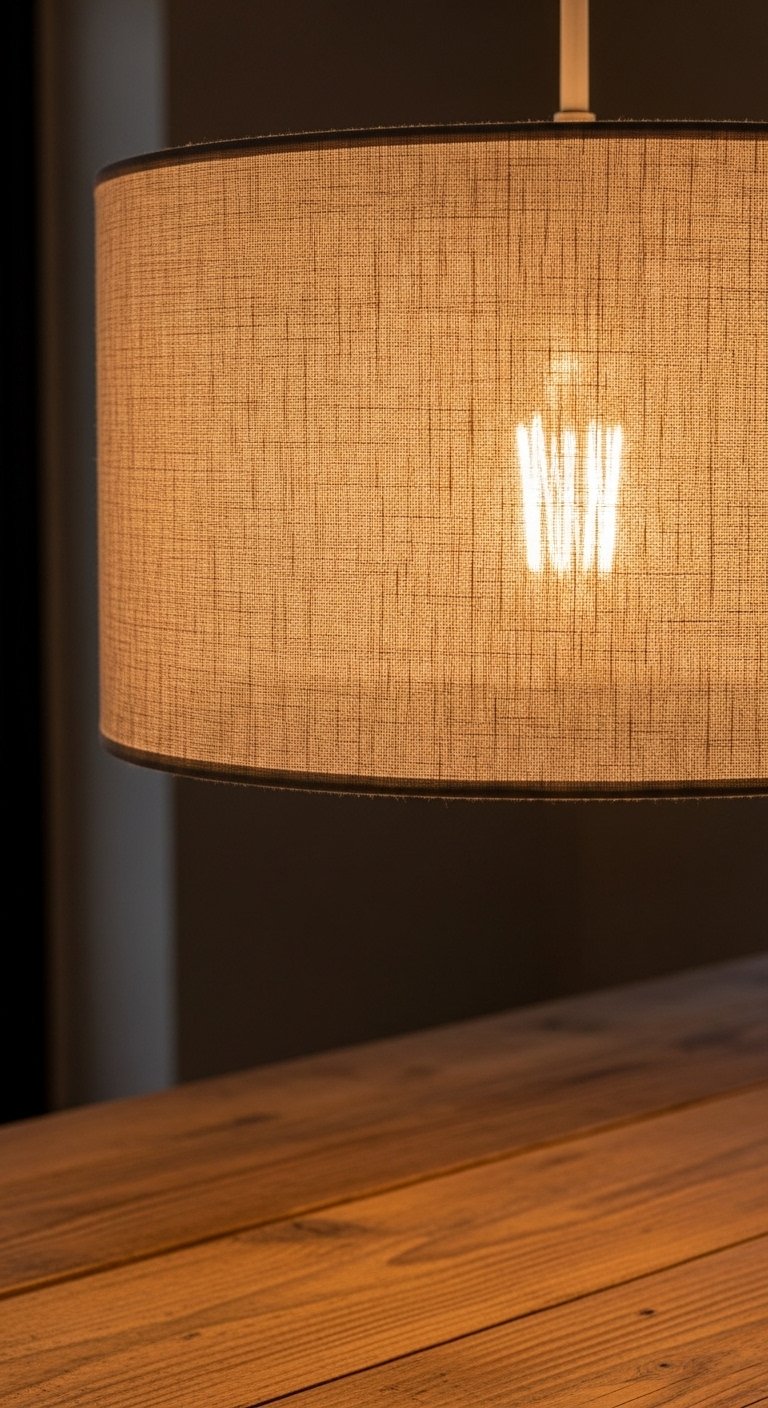
I replaced a bright orb with a linen drum and meals felt calmer instantly. Linen shades diffuse light so wood reads warmer without harsh shadows. Choose a drum about one third to half the table width, usually 24 to 30 inches for standard tables. I installed a linen-drum-pendant-28-inch and raised it a few inches above the usual so sight lines stay open. A common mistake is hanging pendants too low. For renters, use a small canopy hook and an adapter to avoid rewiring.
Window Seat Nook with Plush Pillows
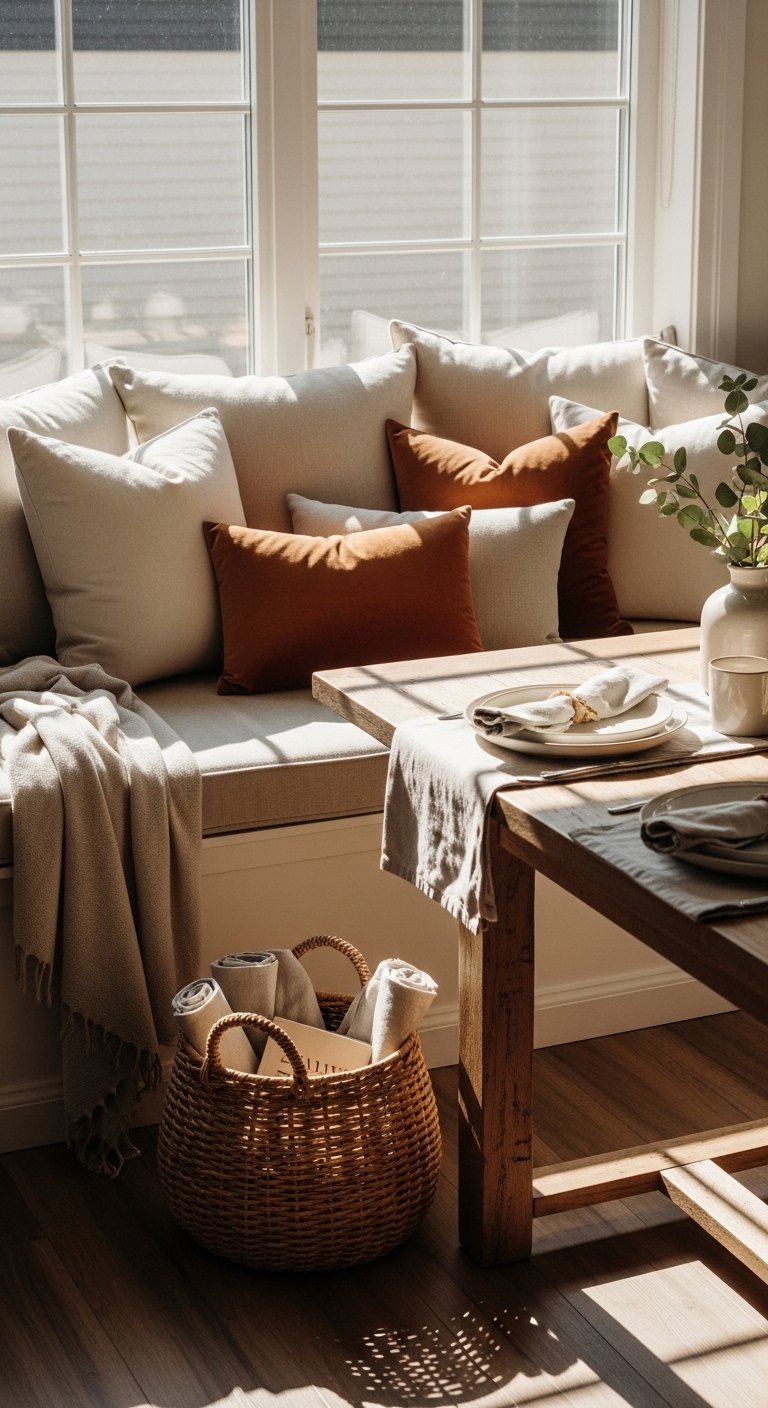
There is something about a window seat with layered pillows that makes you want to cancel your plans. I turned a dead corner into extra seating with a bench and two 22-inch down-filled linen pillow covers. 22-inch-linen-pillow-covers are machine friendly and cheap to swap seasonally. People often skip lumbar balance here. Use a 20×20 square plus a lumbar to avoid a floppy pile. Renter-friendly tip is to use non-slip pads under the bench instead of drilling.
Mix Mid-Century Chairs with a Farmhouse Table
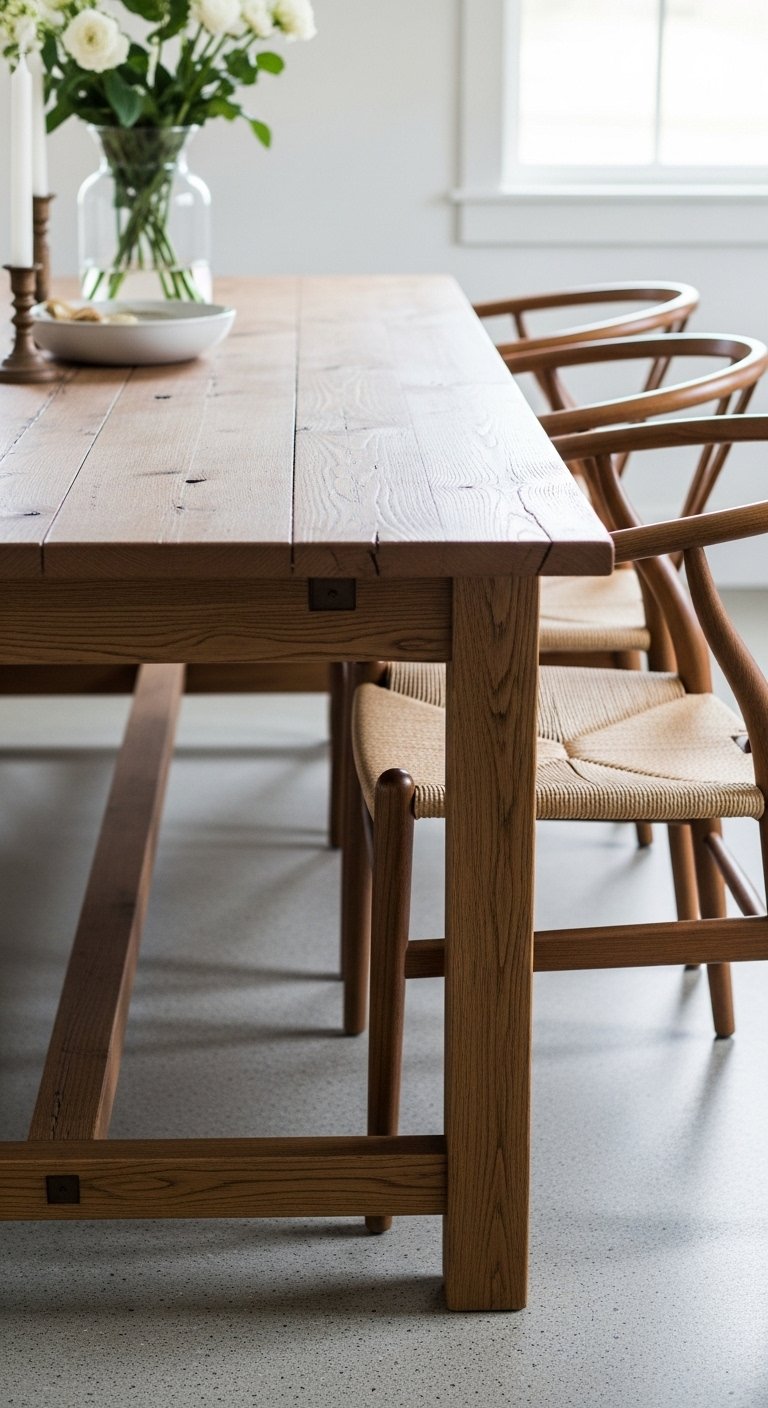
I wanted my table to feel less heavy, so I added sculptural mid-century chairs. The curve cuts the rustic edge and creates visual breathing room. I use reproduction wishbone-dining-chairs that are lighter on rugs and kid-proof. A frequent mistake is mismatching scale; pick chairs that are 18-20 inches wide to keep proportions right. This combo works especially well in open-plan homes where you need the chairs to visually connect to the living area.
Exposed Beams Paired with Woven Blinds
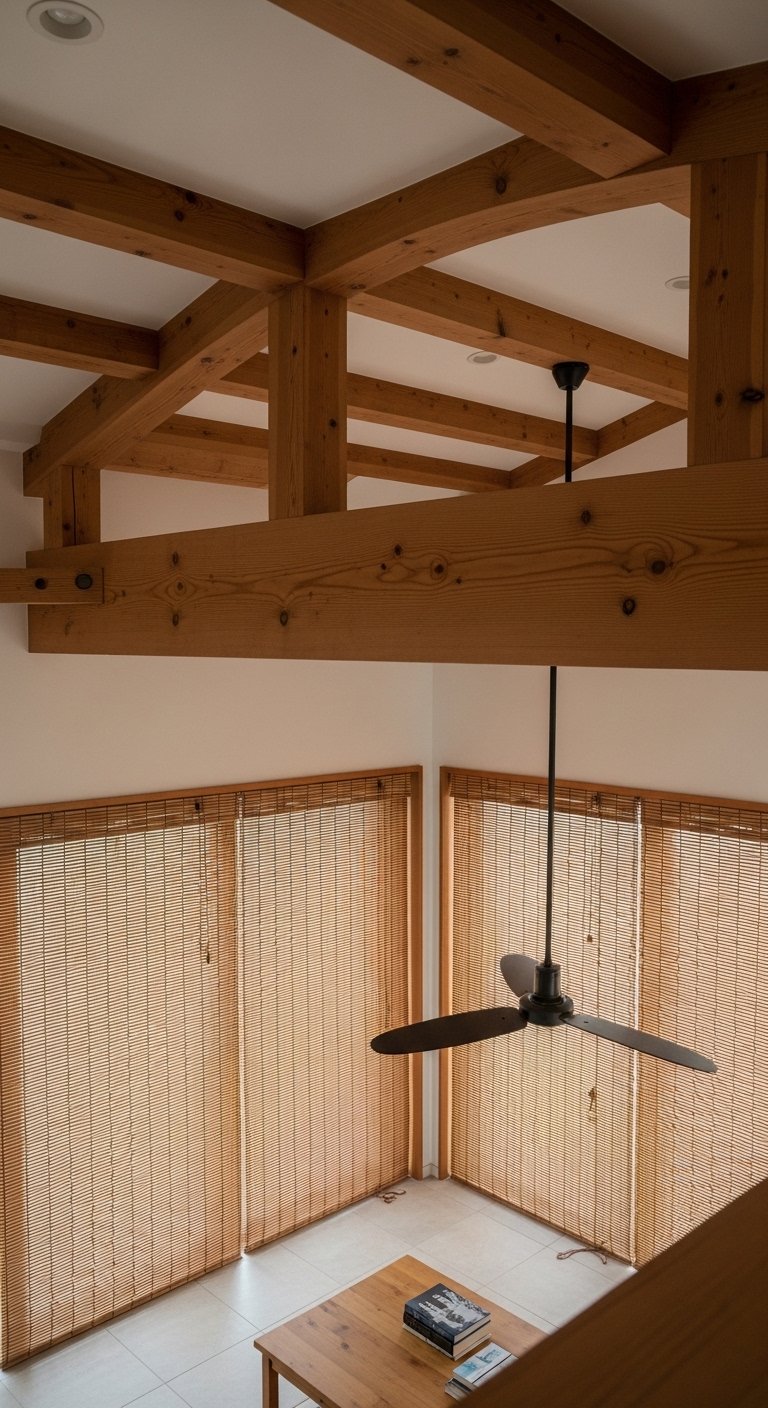
Beams add real texture where shiplap used to dominate. I painted mine a medium oak stain and installed cordless woven blinds to filter glare. The woven shades keep the rustic vibe but feel current. I used bali-woven-shades-cordless and tension mounts so the landlord did not get involved. A mistake is letting window treatments end at the frame. Hang blinds and curtains higher to make ceilings feel taller. For low ceilings, choose slimmer beams so the room does not shrink.
Matte Brass Accents to Warm Wood Tones
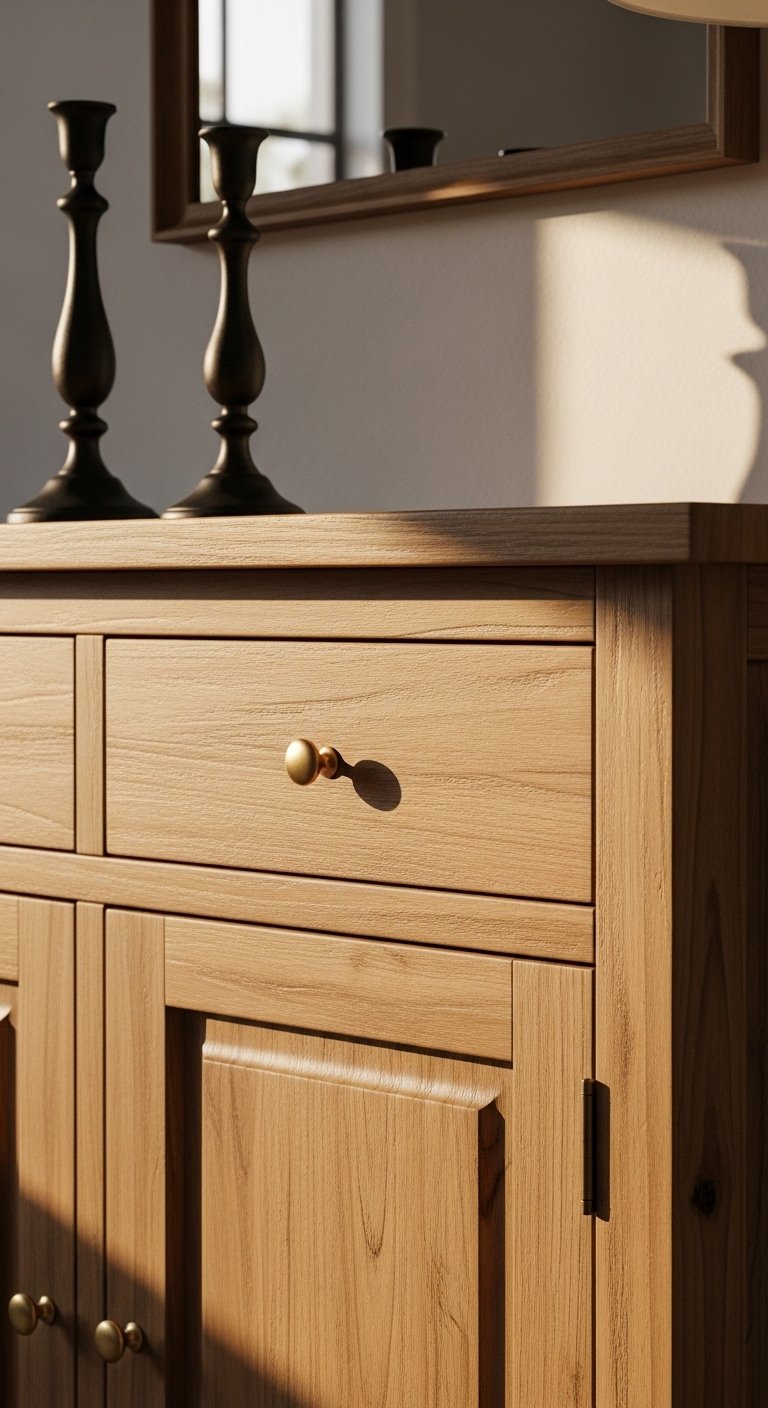
Chrome feels dated in farmhouse rooms. Swapping to matte brass warmed my oak pieces without looking fussy. I replaced pulls with matte-brass-cabinet-pulls which tied my lighting, hardware, and frames together. People often match every metal exactly. Instead, repeat metals in two or three spots across the room for a planned look. For renters, use adhesive-backed hooks and peelable pads to test finishes before committing.
Upholstered Bench Opposite Chairs for Balance
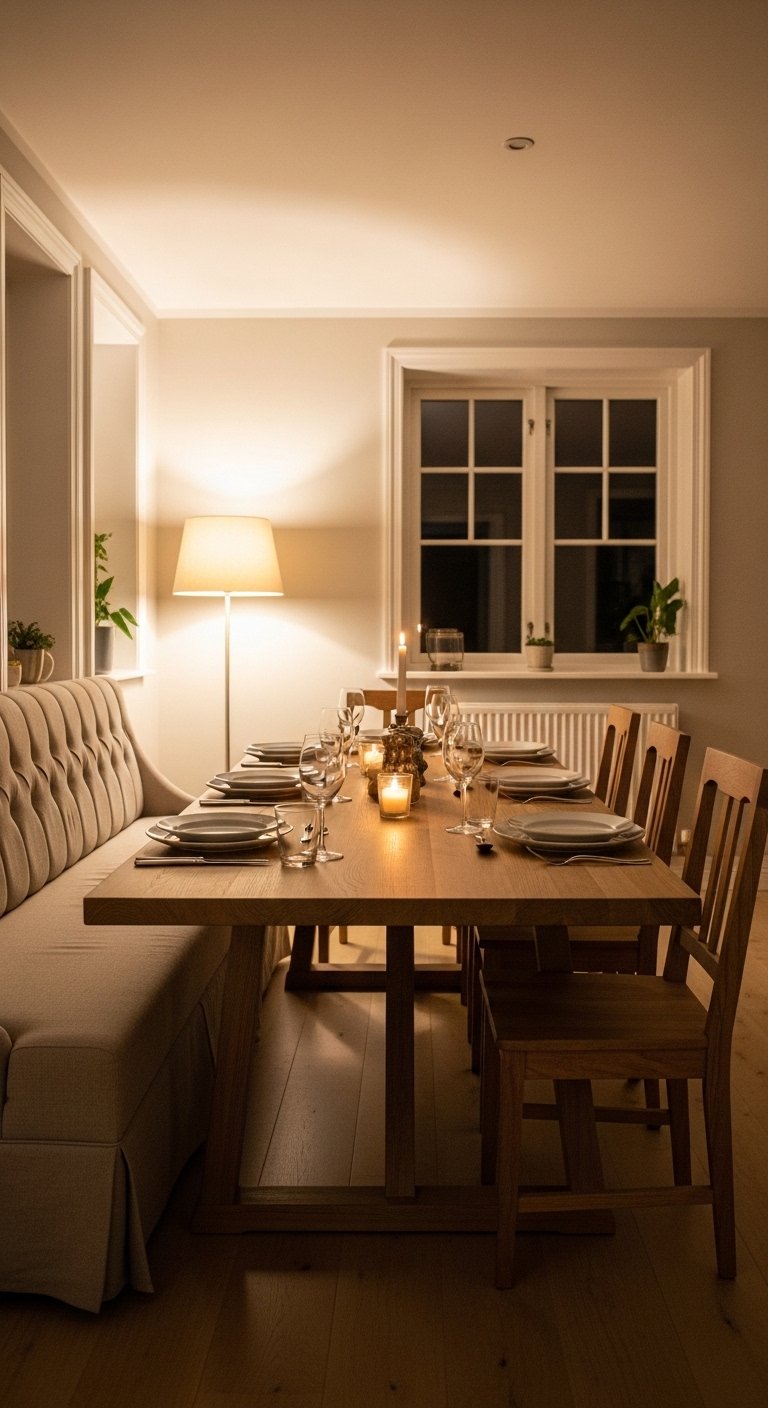
I added a bench to one side of my table because hard chairs were exhausting for long meals. A linen upholstered bench gives comfort without feeling formal. I went with a slipcovered linen-upholstered-bench-48-inch that washes easily. A common mistake is choosing a bench the same height as the table seat. Aim for bench seats 17-19 inches high for proper table ergonomics. This pairs nicely with open-back chairs from earlier to keep the room balanced.
Gallery Wall of Farmhouse Prints with Unified Frames
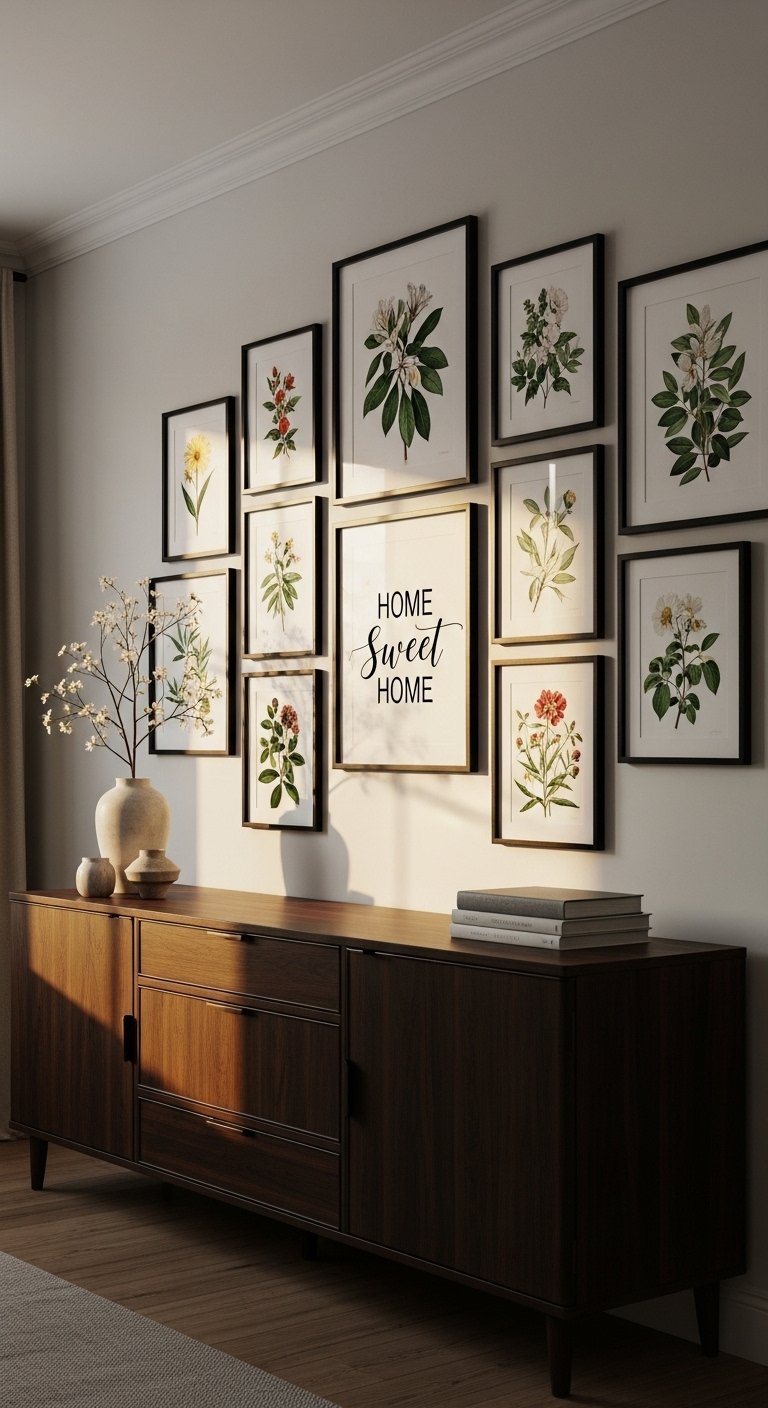
I used a gallery wall to stop a wide empty wall from feeling ignored. Gallery walls work best when frames repeat a finish. I chose matte black frames and printed botanicals that echo my table centerpiece. matte-black-picture-frames-set makes swapping art painless. A mistake is scattering different frame colors which looks messy. Use odd numbers of pieces and vary heights, but keep two frame colors max. For renters, hang with heavy-duty removable strips to avoid holes.
Sheer Curtains with Beams to Maximize Light
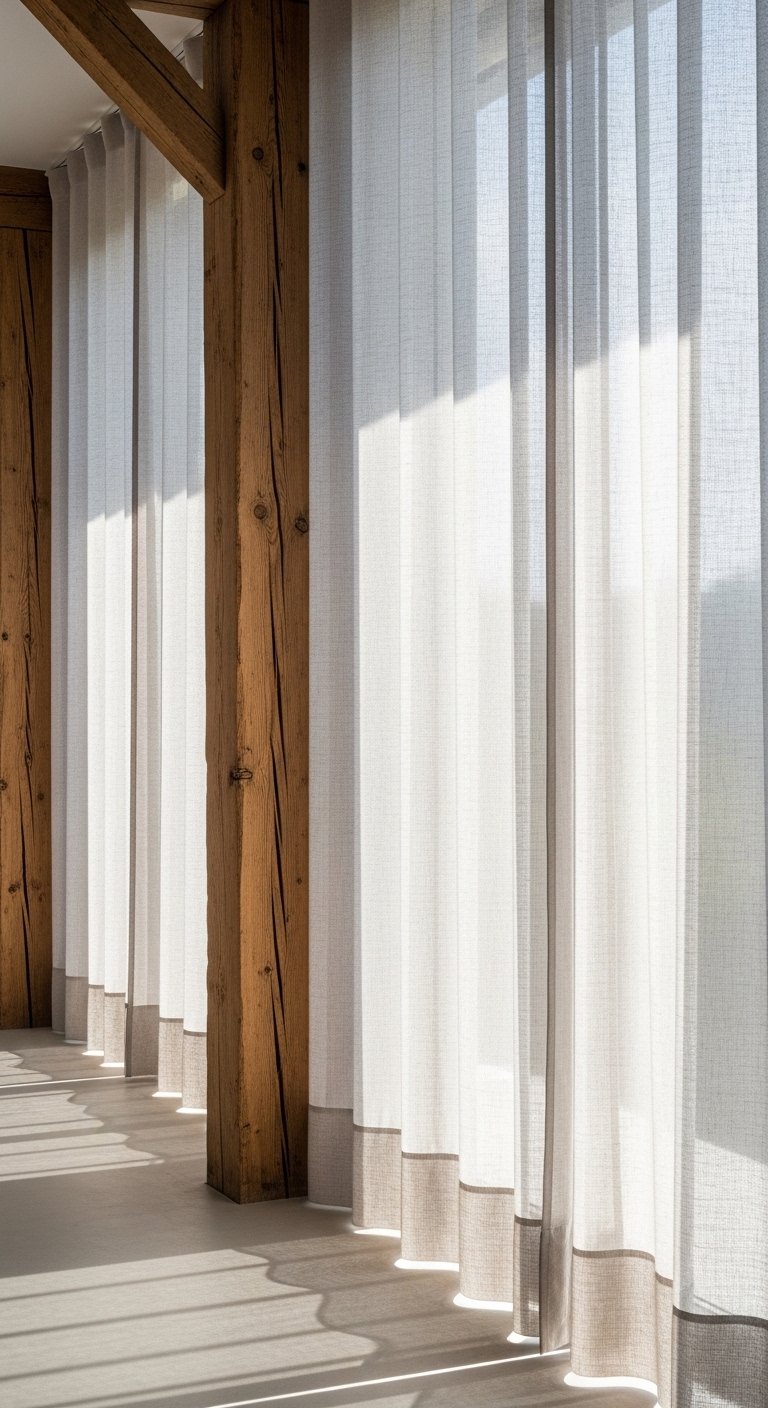
Most people hang curtains right at the window frame. That is why their rooms look shorter than they are. I moved rods up and chose 96-inch linen panels that kiss the floor to make the ceiling feel taller. 96-inch-linen-curtain-panels are budget friendly and renter safe with tension rods where needed. Avoid curtains that puddle unless you want that look. For 9-foot ceilings, 96 inches gives the right visual lift without overwhelming the space.
Rattan Pendant for Ceiling Texture in Open Dining
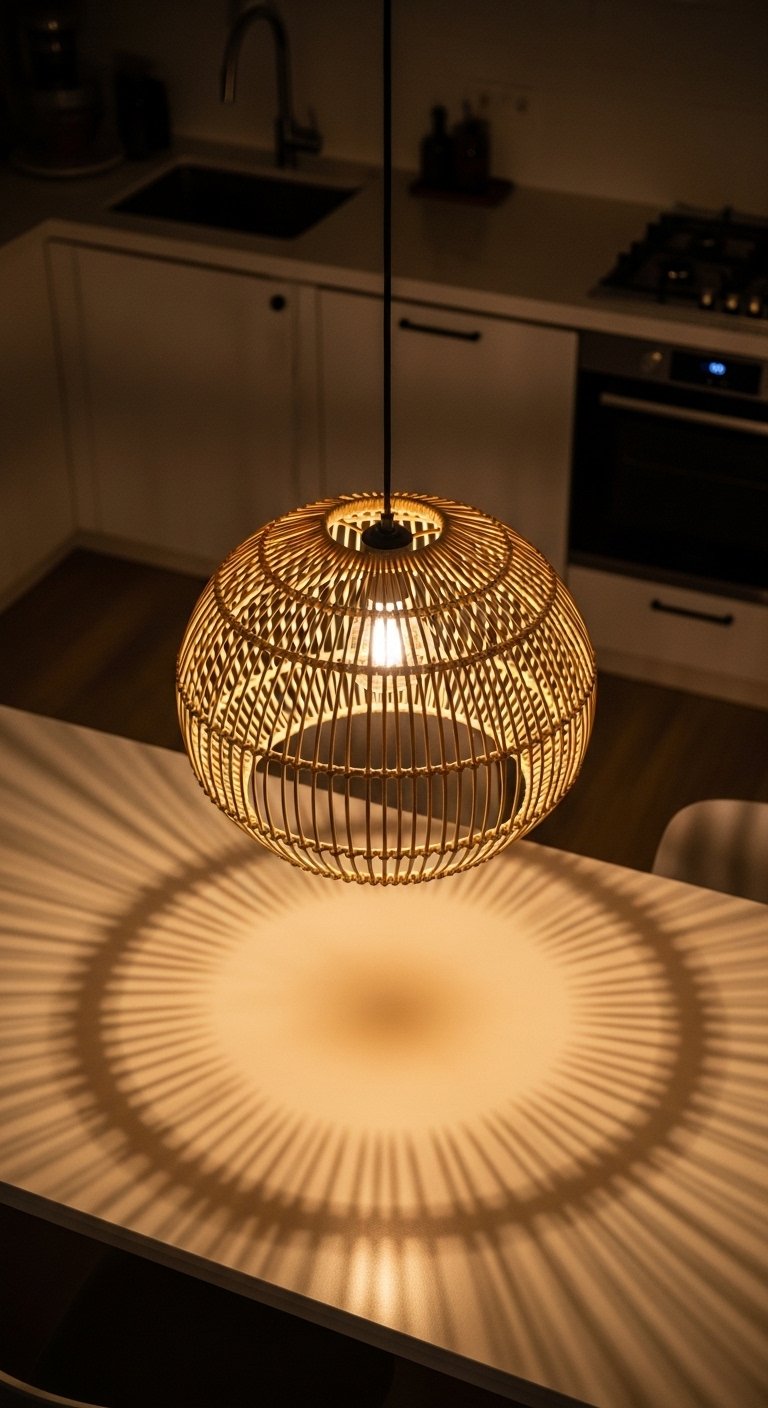
I added a rattan pendant when the ceiling felt like a blank plate. The texture echoes rattan chairs and draws the eye upward. I chose a 26-inch rattan-drum-pendant and hung it so it floats above the table without blocking sight lines. A frequent mistake is choosing a pendant too small. Aim for a shade one third to one half the table width. For renters, use a hook adapter that fits existing fixtures so you avoid ceiling work.
Mix Metal and Wood Repeats for Open-Concept Flow
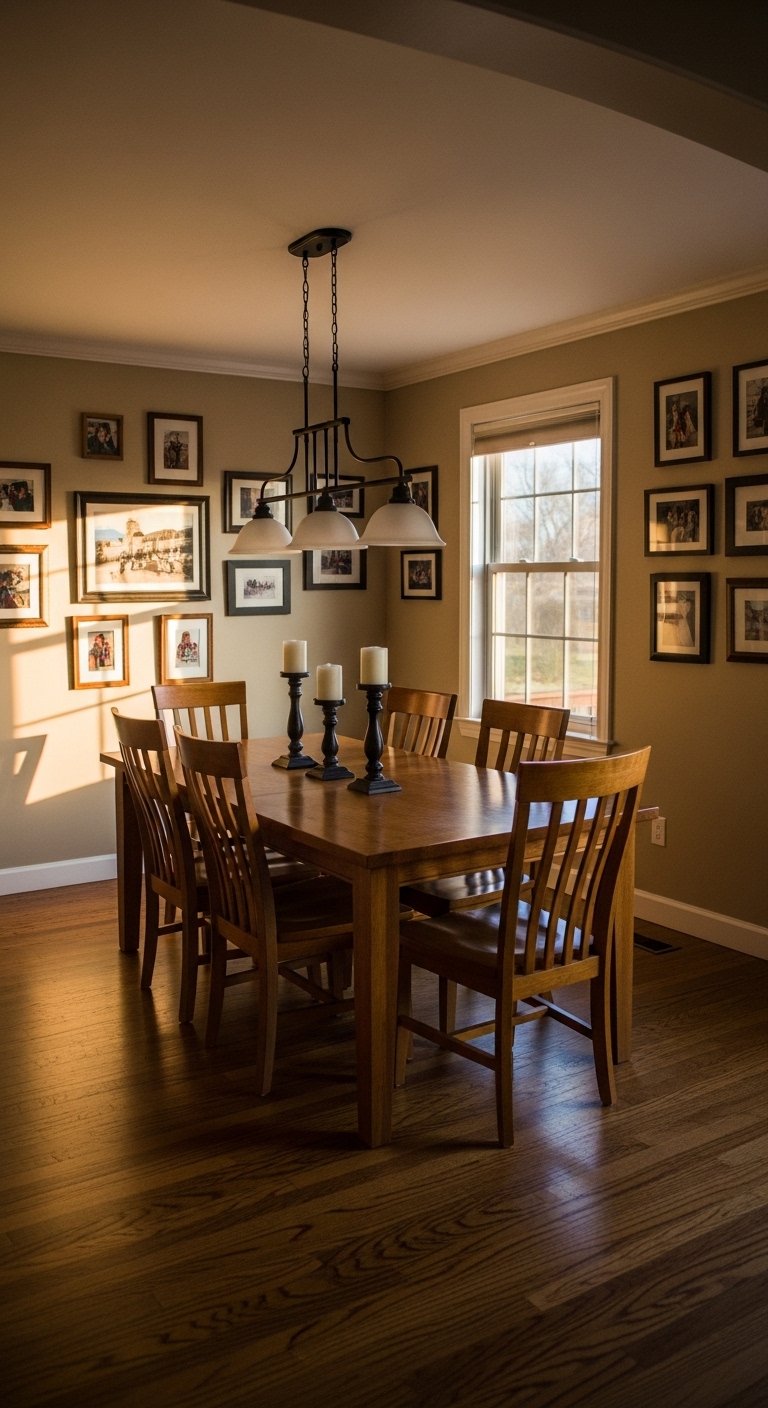
Open-plan dining felt chopped off until I started repeating two to three elements across rooms. Repeat wood tones, a brass accent, and a single woven texture to tie spaces together. I added mixed-metal-candle-holders across the table and living room shelf. A common oversight is not carrying at least one element into the adjacent room, which makes the dining feel like an island. For small spaces, pick one repeated element like the table tone and use it in shelving and frames.
Your Decor Shopping List
Textiles
- Honestly the best $40 I have spent. 22-inch-linen-pillow-covers in neutral tones for bench and window seat
- Chunky-knit-throw-blanket-cream (~$35) to layer on seating
- 8×10-jute-dining-rug (~$150) for anchoring tables
Wall Decor
- matte-black-picture-frames-set (~$40) for a unified gallery
- brass-picture-ledges (~$25) to swap art without nails
Lighting
- linen-drum-pendant-28-inch (~$120)
- rattan-drum-pendant (~$220) for ceiling texture
Budget Finds
- slat-back-dining-chairs (~$120 each)
- matte-brass-cabinet-pulls (~$15/set) to warm finishes
Plants and Greenery
- artificial-fiddle-leaf-fig-6ft for height where real care is impossible
Most of these have similar options at Target or HomeGoods if you prefer to feel before you buy.
Shopping Tips
White oak beats dark wood in 2026. Design feeds have shifted completely. These white-oak-floating-shelves look current, not dated.
Grab velvet-pillow-covers for $12 each. Swap them every few months and the whole room feels different.
Curtains should puddle or kiss the floor, never hang halfway up. 96-inch-linen-curtain-panels are right for standard 9-foot ceilings.
One large plant beats five small succulents. artificial-fiddle-leaf-fig-6ft fills a corner without the upkeep.
Frequently Asked Questions
Q: What size rug do I actually need for dining?
A: Bigger than you think. For a standard dining area, go 8×10 minimum so at least the front table legs sit on the rug. 8×10-jute-dining-rug is a tough neutral if you want low fuss.
Q: Can I mix boho textiles with modern furniture without it looking messy?
A: Yes. Repeat two to three elements like wood tone, a metal finish, or a woven texture and keep most colors neutral. Use odd numbers for tabletop accessories so it reads intentional.
Q: How do I make a small dining nook feel larger?
A: Raise rods and hang floor-length curtains, use open-back chairs to let light pass, and keep one large rug that extends beyond the table. slat-back-dining-chairs help the room breathe.
Q: My kid and dog destroy fabric quickly. What textiles hold up?
A: Choose rattan or leather-look chairs near the table and washable linen slipcovers for the bench. Low-pile jute rugs are surprisingly durable when paired with a machine-washable rug pad.
Q: Should I match my metals or mix them?
A: Mix them. Repeat a primary metal in two or three places and add a secondary metal as an accent. matte-brass-cabinet-pulls are a good starting point.
Q: Are faux plants acceptable in dining rooms?
A: Both real plants and faux work. Use a live snake plant in low-light spots and an artificial-fiddle-leaf-fig-6ft where height is needed but care is not possible.