
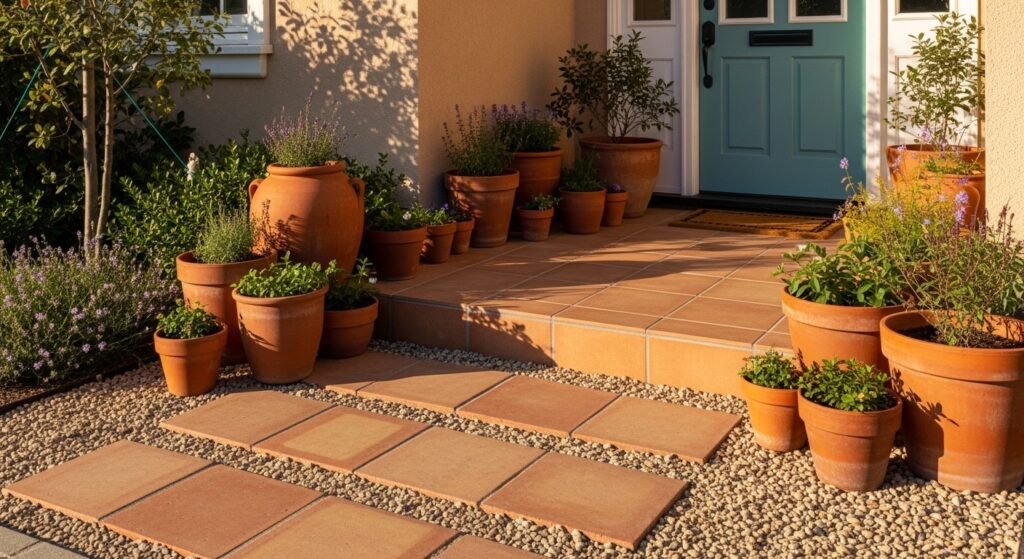
My living room had nice furniture and decent lighting but it still felt like a waiting room. Took me embarrassingly long to figure out it was missing texture. Every surface was smooth, every color was flat, and nothing invited you to actually sit down. I treated the front yard the same way for years until a row of terracotta pots and a gravel-lined tile path actually made the whole house feel intentional.
These ideas lean warm Mediterranean meets modern cottage. Most installs sit in the $100 to $500 neighborhood but there are plenty of $30 swaps. Works for small urban front porches, wide suburban lawns, and anything in between that needs better structure and less mud.
Mediterranean Tile Pathway to the Door
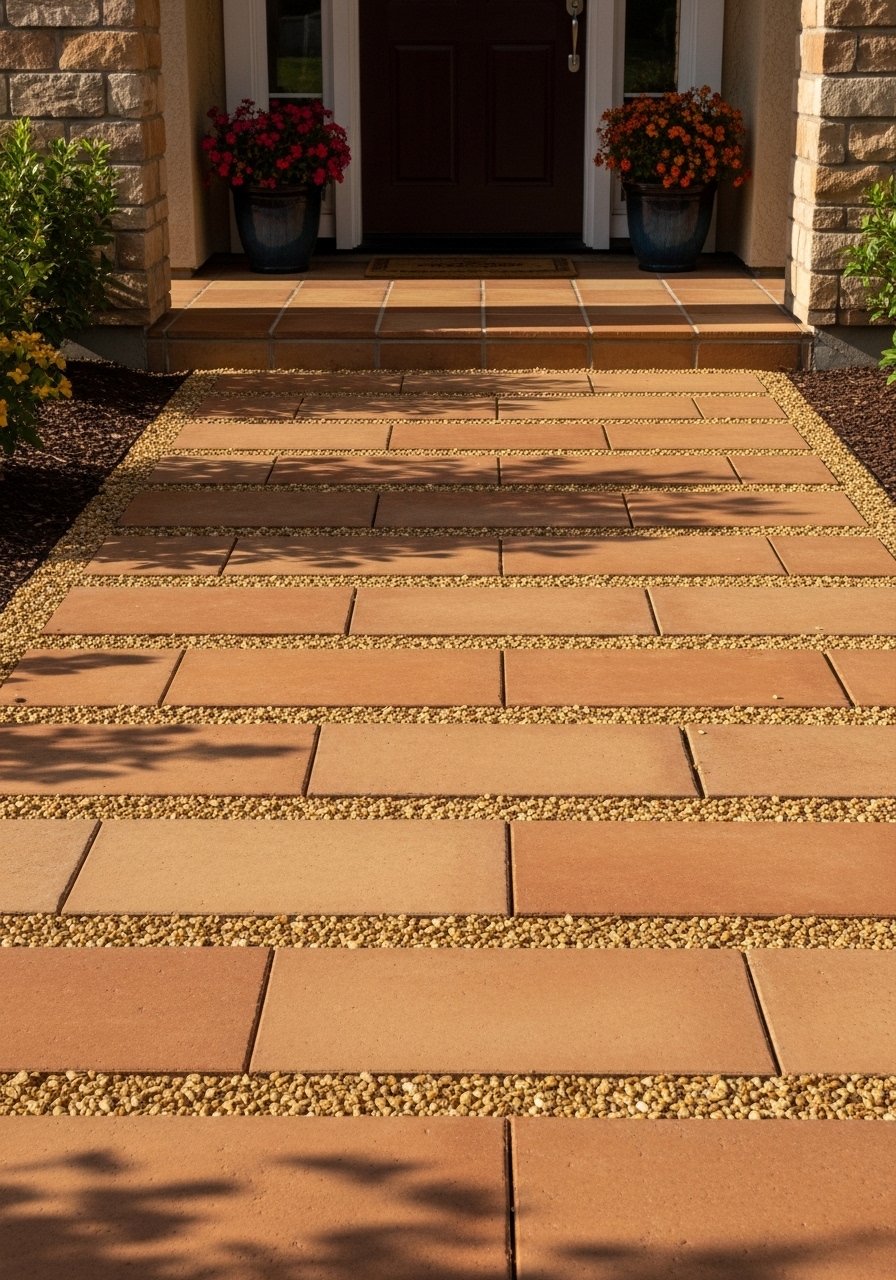
The pathway is the first handshake with your home. Lay 12×12 terracotta tiles spaced 1 to 2 inches and fill the gaps with golden gravel so rain drains instead of turning it into a muddy mess. I split a 70/30 tile to gravel ratio on my entry which cut cost and looked lived-in fast. If you worry about tiles cracking, search for frost-resistant options or use smaller pavers. I used terracotta tile 12×12 for the main run and edged the bed with golden pea gravel so the path never turns into a cleaning chore.
Vertical Terracotta Pot Ladder for Narrow Yards
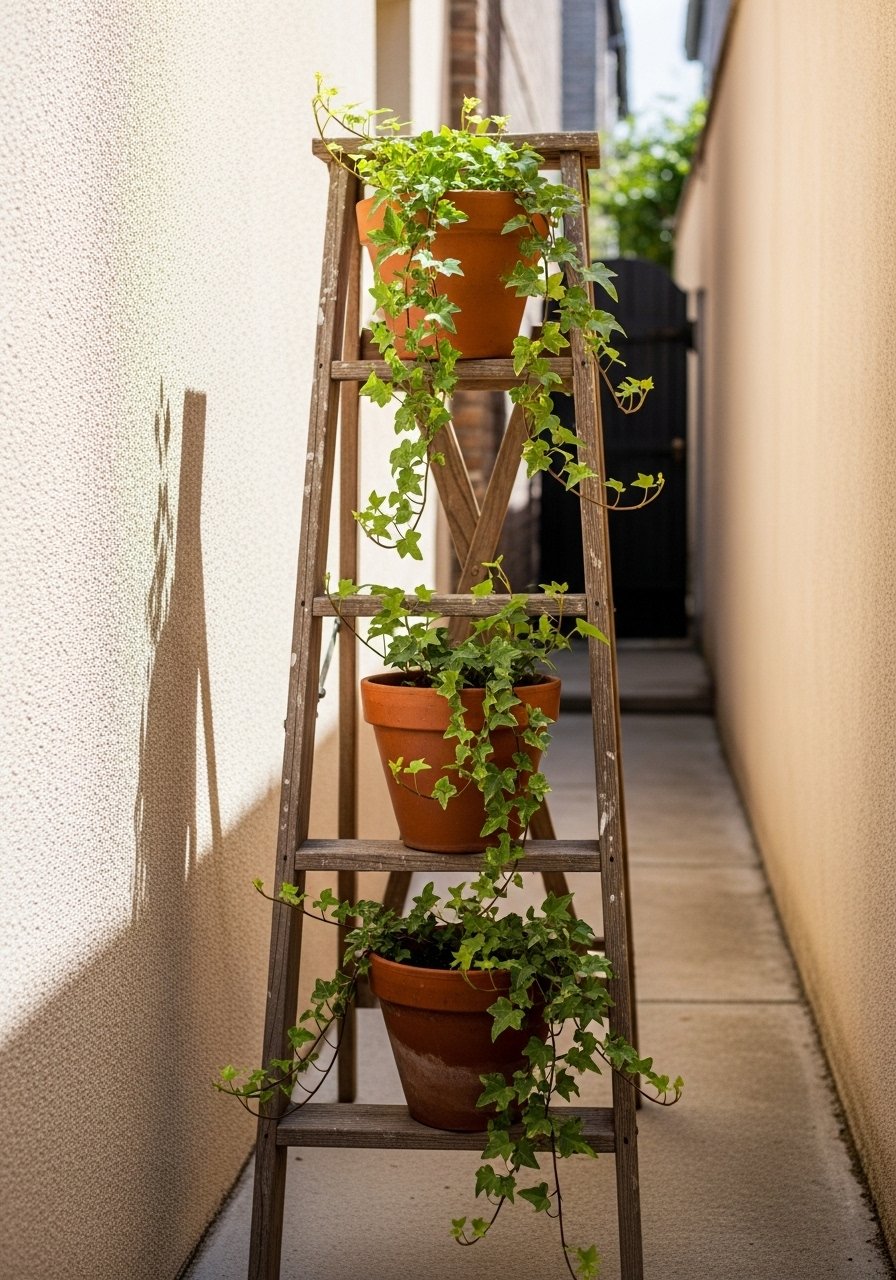
Small yards need up, not out. I built a freestanding ladder and stacked three to five terracotta pots on the steps to free floor space while drawing the eye up. Group pots in odd numbers and vary heights so it reads natural. For renters, the ladder is perfect because nothing is drilled into siding. I used unglazed terracotta pots set and weighted the bottom pot with gravel so a dog does not tip the whole stack. One mistake is crowding the ladder with plants that need full sun on top and shade on bottom. Plan plant placement first.
Terracotta-Edged Gravel Entry Zone
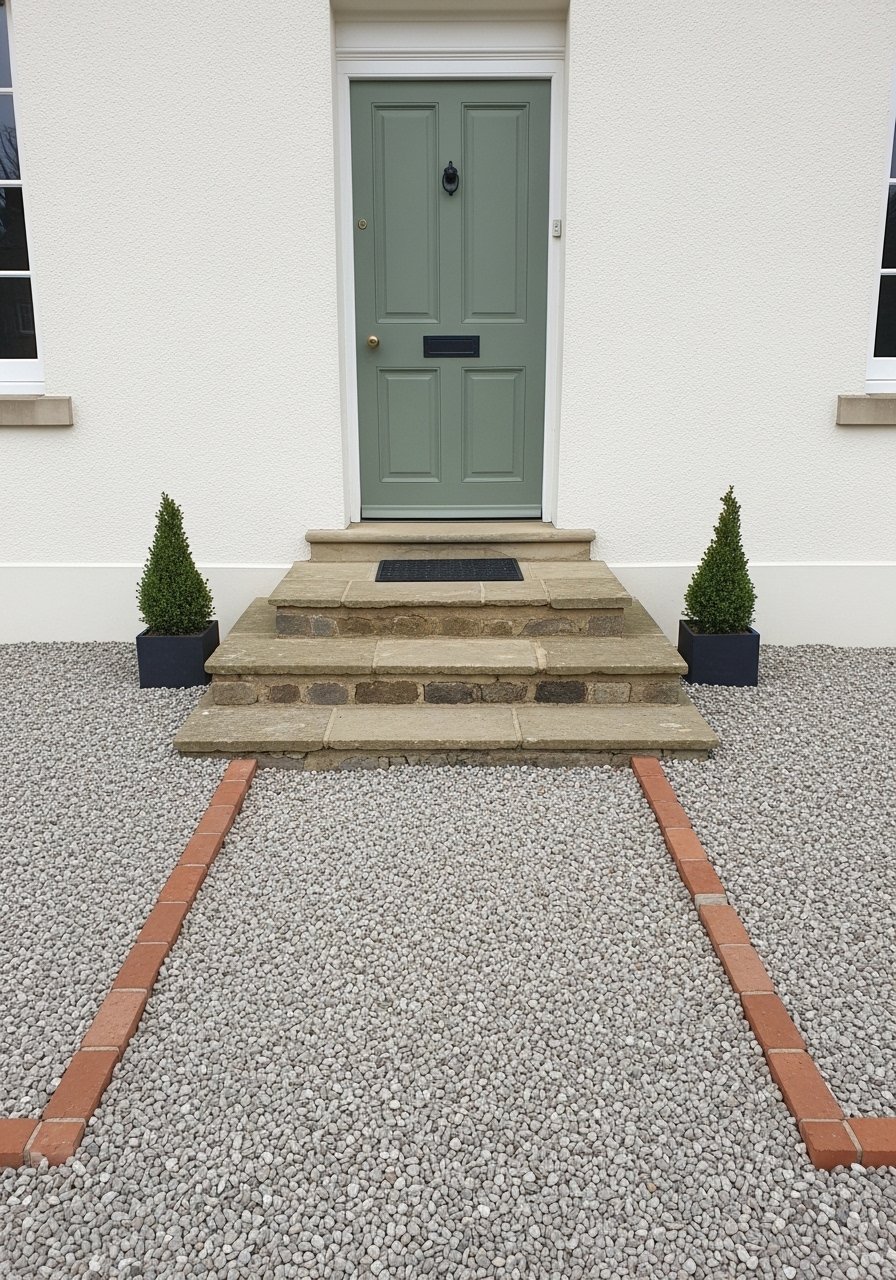
If your front lawn ends up patchy no matter what you plant, frame the soil. A 4 to 6 inch terracotta brick border around a gravel entry zone keeps mulch and gravel in place and makes the doorway read intentional. This is my go-to when budgets are tight because it hides uneven grass and feels finished for under $250. For renters skip mortar and stake the edging so it can be removed. I like terracotta edge bricks paired with decorative gravel. The common mistake is laying the border too low so it disappears under mulch. Keep it proud of the soil line.
Terracotta Firepit Base That Handles Heat

A firepit looks like it belongs when it sits on a proper base. Give the pit a minimum 8 by 10 foot terracotta tile area so the feature does not look like it is floating. Terracotta holds up to heat better than many painted pavers and the warm tones echo the flames. My rule was to pick textured pieces and leave 1 inch gaps for gravel so water does not pool. If you rent, use a portable fire bowl on a tile mat instead. I used a set of heat-resistant terracotta slabs. One wear note is sealing the tiles in year two to stop moss in shady climates.
Oversized Herb Pots on a Wall for Front Porches
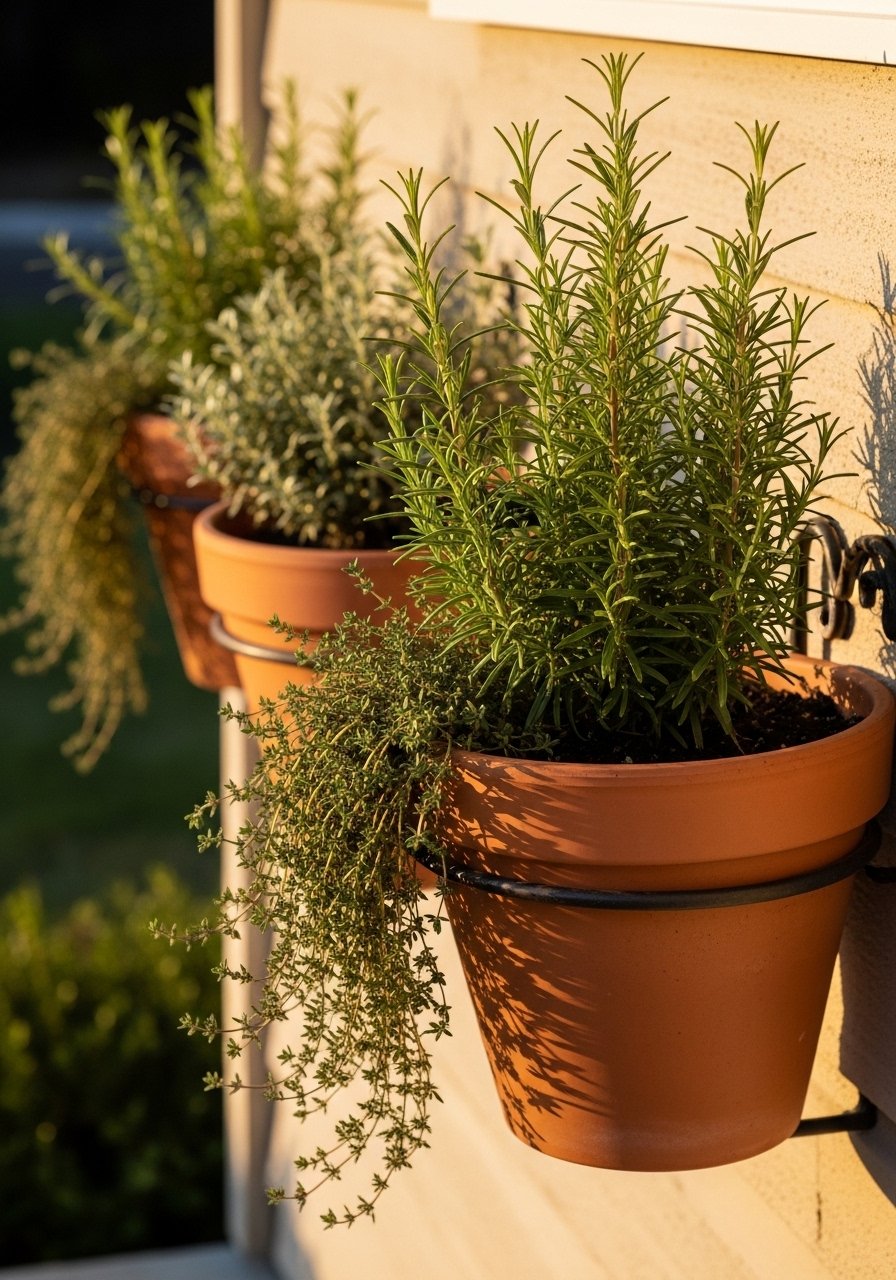
Herbs make a front porch both useful and pretty. Hang three large terracotta pots on a fence or use freestanding brackets if drilling is off limits. Plant rosemary, thyme, and a trailing oregano so you get height and ground cover in a small footprint. I recommend 20-inch pots and group them in threes for balance. For renters use heavy-duty command-style hooks rated for outdoor use rather than screwing into the trim. I sourced large terracotta planters and paired them with rosemary starter plants. A mistake I made once was mixing water needs in the same pot, which led to one plant dominating.
Breeze Block Screen with Terracotta Accents
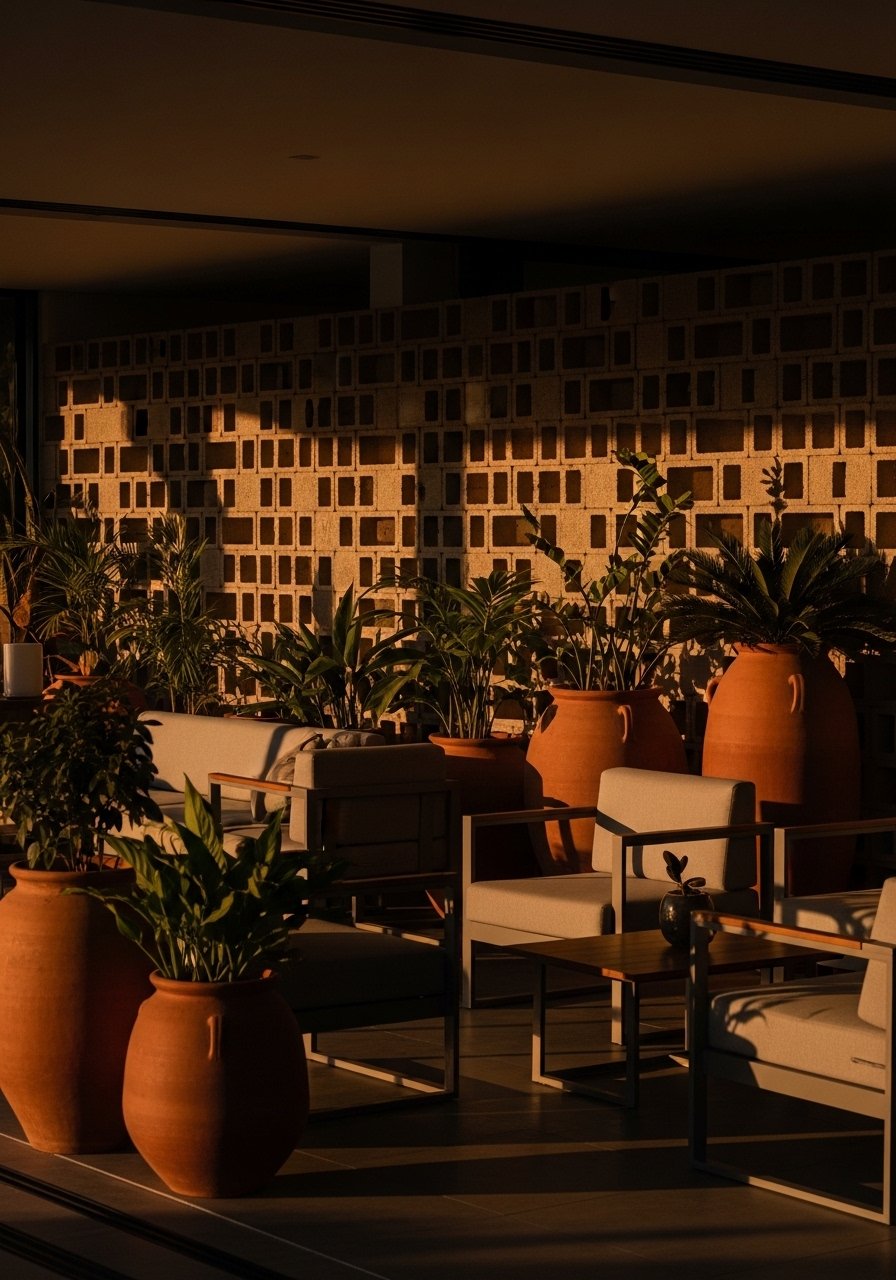
If your front yard feels exposed, carve a lounge zone with stacked breeze blocks and terracotta accents for a modern farmhouse vibe. Make freestanding stacks to keep it renter-friendly and plant low spillers in pots behind the screen. I used terracotta pots as repeat elements to soften the concrete texture. A smart formula is a 4 to 6 inch terracotta border at the base to visually tie the blocks to the ground. I bought breeze blocks and matched them with medium terracotta pots. Avoid building a solid wall that cuts air flow and makes the spot feel claustrophobic.
Sculptural Branch Focal in a Big Terracotta Pot
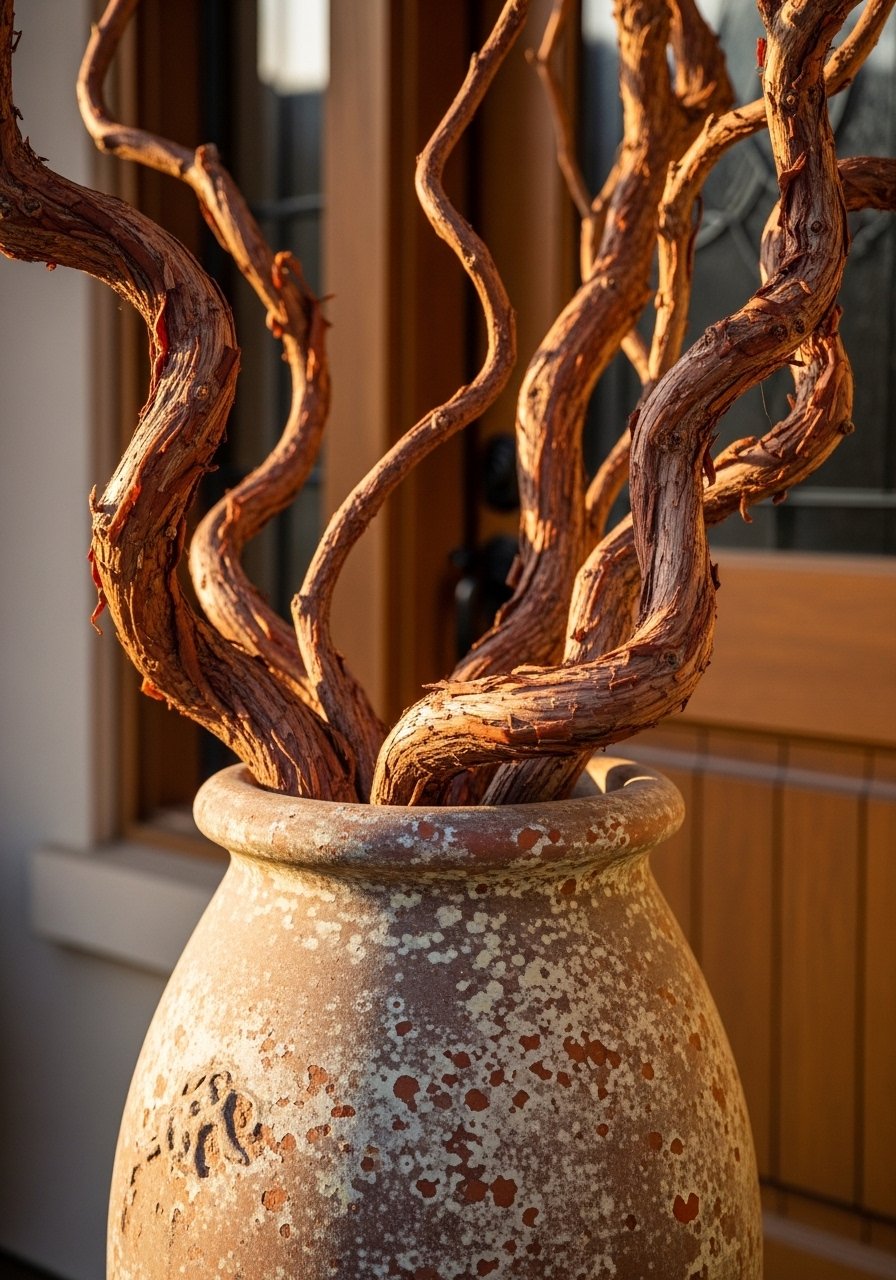
Sometimes the simplest fix is height without water. A single oversized pot with sculptural branches grounds an entry and offers drama without maintenance. I use a 24-inch pot and three main branches so the silhouette reads intentional. It works best next to a bench or mailbox rather than centered, which can look staged. For a renter-friendly option use a heavy ceramic pot filled with gravel for weight. I recommend large terracotta urns and manzanita branches bundle. A common mistake is picking too many branches and blocking sightlines to the doorbell.
Mixed Tile and Gravel Drive Apron for Softer Edges
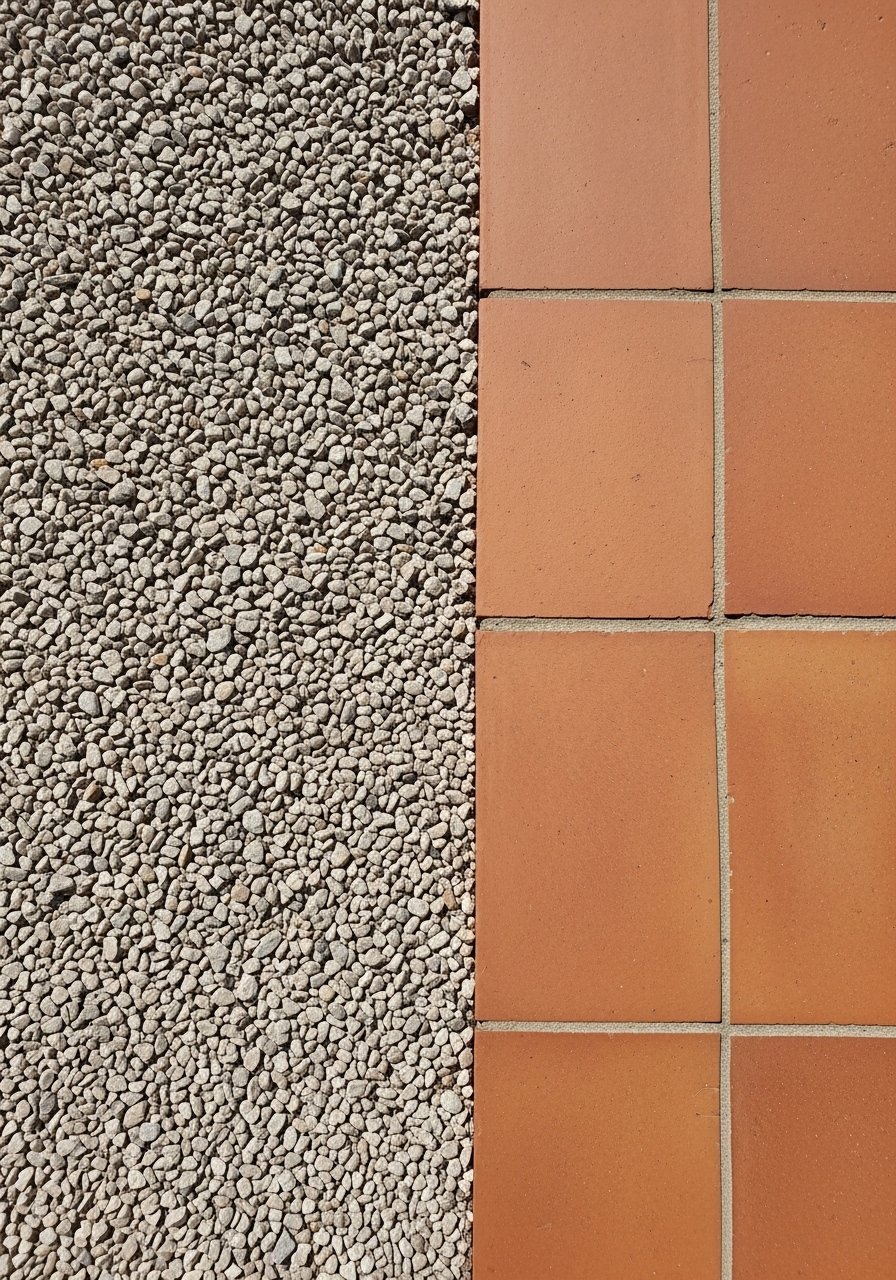
Concrete driveways feel harsher than they need to. Border the apron with terracotta tiles and fill between with gravel to soften the edge and reduce runoff. On my house I used a 70 percent tile to 30 percent gravel blend to keep costs down while maintaining a walkable surface. This also hides oil stains better than plain concrete. If you have a small dog, pick tiles with a non-slip texture. I grabbed terracotta driveway tiles and all-weather edging gravel. Avoid tiles that are too smooth in wet climates or they will get slick.
Layered Pot Cluster Under Front Windows
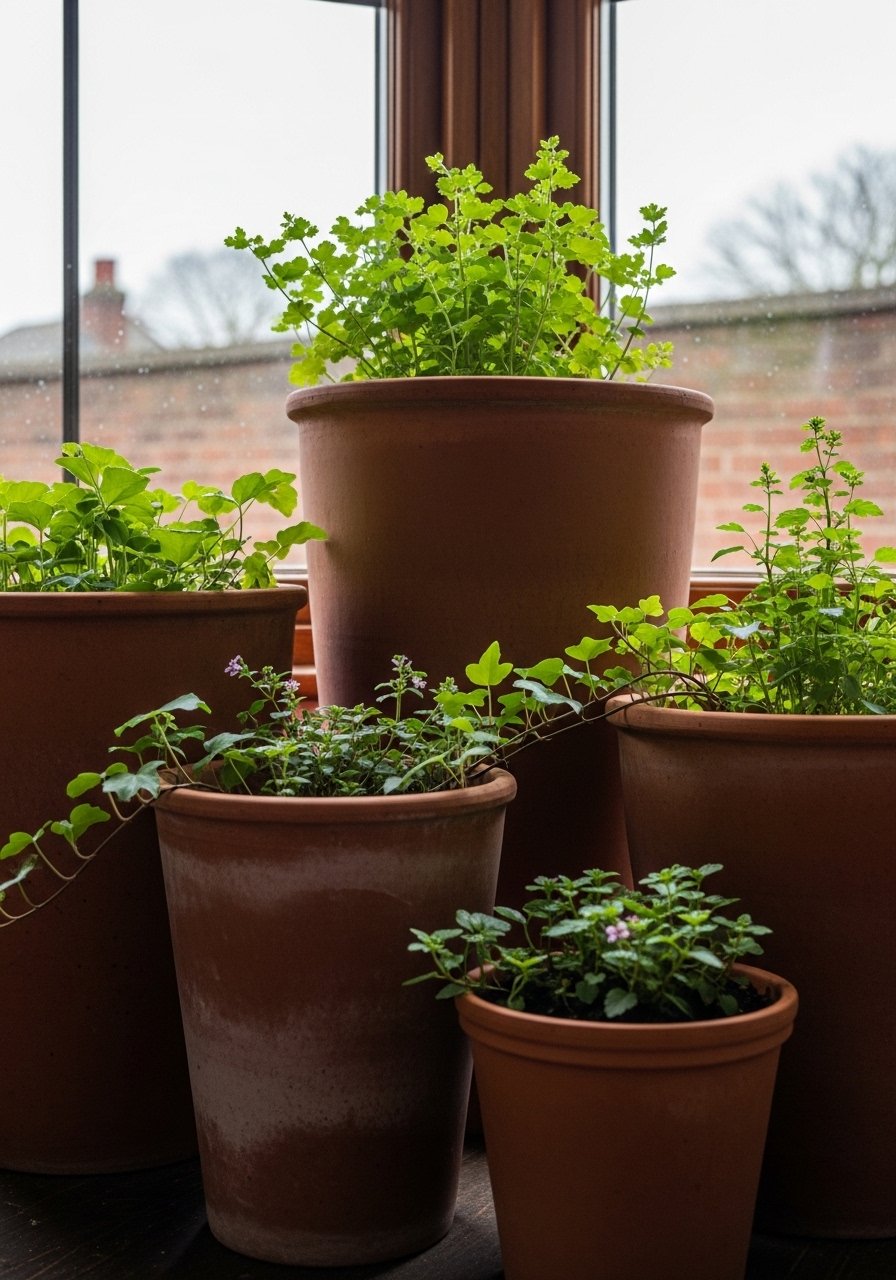
Front windows love a planted base. Cluster five terracotta pots in odd numbers and mix heights so light from the windows is not blocked. I used 8 to 14 inch pots and staggered them so each plant has breathing room. This approach softens a rigid facade and looks especially good with a painted sill. For renters use moveable trays so you can swap pots seasonally. My go-to pots were mixed size terracotta planters paired with hardy perennials. A mistake is matching every pot exactly which ends up looking staged rather than layered.
Half-Round Terracotta Edging for Flower Beds
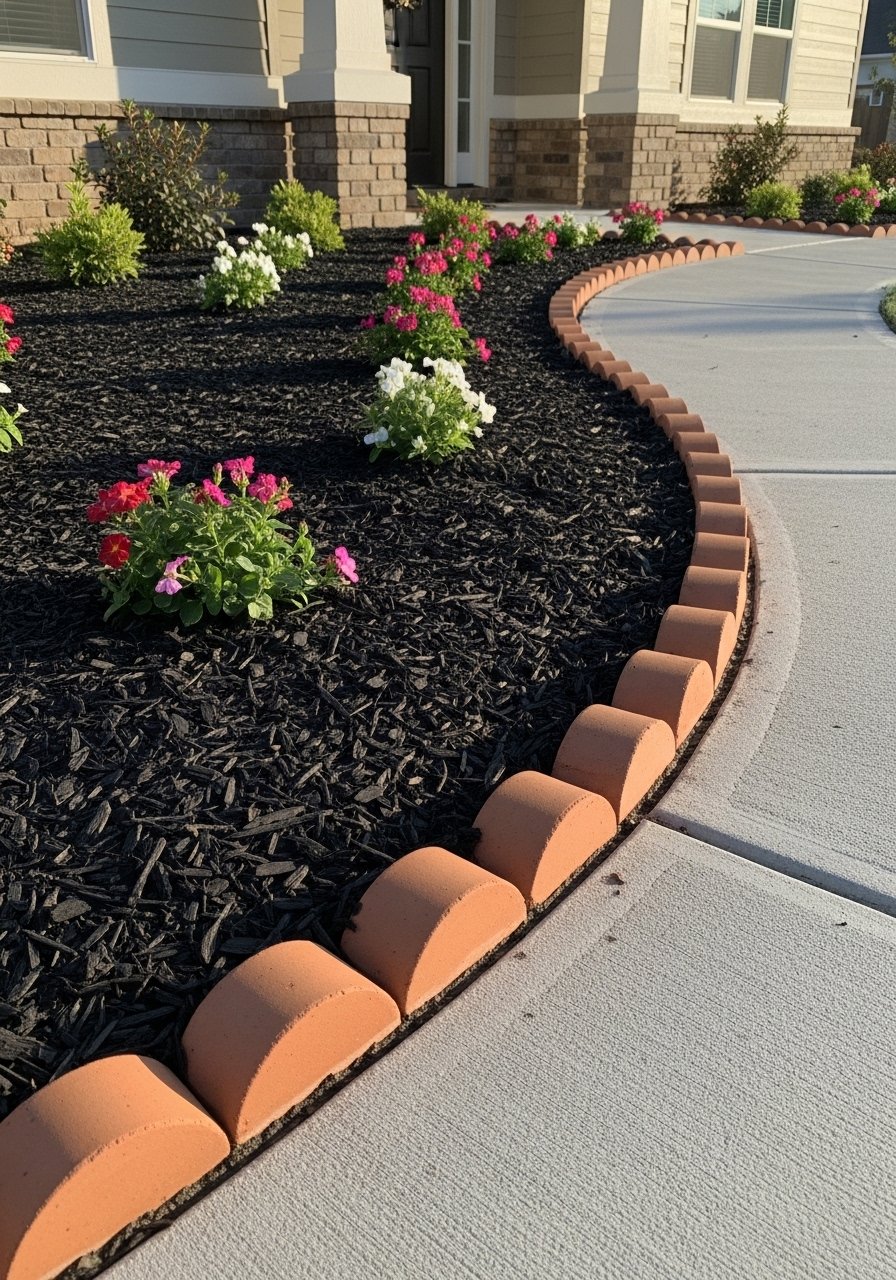
Want a neat bed without constant touch-ups? Half-round terracotta edging at 4 to 6 inches keeps mulch and soil from spilling and gives beds a classic cottage look. I install edging slightly proud of the soil so it does its job through the rainy months. For renters use freestanding edging that sits without mortar. I used half-round terracotta edging and refreshed the gravel once a year to keep it crisp. The small detail most people skip is sealing the top edges where water can wear the bricks fastest.
Inset Pots Along a Straight Path
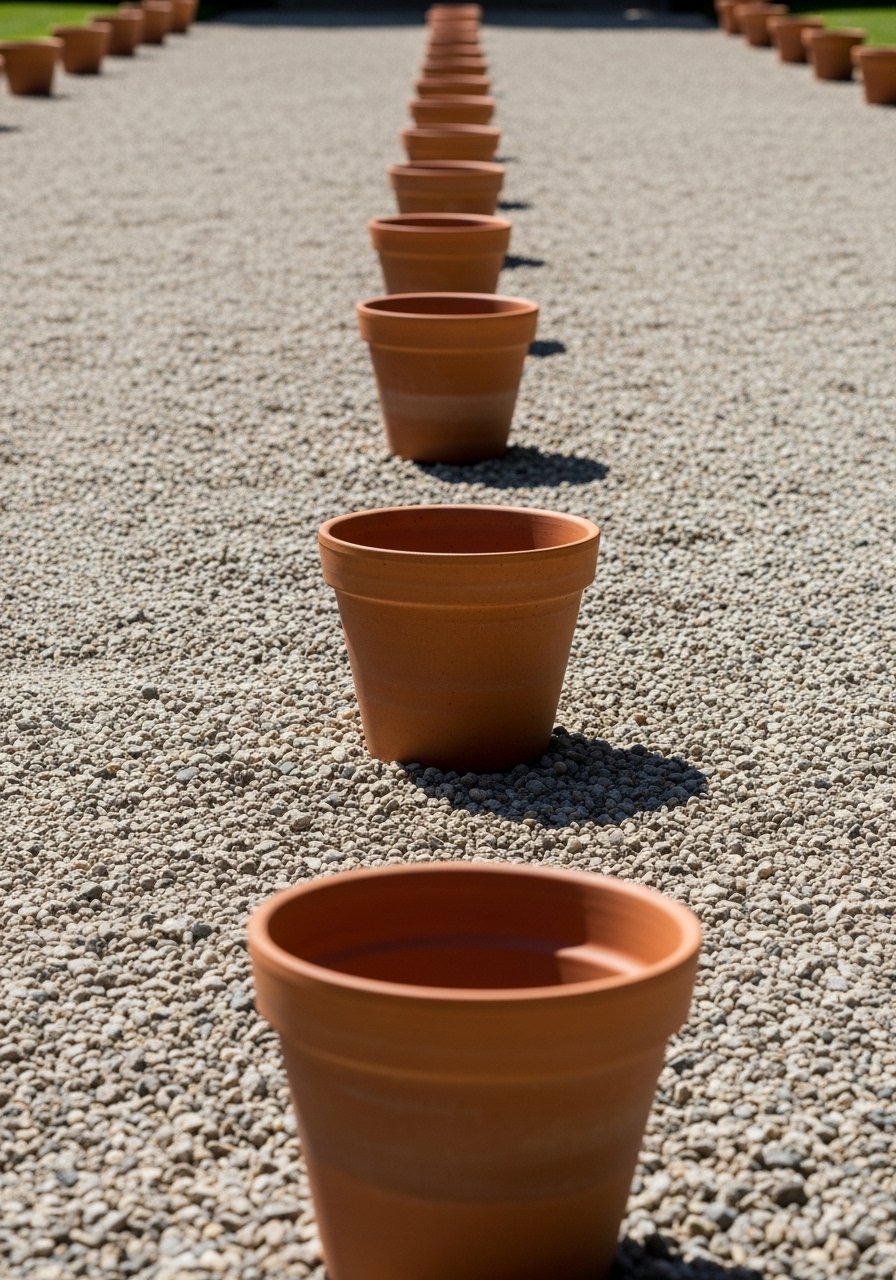
Break up long straight walks by embedding single terracotta pots into the path rhythm. A pot every 6 to 8 feet feels intentional without cluttering. I like using spillers like trailing petunias so each pot visually links to the next. One trick is to recess the pot slightly so it reads integrated and not slapped on. I used 12-inch terracotta planters and picked lightweight mixes for easy seasonal swaps. Avoid lining the path too closely to the house where watering can cause splashes on siding.
Terracotta Stepping Stones Through the Lawn
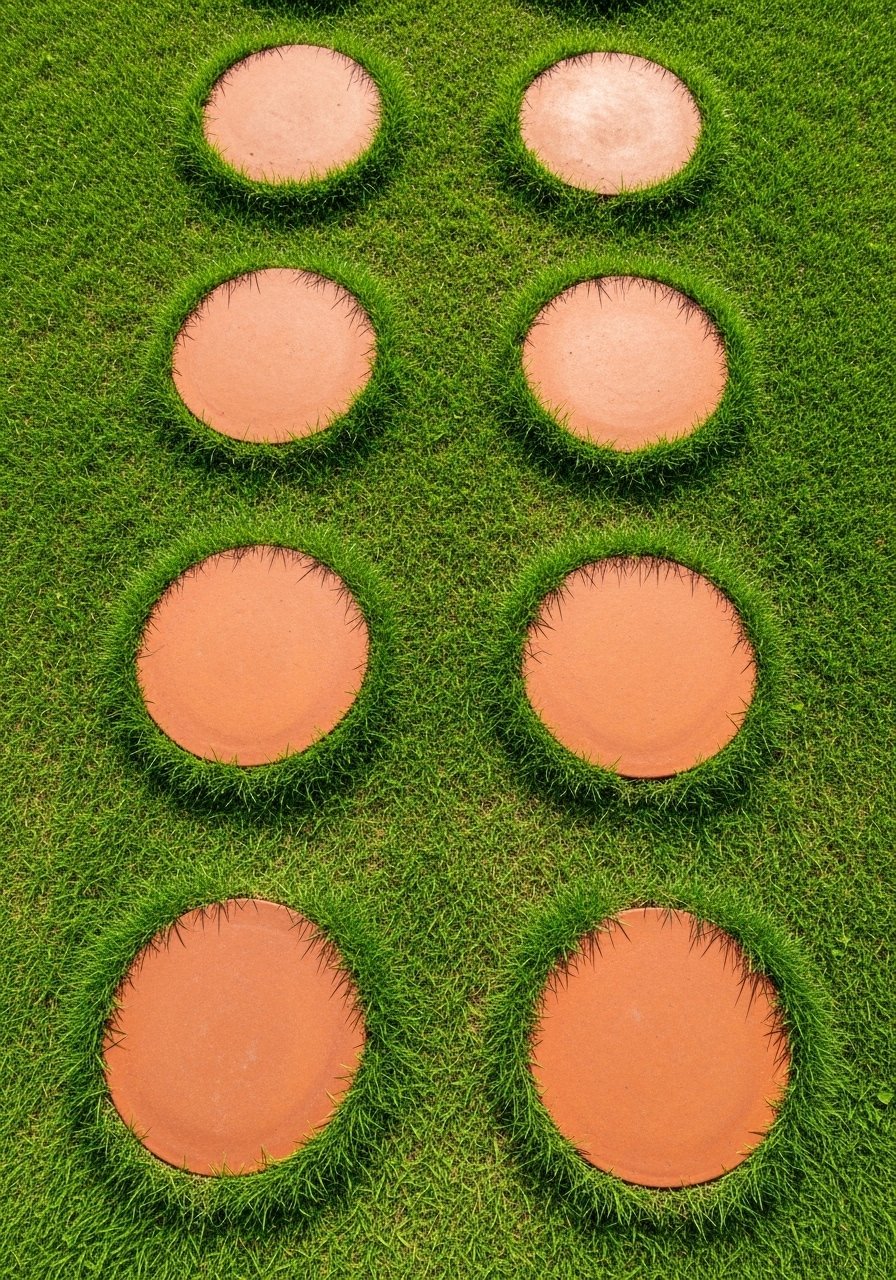
When you want a casual route across grass, use 18 by 18 inch terracotta stepping stones spaced about 2 feet apart from center to center. They pop against green and avoid the full cost of a paved path. I left a little soil rake around each to prevent sinking and filled gaps with golden gravel for drainage. For renters these stones are liftable at will. I sourced terracotta stepping stones. A common mistake is spacing them for racing strides instead of a natural stroll, which makes walking awkward rather than charming.
Low-Maintenance Potted Porch Display for Renters
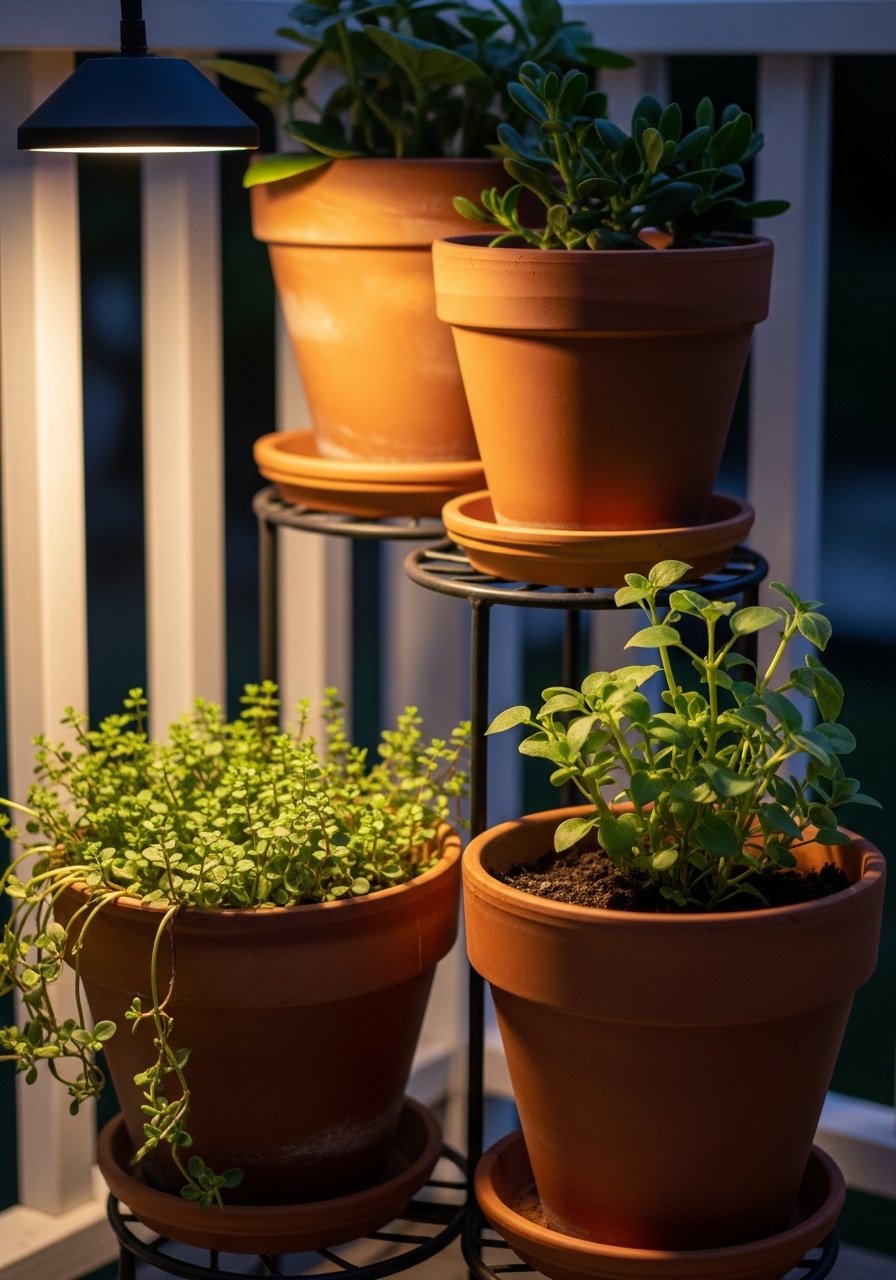
If you rent and cannot dig, a tiered plant stand with terracotta pots gives impact without permission forms. Use three pots on a stand next to the door, pick drought-tolerant plants, and anchor the bottom pot with gravel so wind does not tip the whole setup. I spent under $100 on a stand and pots and it instantly hid scuffs on the porch. I recommend tiered plant stand and drought-tolerant mixed plants. The small detail to watch is scale, pick pot sizes proportionate to the door so nothing looks swallowed.
Your Decor Shopping List
Textiles and Soft Touches
- Honestly the best $40 I have spent. Outdoor seat cushions, set of 2 in neutral tones for porch benches
- Woven outdoor runner 2×8 (~$45), looks like a rug but handles dirt
Planters and Pots
- Unglazed terracotta pots, mixed pack in 8, 12, 20 inch sizes
- Large terracotta urn 24-inch for sculptural branches
Hardscape Basics
- Terracotta tile 12×12 for pathways
- Golden pea gravel 50lb bag for gaps and drainage
Tools and Extras
- Landscape edging spikes, pack of 20 to hold borders without mortar
- Outdoor plant stands, foldable for renter-friendly displays
- Weatherproof sealant for terracotta to prevent moss in year two
Similar at Target or HomeGoods for quick swaps on cushions and small pots.
Shopping Tips
White oak beats dark wood in 2026. Design feeds have shifted completely. These white oak floating shelves look current, not dated.
Grab unglazed terracotta pots in multiples. Weight them with gravel and you reduce tipping by pets.
Curtains should puddle or kiss the floor, never hang halfway up. These 96-inch linen panels are right for standard 9-foot ceilings and they look intentional.
Lead with one big plant not five small ones. A faux fiddle leaf fig 6ft gives instant height if you cannot keep live plants alive.
Pick frost-resistant or glazed options in colder climates and seal terracotta in year two with outdoor terracotta sealant.
When in doubt about scale, measure your door width and aim for 3 to 5 foot wide path runs so nothing reads too skinny or oversized.
Frequently Asked Questions
Q: Will terracotta tiles crack in winter?
A: They can if they are not frost-rated. Pick frost-resistant or glazed tiles and leave 1 to 2 inch gaps filled with gravel so water can escape. Also apply an outdoor sealant in year two to slow moss and wear.
Q: How do I keep pots from tipping if I have a dog?
A: Weight the bottom with gravel, pick wider-based pots, and use plant trays under pots to stop scratches. I recommend anchoring the largest pot with a 10 pound bag of pea gravel before planting.
Q: Are terracotta paths right for renters?
A: Yes, when you use freestanding elements. Use potted paths, a ladder of pots, or removable edging rather than digging in. The tiered plant stand trick is a renter-friendly way to get the same look.
Q: How do I avoid mud after rain with terracotta paths?
A: Space tiles 1 to 2 inches and fill gaps with golden gravel. That detail makes the path drain fast and prevents the muddy footprints every guest hates. Most folks keep front yard fixes around $300 to $500 so this is an affordable fix.
Q: What scale should I use next to a small front window?
A: Group pots in odd numbers and stagger sizes, think 8, 10, 14 inch range. Over half pick earth tones like terracotta now so the colors will read deliberate. Terracotta paths are blowing up this year so pairing a small tiled patch with window pots keeps the look modern.