
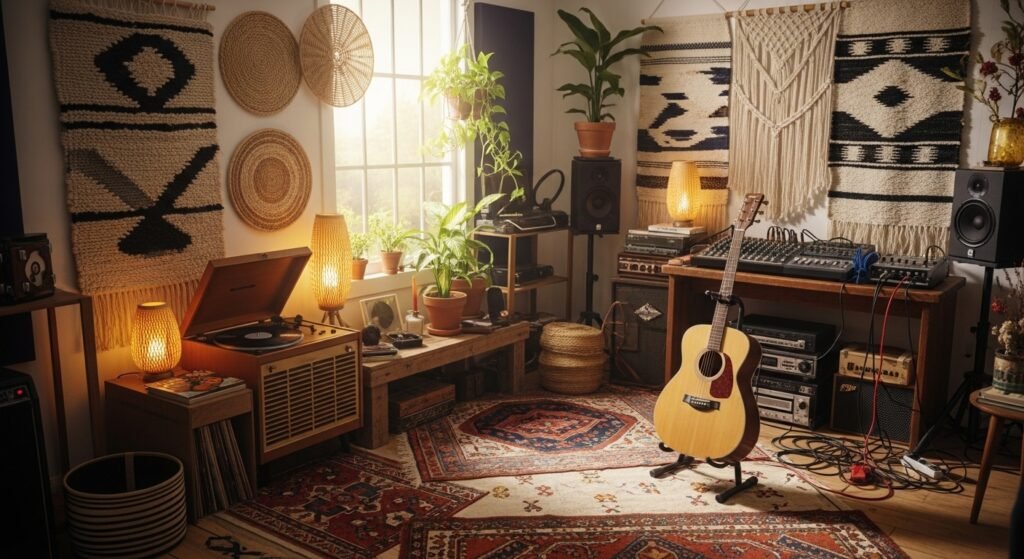
My living room had nice furniture and decent lighting but it still felt like a waiting room. Took me embarrassingly long to figure out it was missing texture. Every surface was smooth, every color was flat, and nothing invited you to actually sit down.
These ideas lean chill boho with a slightly vintage record-room vibe. Most items range from budget-friendly under $50 to a few pieces around $100 to $200. They work for a dedicated studio, a corner of the living room, or a bedroom music nook that needs warmth and better acoustics.
Layered Rugs for Sound and Style
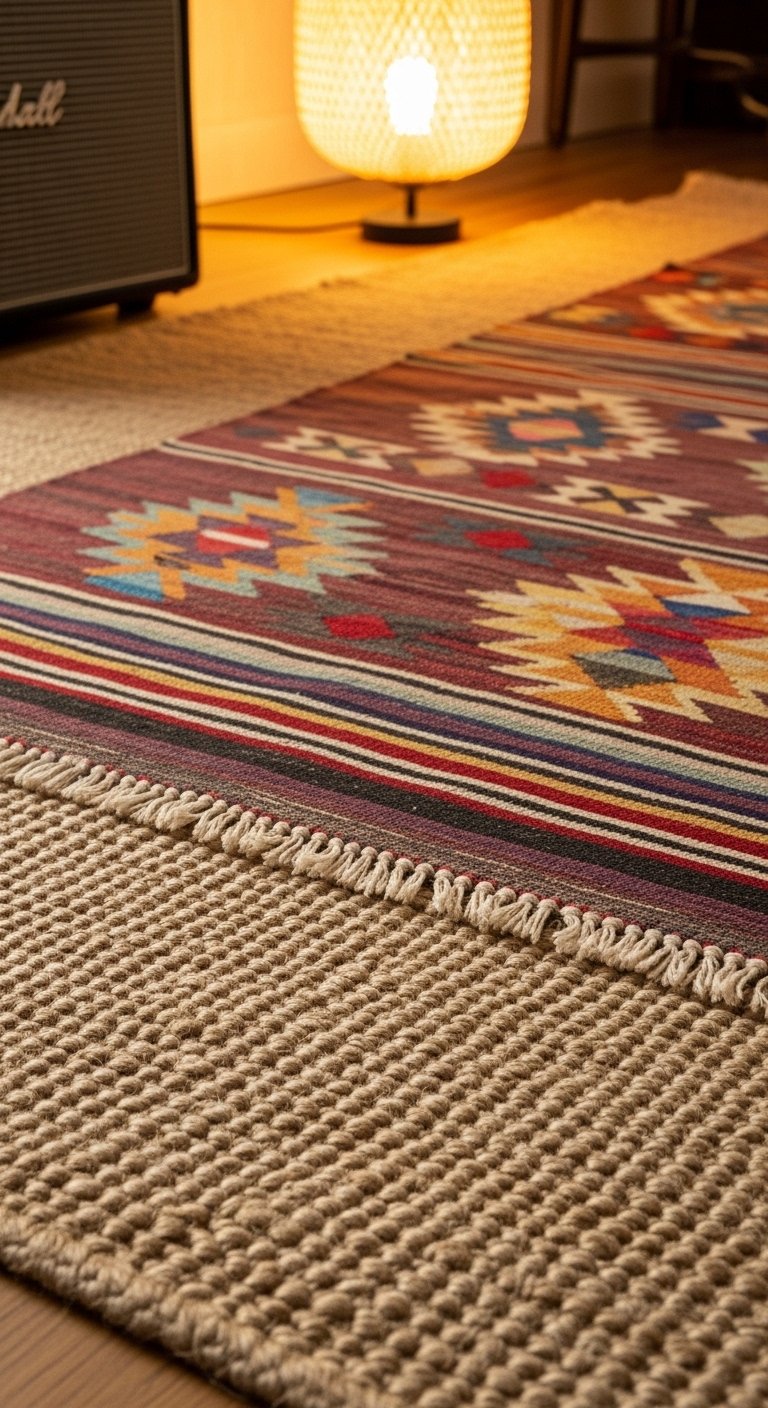
The first time I layered rugs under my amp I heard the room breathe differently. Rugs ground the gear and tame high frequencies, and they make the whole setup feel purposeful. I used an 8×10 jute base under a 3×5 kilim runner so the front three feet of the amp sit on the rug. Budget wise you can keep both under $120 total. A common mistake is picking rugs that are too thin for a chair or amp, which shifts and looks messy. Try adding a thin rug pad under the jute to keep everything in place and protect hardwood floors. I liked this 8×10 jute area rug as the neutral anchor.
Vintage Record Display as Wall Art
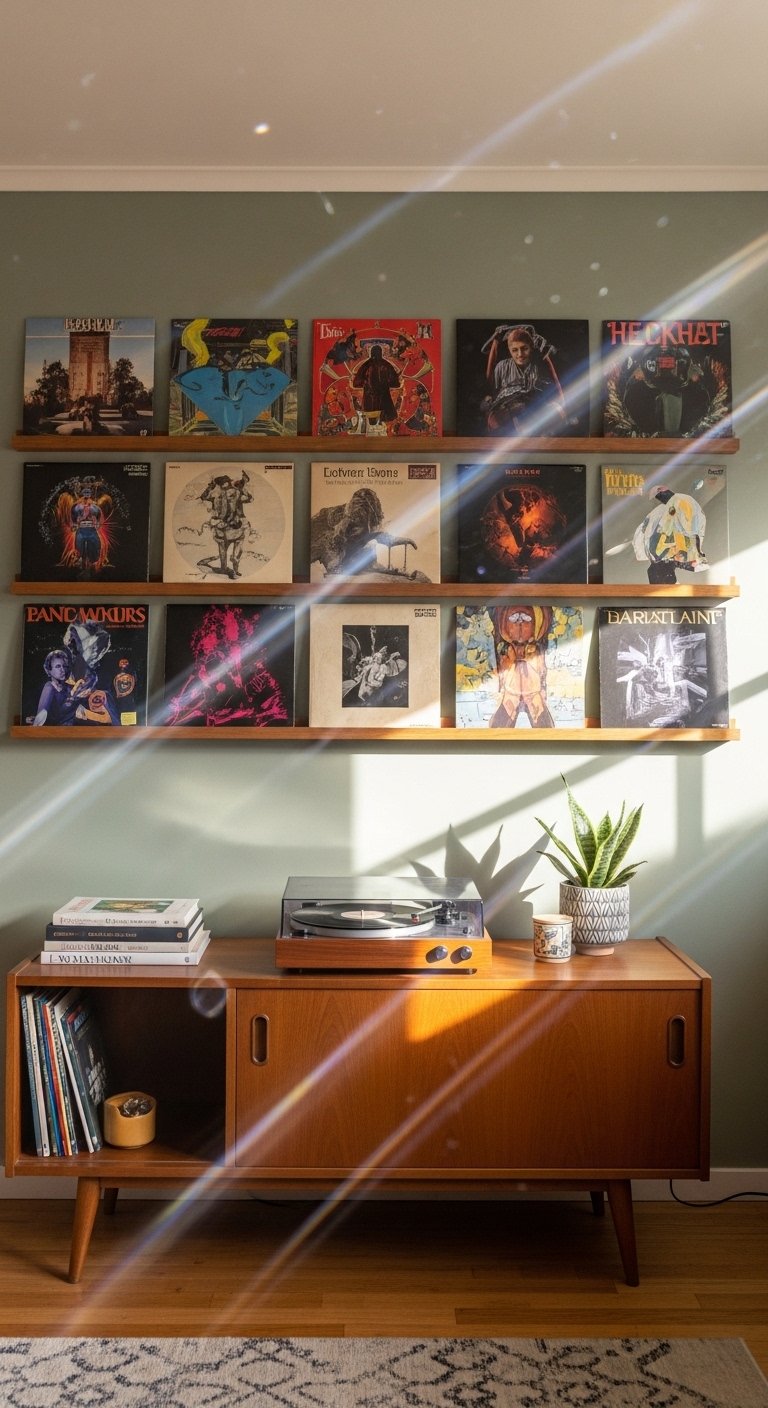
I used my record collection as instant wall art and it stopped the room from feeling curated-by-committee. Mount records with removable adhesive frames so renters can switch them without holes. The visual rhythm of album spines creates that lived-in musician look. A mistake is spacing frames too evenly, which makes it feel sterile. Instead aim for clusters with roughly 3 to 5 inches between pieces. For easy swapping try these removable record frames that keep the sleeve visible and the cover protected.
Hanging Guitar or Instrument Wall
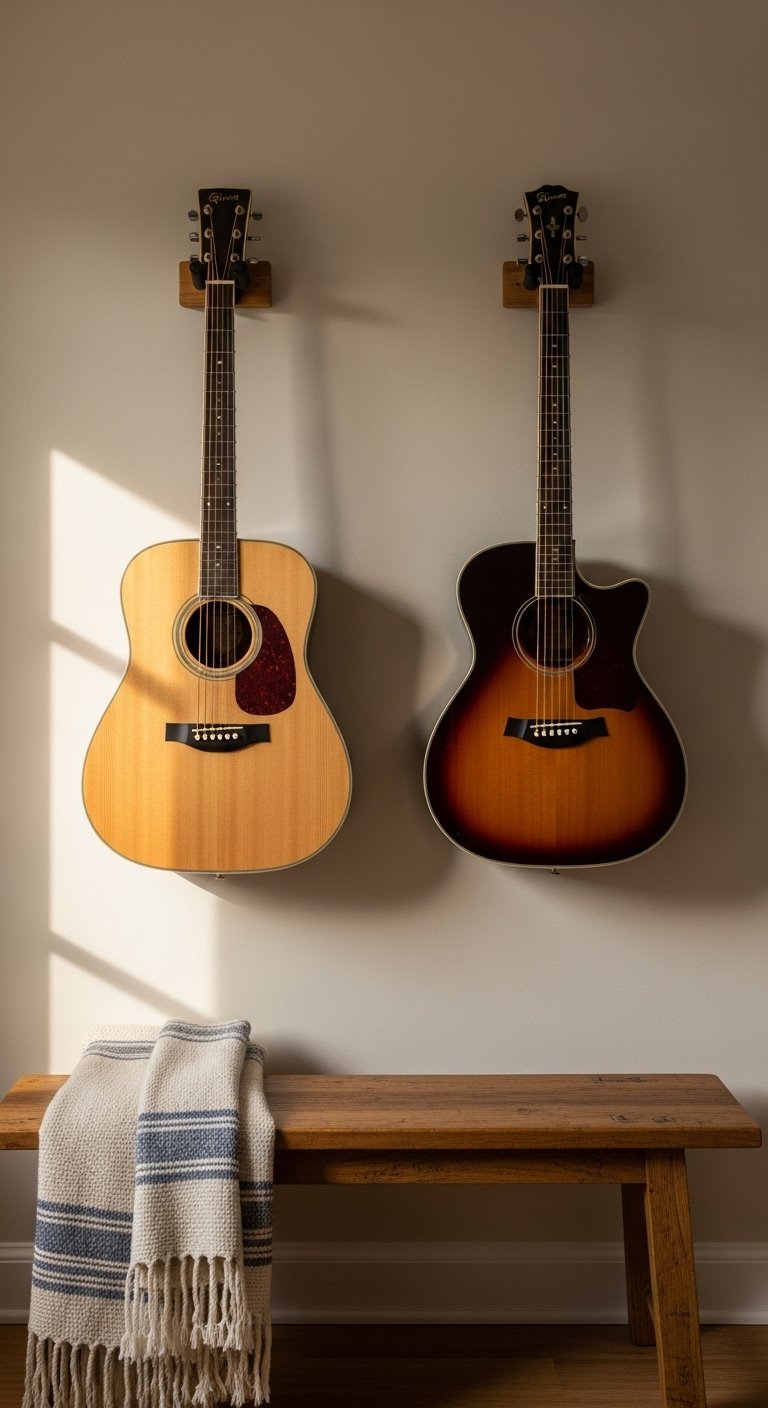
I hung my guitars on the wall and finally gained floor space and instant decor. The trick is mounting at a height where the headstock clears sitting people, roughly 60 to 66 inches from the floor for most acoustics. A lot of people hang instruments too low which makes the room feel cluttered. Use padded wall hooks and route cables away from the display. I use these padded guitar wall mounts. They are under $30 but look intentional.
Macrame and Textile Wall Hangings for Warmth
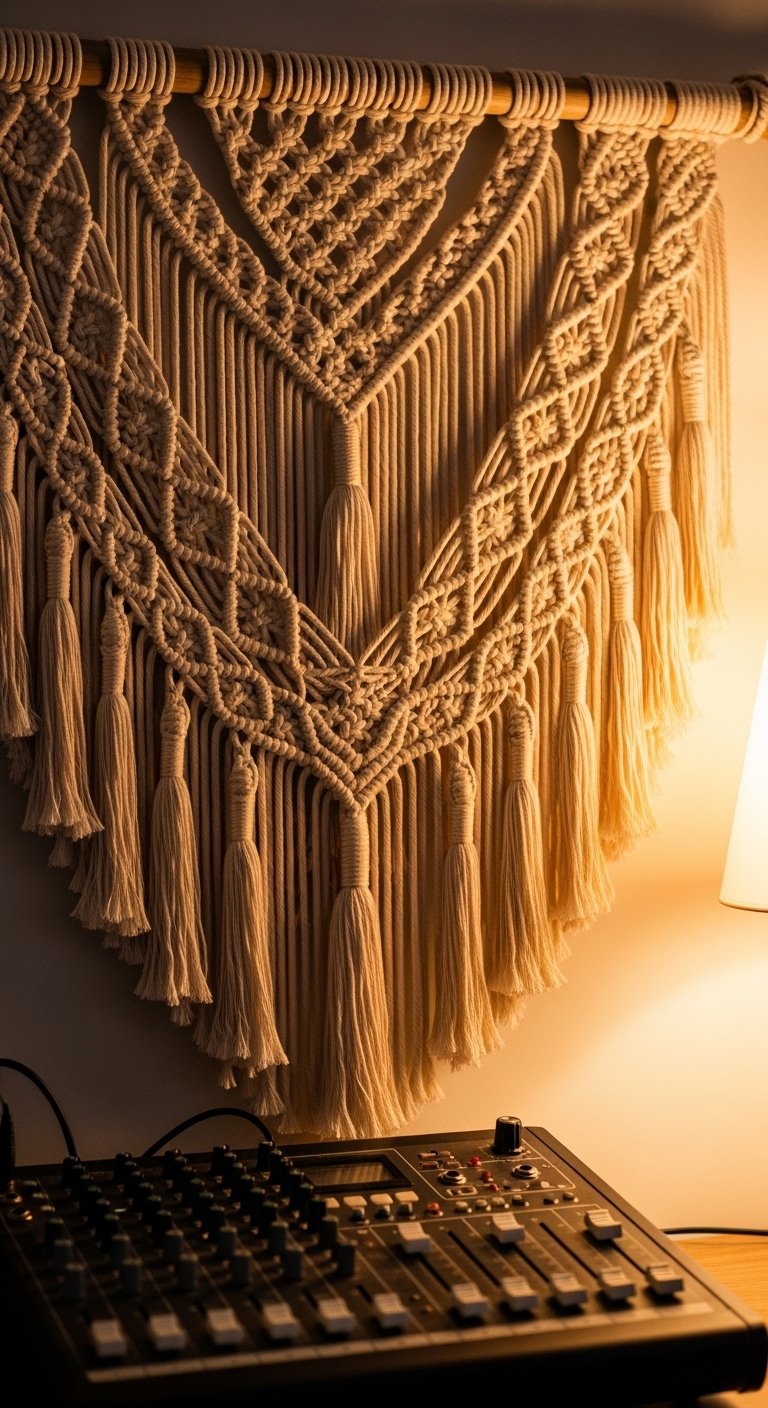
A big macrame piece filled a silence I did not know the room had. Textiles absorb sound and add that bohemian texture that encourages long practice sessions. Size matters here, pick one at least 36 inches wide for small rooms. The common error is a tiny hanging over a wide sofa, which reads like an afterthought. For a studio, hang the textile slightly higher than you would art so it visually hugs your ear level when you sit. I bought this 40-inch macrame wall hanging and it doubled as an acoustic buffer.
Portable Acoustic Panels That Look Like Art
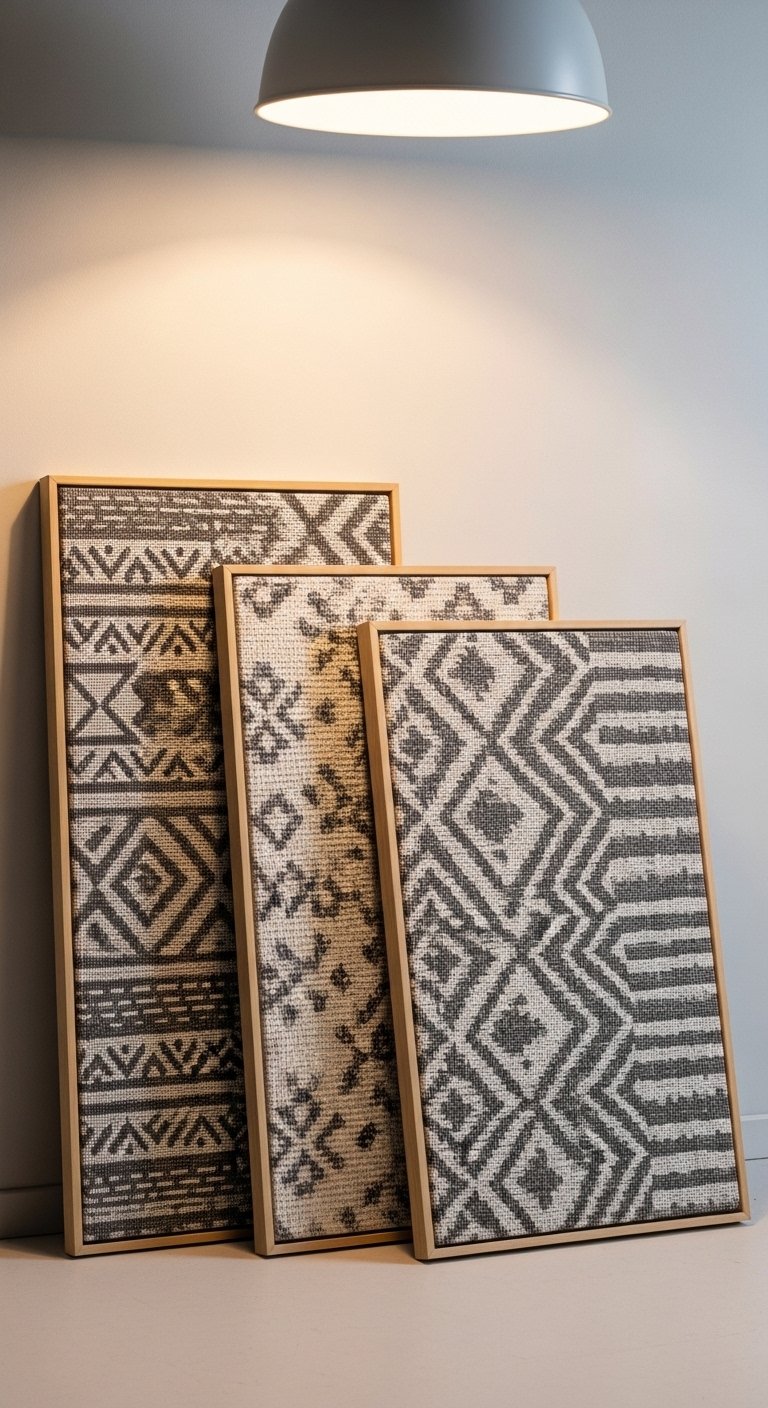
I used framed acoustic panels behind my desk and people thought they were art. Panels placed behind monitors or speakers cut edge reflections and keep recordings cleaner. Test in three lights to check fabric color against the wall. Most matches fail without tech because eyes are not precise enough. A common mistake is buying panels only for function that clash visually. Choose fabrics in warm neutrals and run three panels in a 2:1 width ratio so they read balanced. I recommend these decorative acoustic panels that come ready to mount.
Low Seating and Floor Cushions for Live Sessions
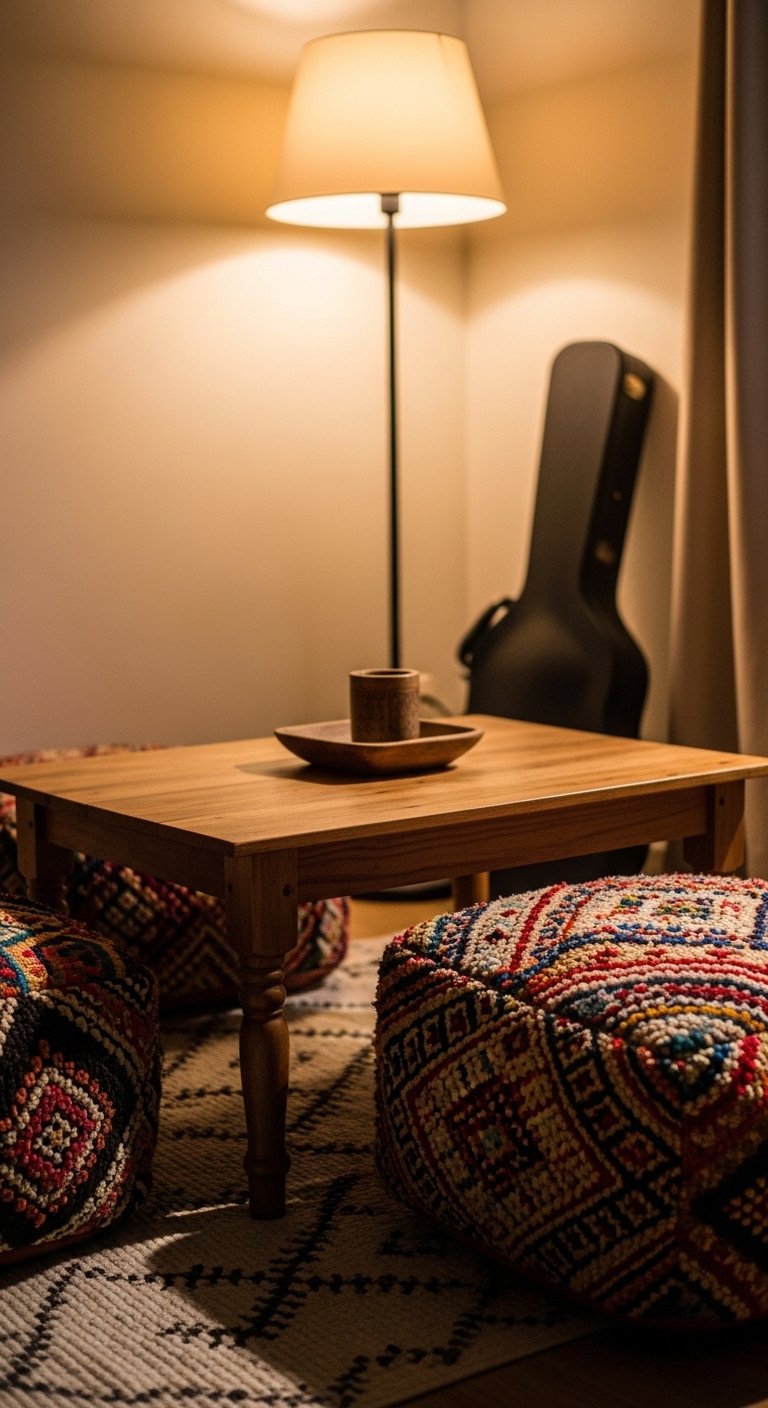
There is something about a reading nook with layered pillows that makes you want to cancel plans. Low seating keeps the room casual and invites collaborators to sit down. Use two 20-inch Moroccan poufs and a 24-inch floor cushion for a trio of friends. The mistake people make is mixing pillow thicknesses that fight the floor level. Stick to similar heights and fabrics that can be wiped clean, especially if your space doubles as a hangout. I picked this leather Moroccan pouf and it has survived gigs and coffee spills.
Boho Lighting Layers with Warm Bulbs
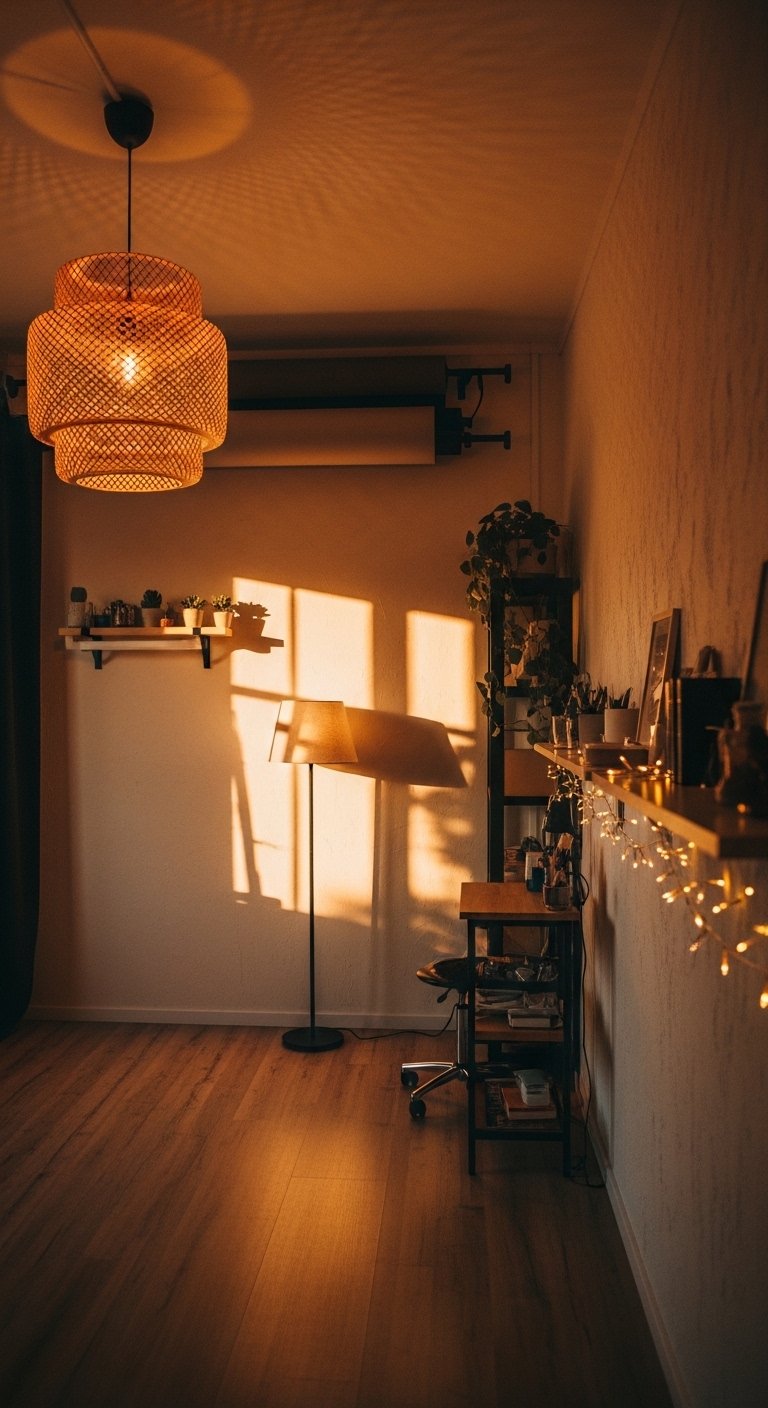
My studio used to have one harsh overhead light. Adding a rattan pendant, a warm floor lamp, and an LED dimmable strip changed how everything reads. Test your setup in three lighting sources. Test in three lights or regret it. Use warm 2700K bulbs near textiles and 3000K task lights for reading charts. A common trap is mixing bulb temperatures randomly which makes skin tones and timber look off. For boho vibes use a dimmable lamp and this energy-saving dimmable floor lamp.
Floating Shelves with Record Crates and Plants
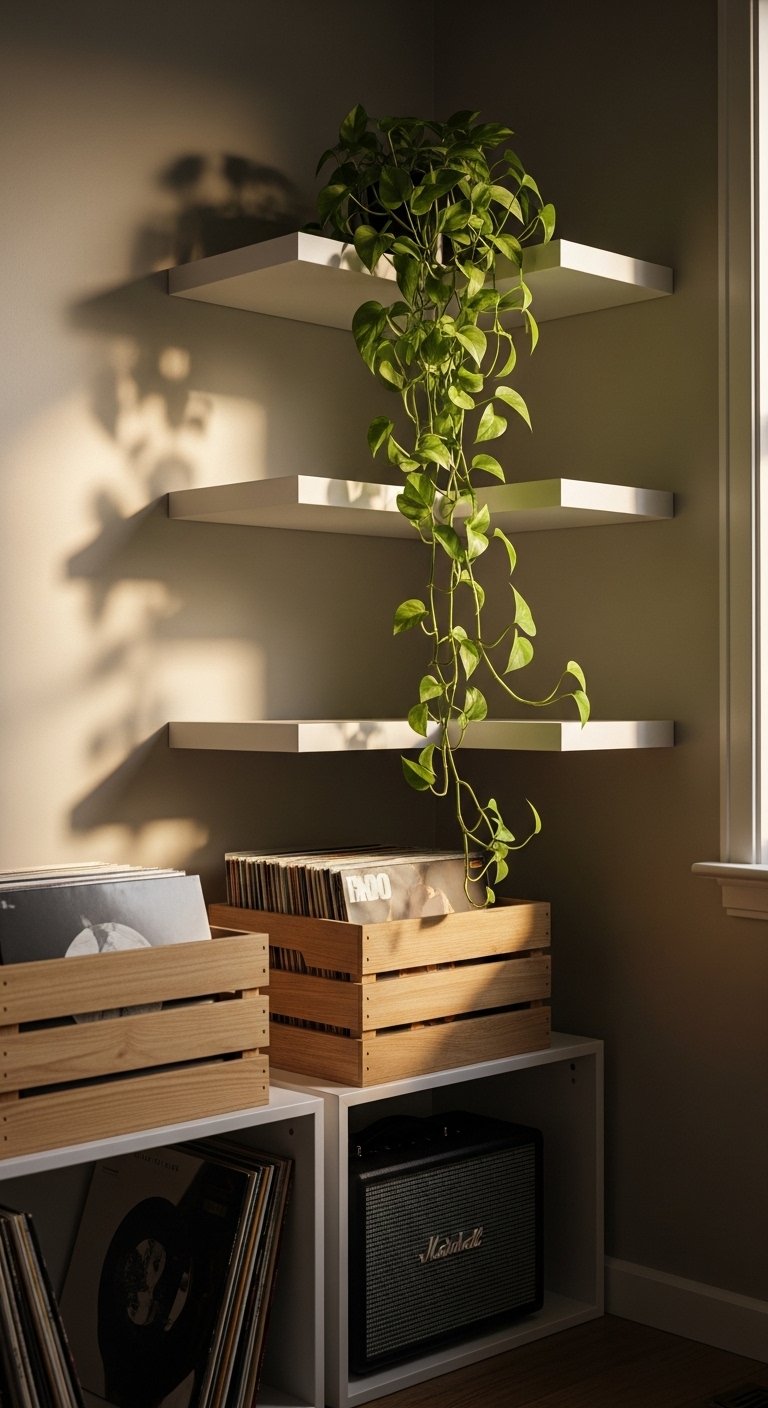
Open shelving keeps gear visible and signals you use the room. I swap crates of records seasonally and it always reads fresh. Try staggered shelves with the lowest shelf 18 inches above the floor so crates slide under easily. The small detail many skip is mixing closed storage with open shelves to hide cables. Use a trailing plant on each shelf to soften edges. I used these white floating shelves and cheap wooden crates for records.
Vintage Finds Mixed with Minimal Tech
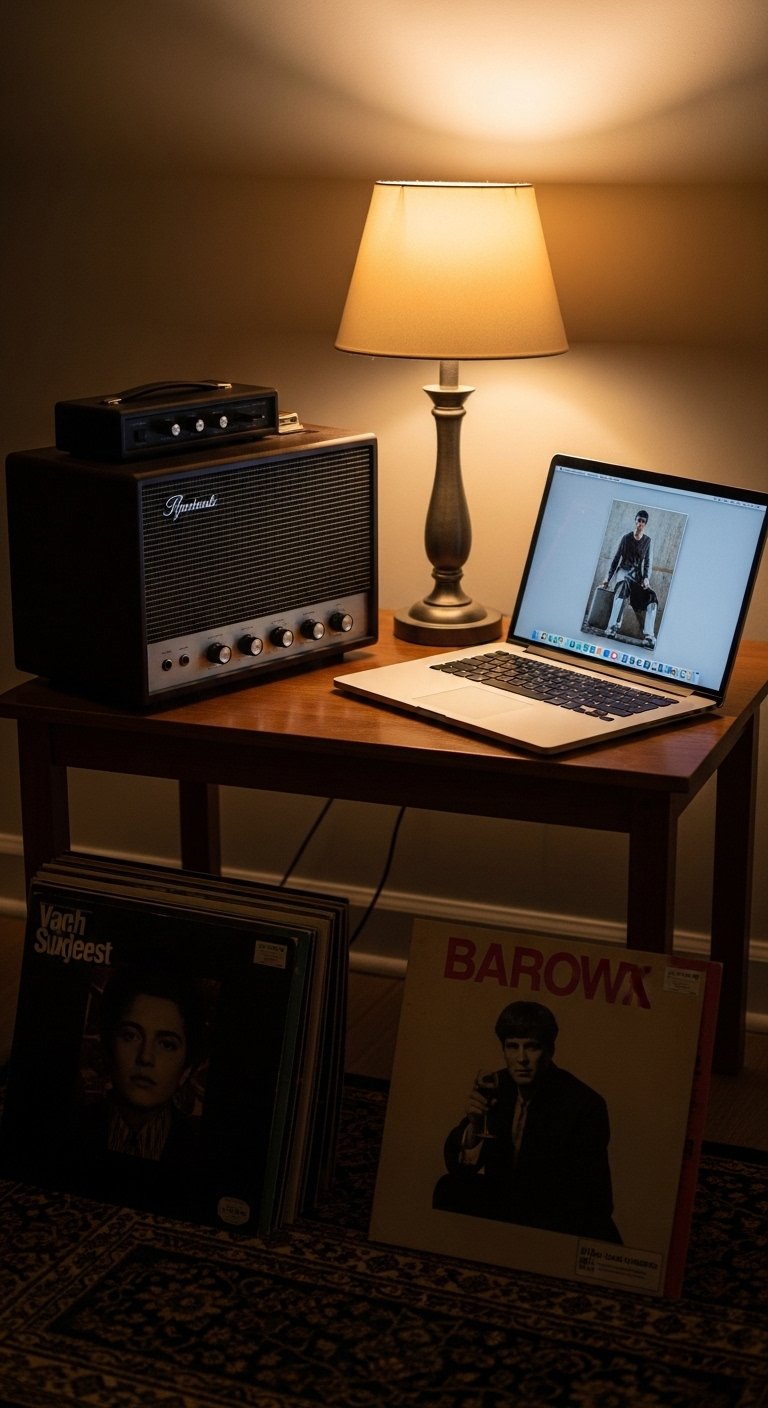
I learned the hard way that matching every piece to one era makes a room feel like a prop. Mix a vintage amp with a slim modern interface and the room gains personality. Keep color bias in mind when you paint or buy wood finishes because every pigment has a color bias. That matters when pairing warm oak with cool painted shelves. A common mistake is matching finishes exactly, which reads flat. Try one warm wood and one painted surface at a 60/40 ratio for balance. I grabbed this vintage-style amp as a focal point.
Curtain Panels for Better Acoustics and Height
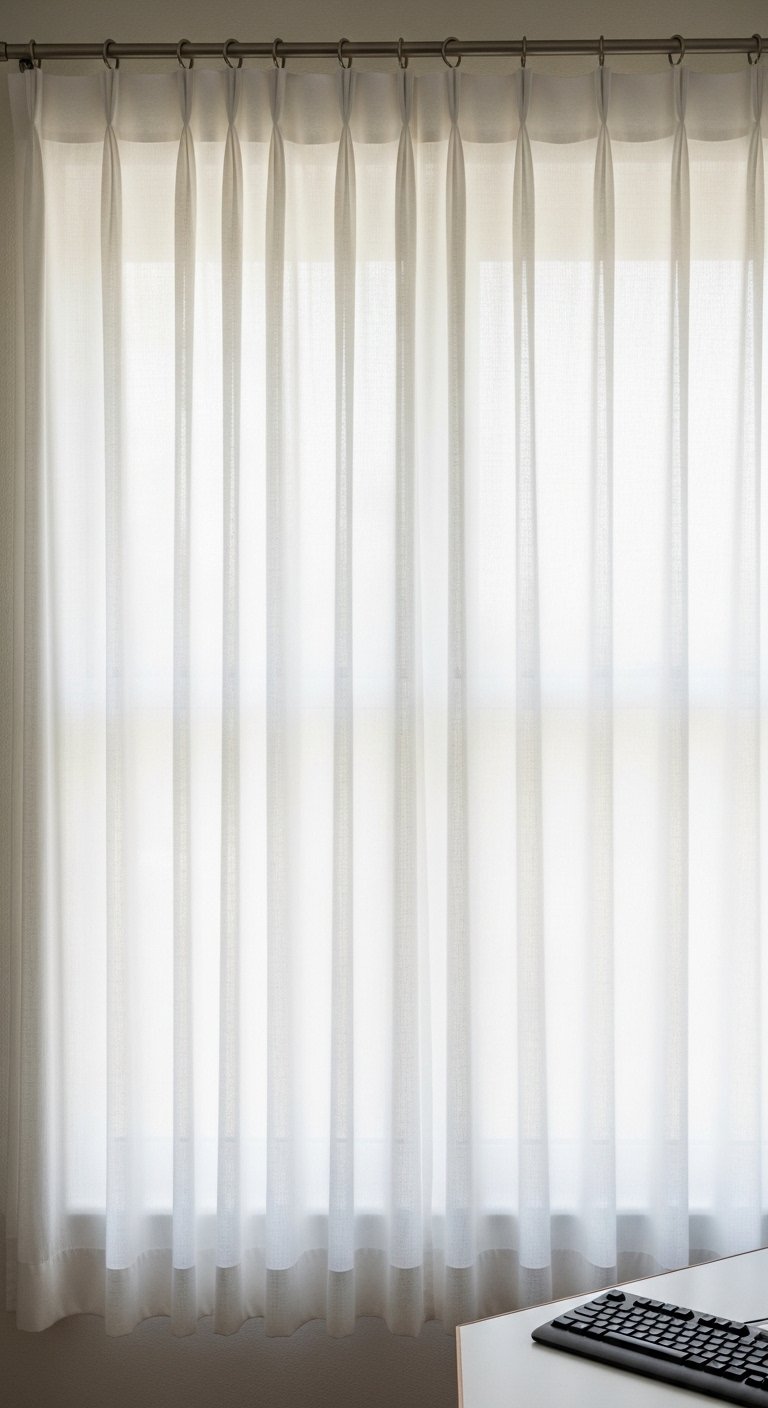
Most people hang curtains right at the window frame. That is why their rooms look shorter than they are. Mount curtain rods 4 to 6 inches above the frame and go floor length to add height and stop reflections. For a studio, heavier linen or cotton velvet also soaks sound. A mistake is choosing panels that are too narrow which causes gaps and defeats the acoustic benefit. I used these 96-inch linen curtain panels and they made the room feel larger and quieter.
DIY Pedestal for Turntable Stability
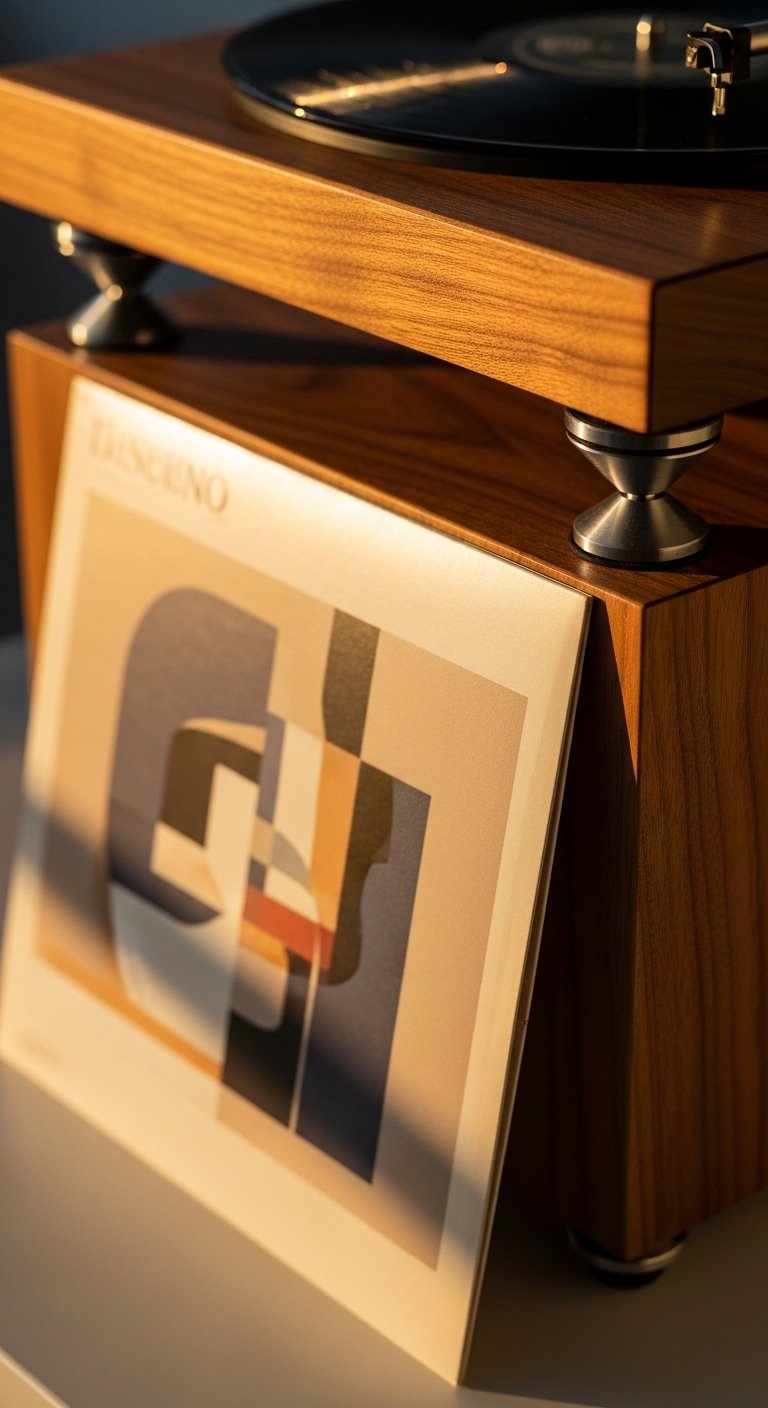
My turntable used to pick up foot traffic rumbles until I built a small pedestal with anti-vibration feet. Even a 12×16 inch platform with rubber isolation pads makes a huge difference. A lot of people overlook isolation until a recording reveals noise. Use four pads under a solid pine board and top with a slipmat. Keep the pedestal height low so tonearm reach stays ergonomic. For ready-made options I like this anti-vibration turntable stand.
Patterned Throw Pillows to Soften Gear Racks
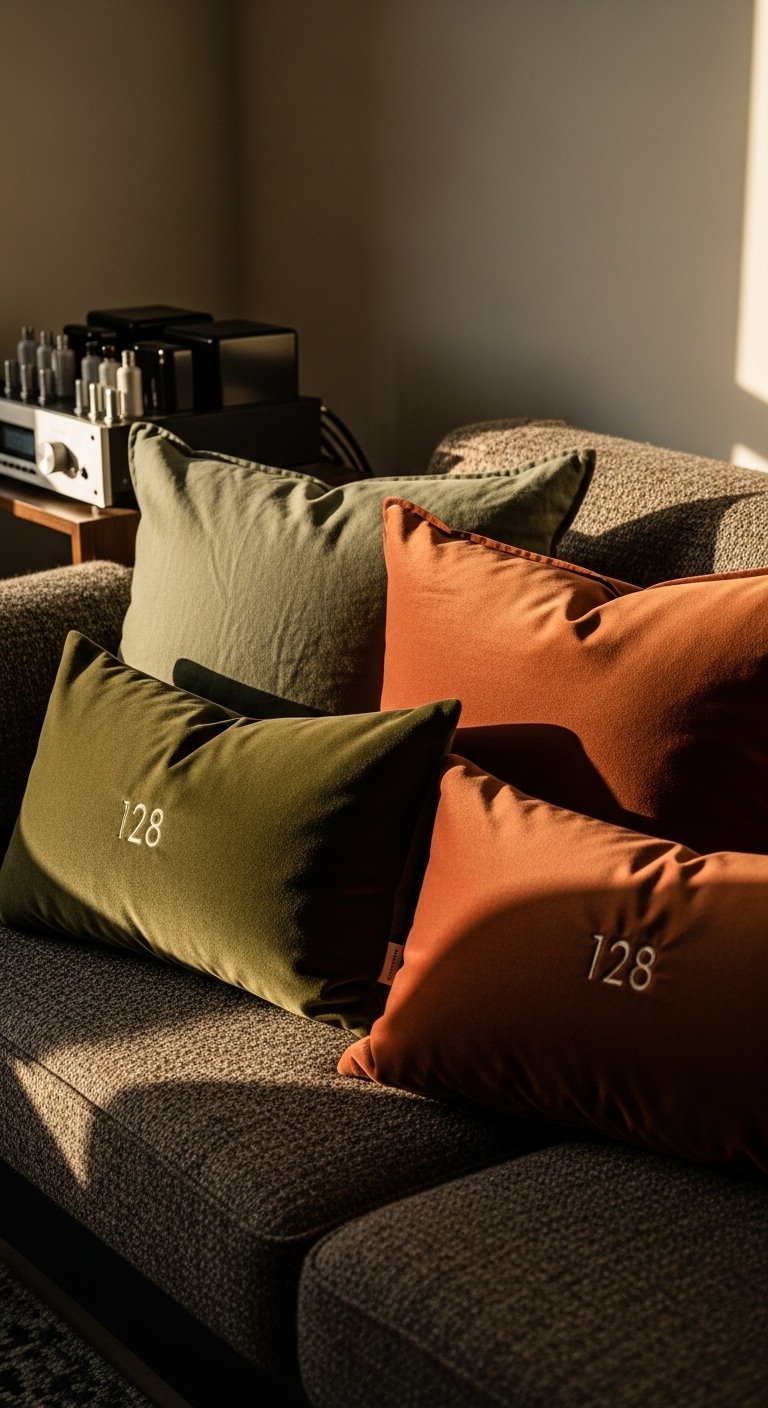
Spent $400 on a new sofa and it still felt sterile. Spent $35 on a mix of pillows and suddenly everything clicked. Use one 22-inch down-filled linen pillow and two 18-inch velvet ones as a 1:2 pattern ratio. The error people make is matching pillow fabric to sofa exactly which reads like an afterthought. Swap pillow colors seasonally or when you change rug patterns. I bought these velvet pillow covers and they changed the room for less than $50.
Softroom Divider with Woven Panels
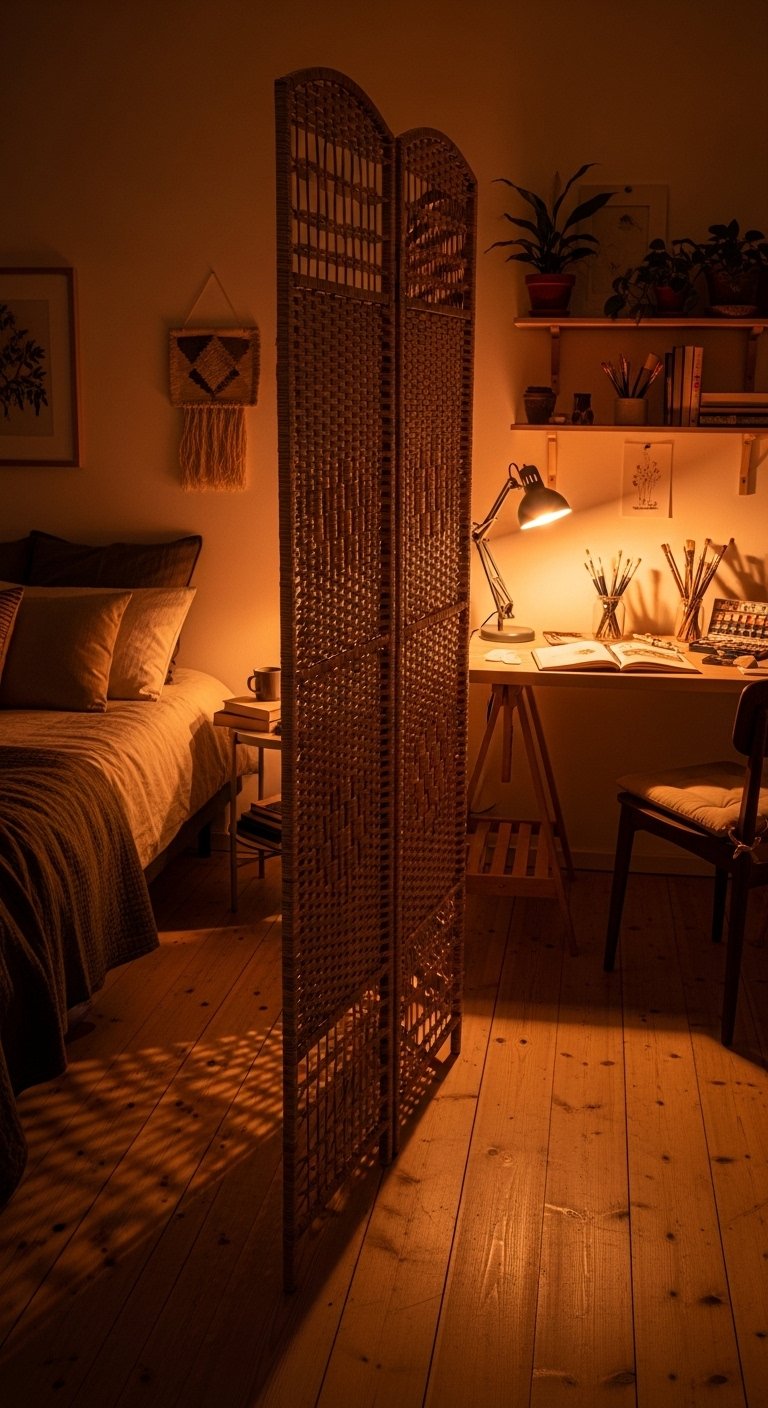
When I needed a sleep area next to gear, I used a woven room divider and the whole place felt intentional. A woven panel blocks sightlines and tames reflections while remaining breathable for sound. Measure so the divider overlaps about 6 inches with the edge of your desk to block late-night light. People often pick a divider that is too short which makes the split obvious. I recommend this woven folding room divider for a small-space studio.
Color Accent Wall Behind Gear with Test Swatches
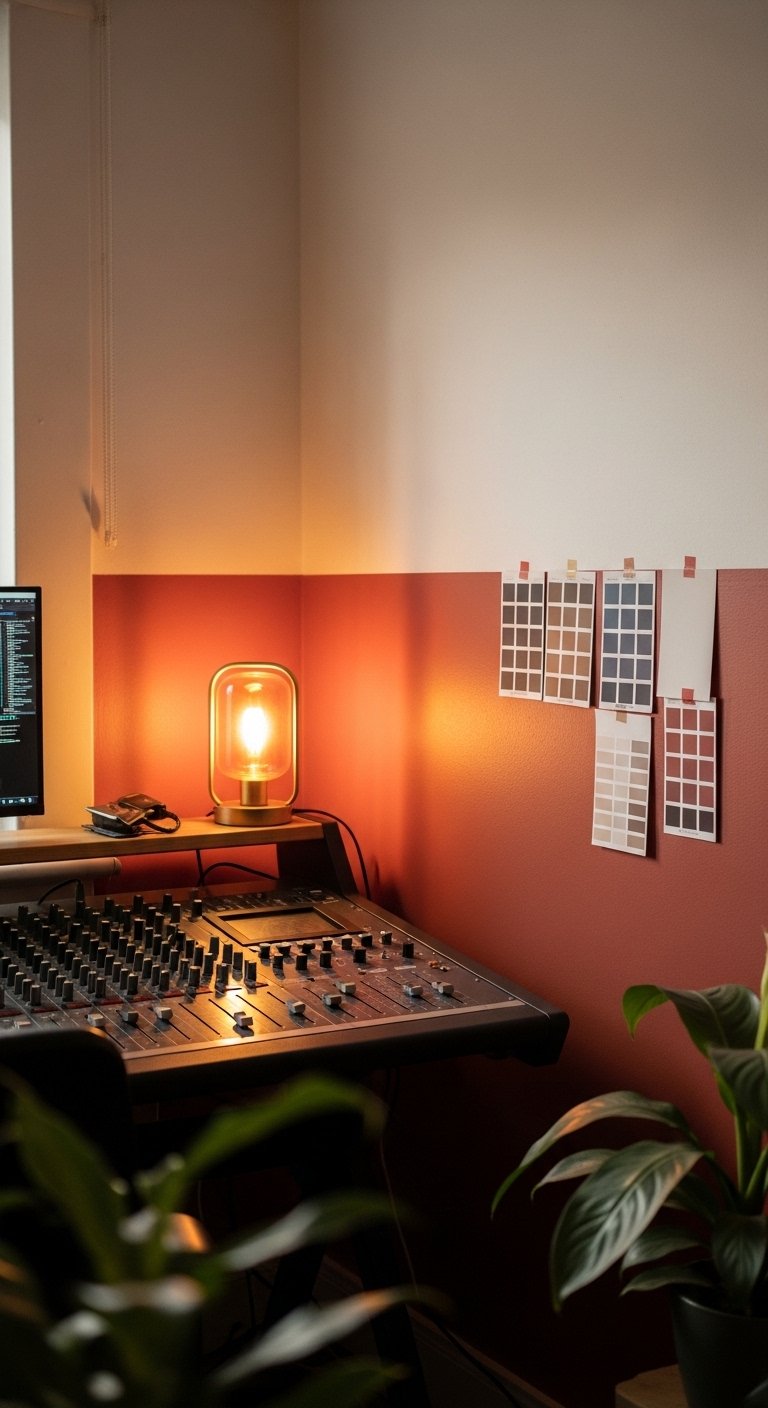
A single accent wall made my studio feel curated instead of chaotic. I tested large 2×8 inch swatches in daylight, incandescent, and LED bulbs before I painted. You get 80% there with a scan, but the last bit is all eye. Most matches fail without tech because eyes are not precise enough. The specific trick was painting a 2×3 foot sample and living with it for three days. To revive discontinued shades ask paint stores for competitor formulas since paint stores have codes for almost any brand swap ready to go. For paint trim I used a durable satin finish paint and a small batch sample before committing.
Portable Mixing Cart and Cable Management
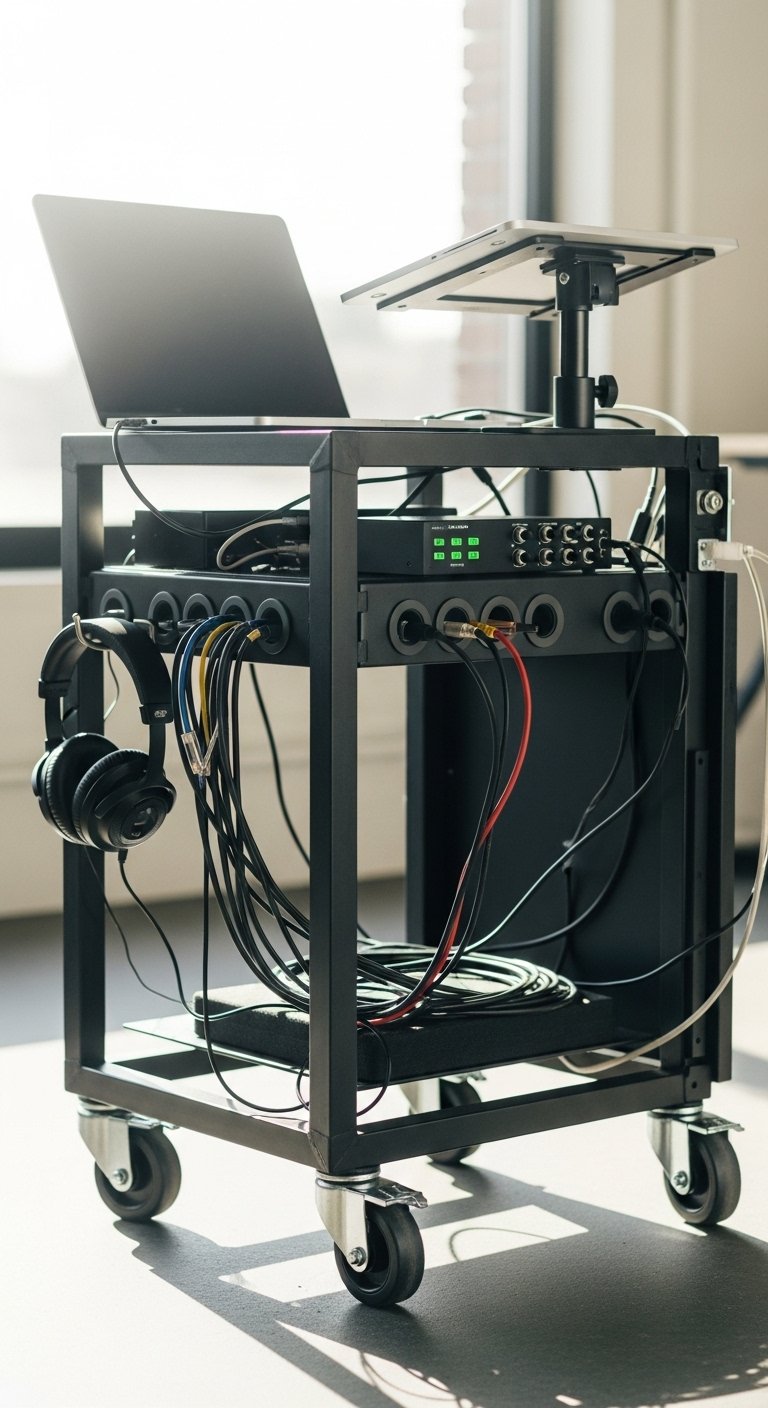
I wanted the option to move sessions into the living room. A compact rolling cart keeps your interface, headphones, and mic stand mobile. Look for a cart about 24 inches wide and 18 inches deep so monitors are stable. People cram too much gear on tiny carts which looks dangerous and wobbly. Add Velcro straps and under-shelf baskets to hide cables. I use this rolling audio equipment cart and it lets me shift a session in under a minute.
Greenery That Softens Sound and Looks Alive
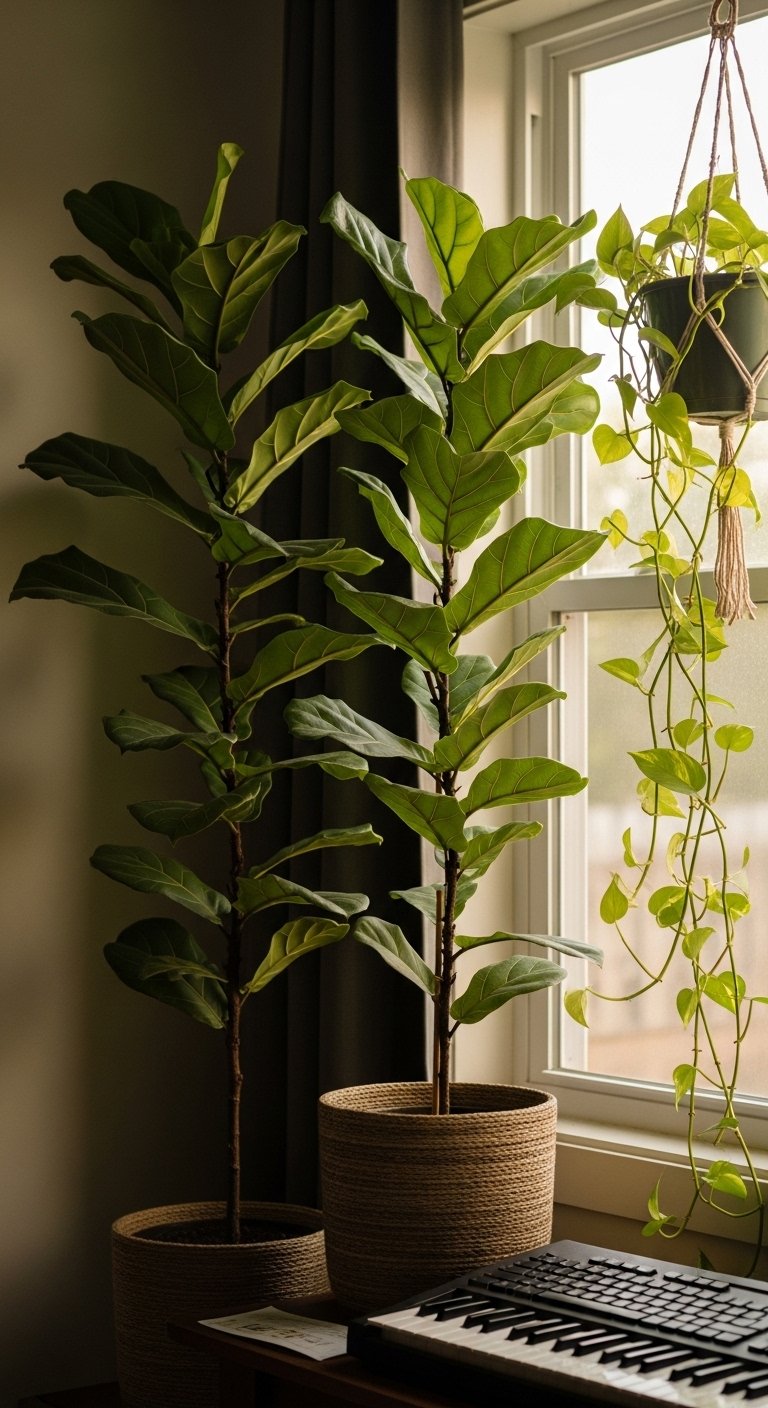
Real plants make a studio feel lived in and they help diffuse sound slightly. I chose a 6-foot fiddle leaf fig in one corner and a trailing pothos by the shelves. One single 6-foot fiddle leaf fig has ten times the visual impact of five small succulents. A common mistake is overwatering plants near electronics. Use saucers and keep humidity moderate. For low-maintenance options I also keep a realistic tall ficus behind the desk. I bought this 6-foot artificial fiddle leaf fig for the spot that gets no light.
Your Decor Shopping List
Textiles
- Honestly the best $40 I have spent. Chunky knit throw in cream 50×60 inches, soft for sitting on floor cushions
- Velvet pillow covers, set of 4 18×18 inches, change the look fast
Wall Decor
- Vinyl record display frames removable, keeps sleeves pristine
- Large macrame wall hanging 40-inch off-white cotton
Lighting
- Dimmable floor lamp with linen shade adjustable height
- Warm rattan pendant light for diffused overhead glow
Furniture and Storage
- 8×10 jute area rug neutral base
- Floating shelf set in white mix open storage with crates
Gear and Stands
- Padded guitar wall hanger set safe and cheap
- Rolling audio equipment cart compact and sturdy
Similar at Target or HomeGoods for pillows, small rugs, and accent plants
Shopping Tips
White oak beats dark wood in 2026. Design feeds have shifted completely. These white oak floating shelves look current, not dated.
Grab these velvet pillow covers for $12 each. Swap them seasonally and the whole room feels different.
Curtains should puddle or kiss the floor, never hang halfway up. These 96-inch linen panels are right for standard 9-foot ceilings.
If you have pets, pick harder-wearing fabrics and a darker jute rug. This jute rug with a tighter weave hides wear better than fluffy fibers.
Lead with a focal piece, then add texture. Start with a statement amp or vintage record player and layer textiles around it.
One tall plant beats five small ones. This artificial ficus tree 6-foot fills space and needs no light.
Frequently Asked Questions
Q: Can I mix boho textiles with modern gear without it looking messy?
A: Yes. Keep a 60/40 rule where 60 percent of materials are natural textures like linen, jute, and leather and 40 percent are modern finishes. Balance warm woods with painted pieces and pick one accent color to repeat.
Q: What size rug do I actually need for a layered look?
A: Go larger than you think. Use an 8×10 base rug and layer a 3×5 or 4×6 runner on top so the furniture reads anchored. A thin rug pad under the base prevents slipping and protects floors.
Q: How do I avoid my wall paint clashing with instruments and wood finishes?
A: Test big swatches under three lighting sources. Every pigment has a color bias, so check for orange or green shifts. Paint a 2×3 foot sample and live with it for a few days before committing.
Q: My paint shop scanned a fabric and it still looked off at home. Why?
A: You get 80% there with a scan, but the last bit is all eye. Combine a spectrophotometer scan with real-life swatches on the wall and check them in daylight and lamp light.
Q: Are faux plants acceptable in a studio corner that gets no light?
A: Yes. Use a realistic tall artificial fiddle leaf fig or similar for height. Place it where you want visual impact and mix in one real low-light plant if possible for texture.
Q: What is the easiest renter-friendly acoustic trick?
A: Use framed fabric acoustic panels and removable hanging systems. Peel-off record frames and adhesive hooks let you arrange without holes and still improve sound and style.