
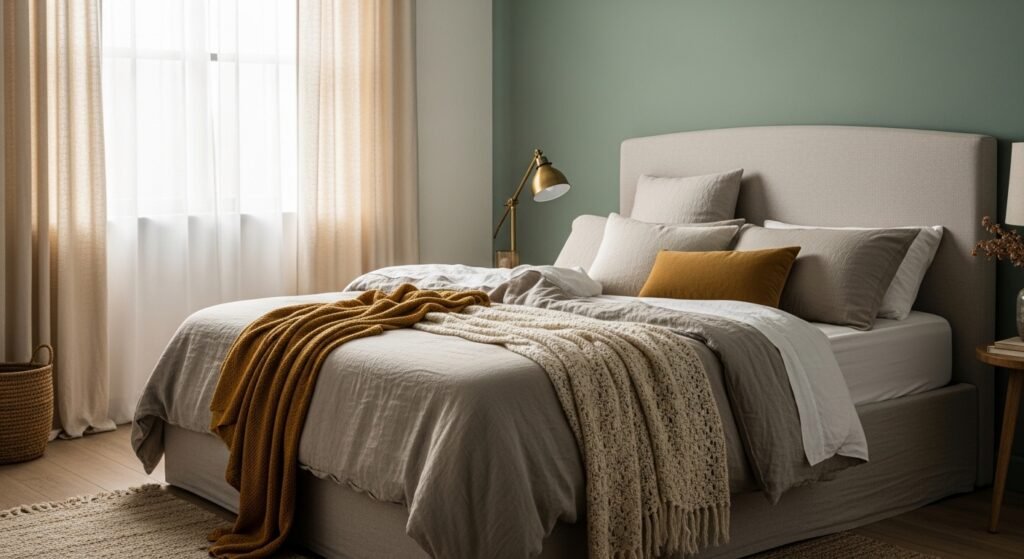
My living room had nice furniture and decent lighting but it still felt like a waiting room. Took me embarrassingly long to figure out it was missing texture. Every surface was smooth, every color was flat, and nothing invited you to actually sit down. After a few small swaps in sage green I finally stopped walking through the room like it was a hallway.
These ideas lean modern farmhouse with some boho touches. Most projects are under $80, with a couple of splurges around $120 to $200. Works for bedrooms, living rooms, entryways, or a rental that needs life without permanent changes.
Sage Accent Wall That Avoids The Cave Feeling
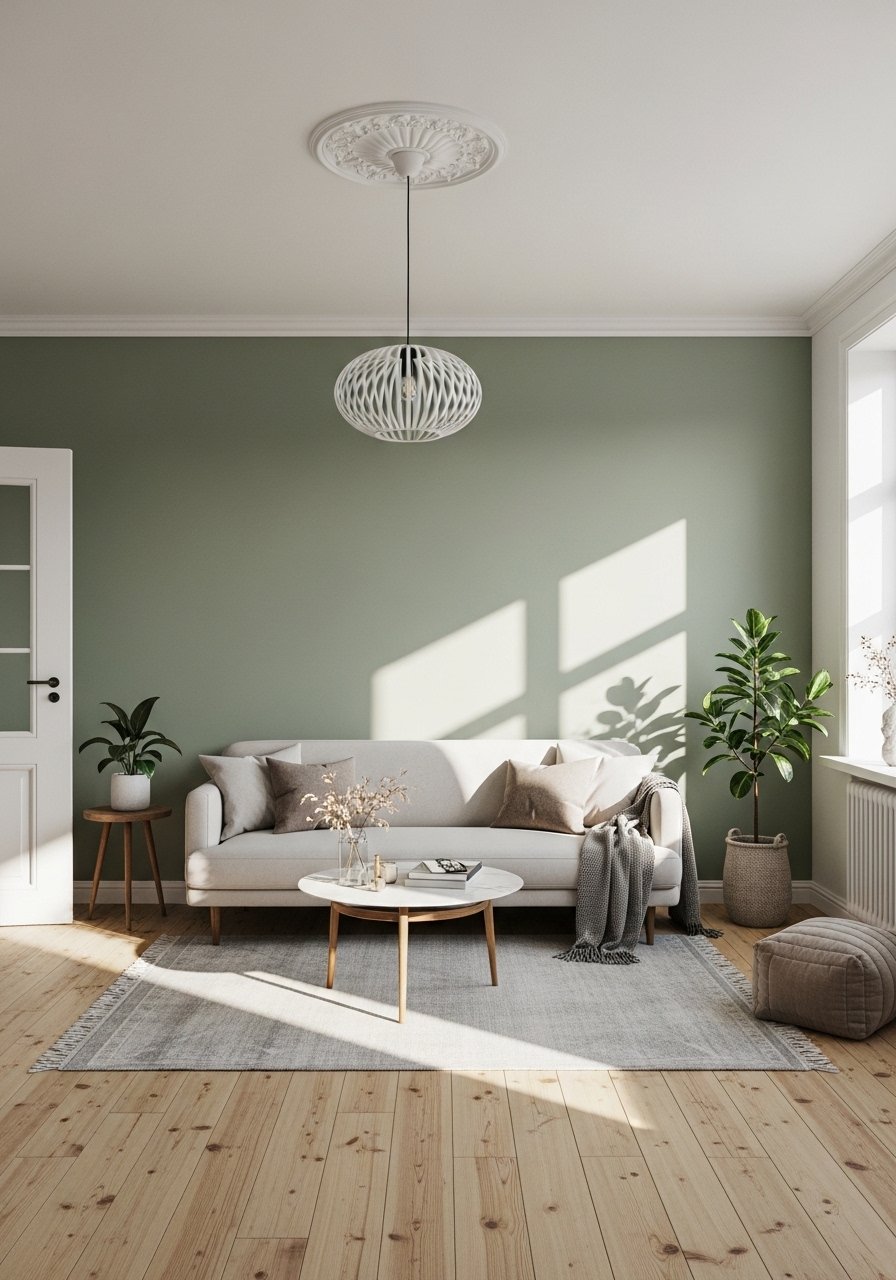
Painting one wall sage gives the color presence without swallowing the room. Pick a paint with an olive undertone if your room faces north so the green reads warm instead of dingy. I used a matte finish on a single wall and kept trim crisp white, which keeps the 80/20 neutral to sage ratio that stops rooms from feeling heavy. Budget for paint and rollers was $40 to $80. Common mistake is painting all four walls then wondering why the space feels like a cave. If you rent, try a peel-and-stick paint paper or a large removable panel. Pair this idea with the curtain trick later to make the wall feel intentional, not accidental. Sage paint touch-up starter kit helped me test undertones.
Bedding Layers In Sage For A No-Paint Refresh
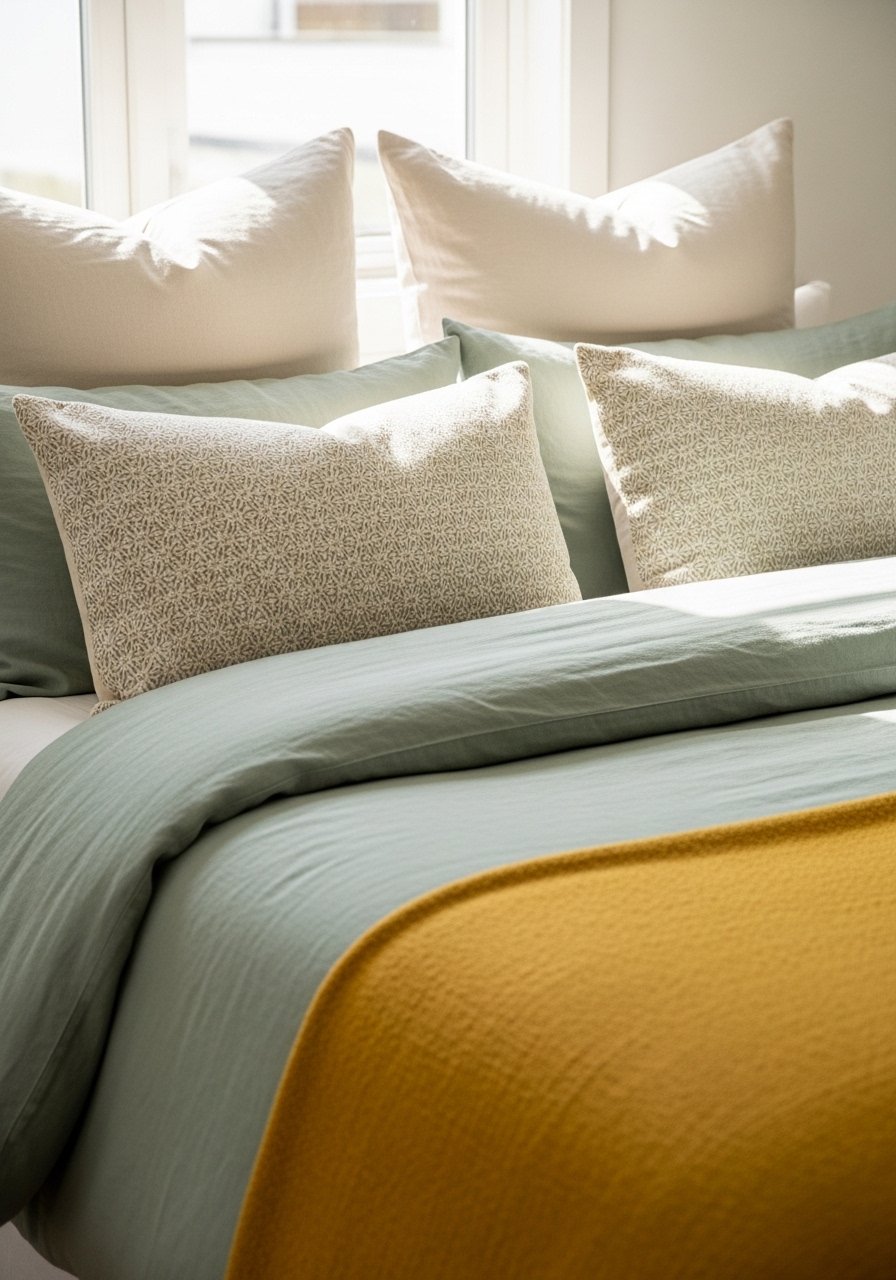
My bed looked flat until I forced myself to layer properly. Start with a duvet in sage, then add two 26-inch euro shams in cream, two standard decorative pillows, and one 14×36 lumbar. Use odd-number groupings so the stack reads relaxed, not staged. This builds depth for under $60 to $150 depending on quality. A lot of posts recommend sage bedding and stop there. I tell people which sizes to buy so pillows actually fill the space. Washable fabrics are a must if you have pets, because velvet sheds and boucle holds fuzz. Swap a mustard throw for a seasonal pop and your whole bedroom feels curated without paint. Sage linen duvet cover is a reliable renter-friendly route.
Rug Under Bed To Stop The Chopped-Up Look
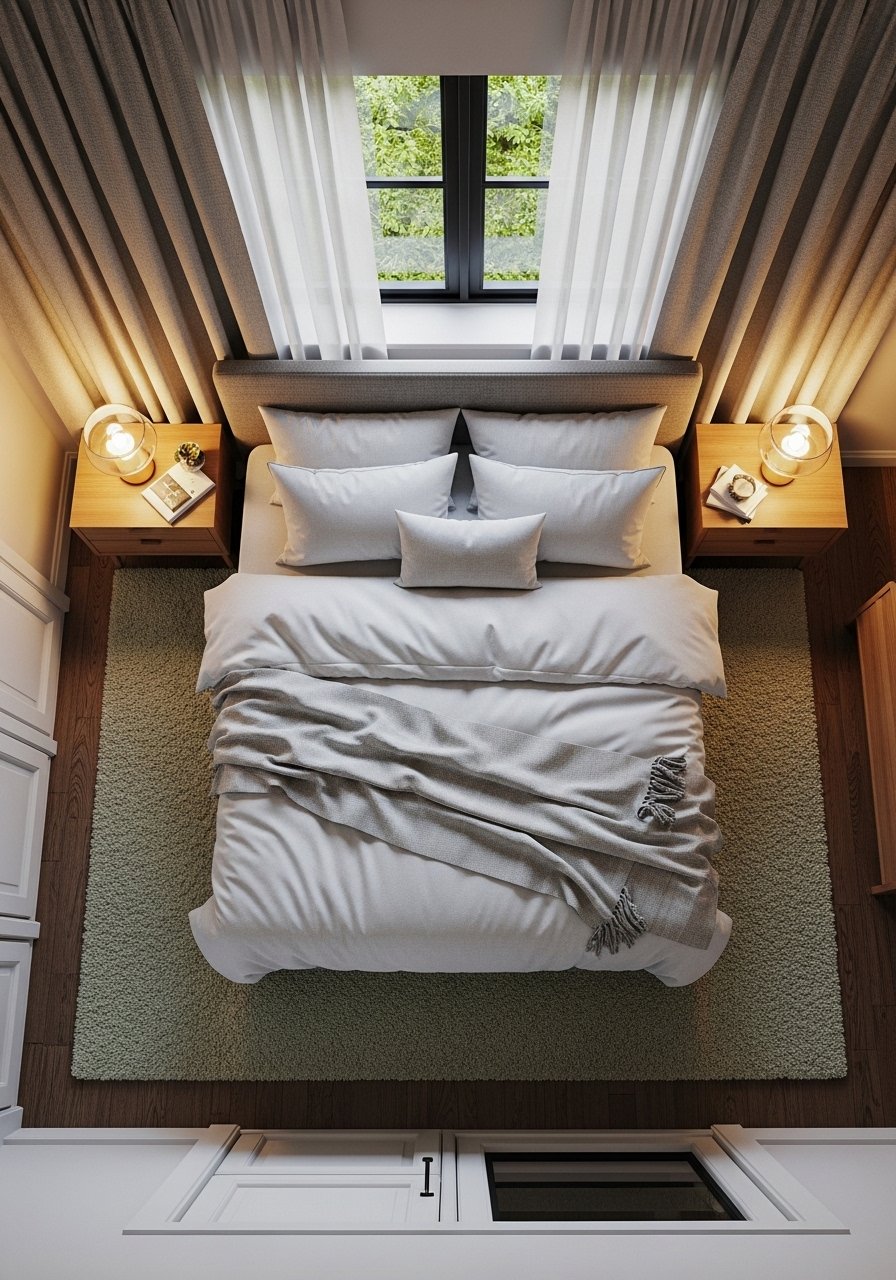
Wrong rug size is the single thing that makes a room look off. For beds, aim for an 8×10 minimum so both nightstands sit fully on it. That simple rule stopped my tiny bedroom from looking chopped. Choose a low-pile washable rug if you have kids or pets, because some sage rugs show footprints and dust. Budget runs $100 to $250, depending on material. A common mistake is buying a too-small rug and then trying to hide it with furniture rearrangement. If your space is narrow, get a runner under the bed lengthwise to keep the front legs grounded. 8×10 washable area rug in sage is what I recommend for real life.
Floor-To-Ceiling Sage Curtains To Trick The Eye Taller
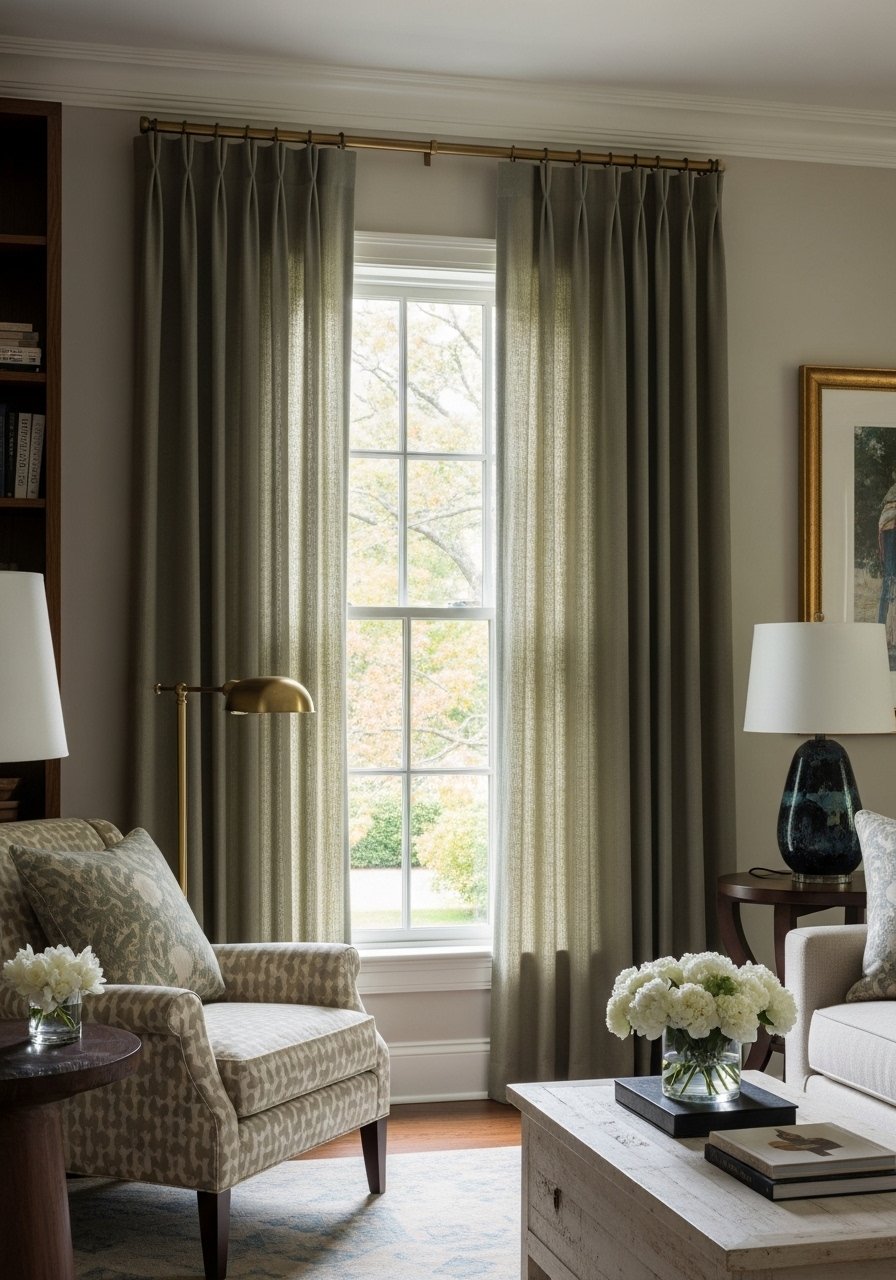
Most people hang curtains at the window frame and then wonder why ceilings feel low. Hang 96-inch panels high and let them puddle slightly. That vertical line makes everything look taller and ties into an accent wall without competing. I used two sage linen panels layered over white sheers for light control and texture. Curtains are inexpensive to change, $30 to $70 per panel, and renter-friendly. The mistake is grabbing short panels that stop the illusion. If you have 9-foot ceilings, the 96-inch length is the rule to follow. These curtains pair well with the accent wall idea above and with layered bedding for a complete look. 96-inch linen curtain panels in sage kept my living room from feeling boxed in.
Two-Tone Wall With Chair Rail For Big Impact, Low Commitment
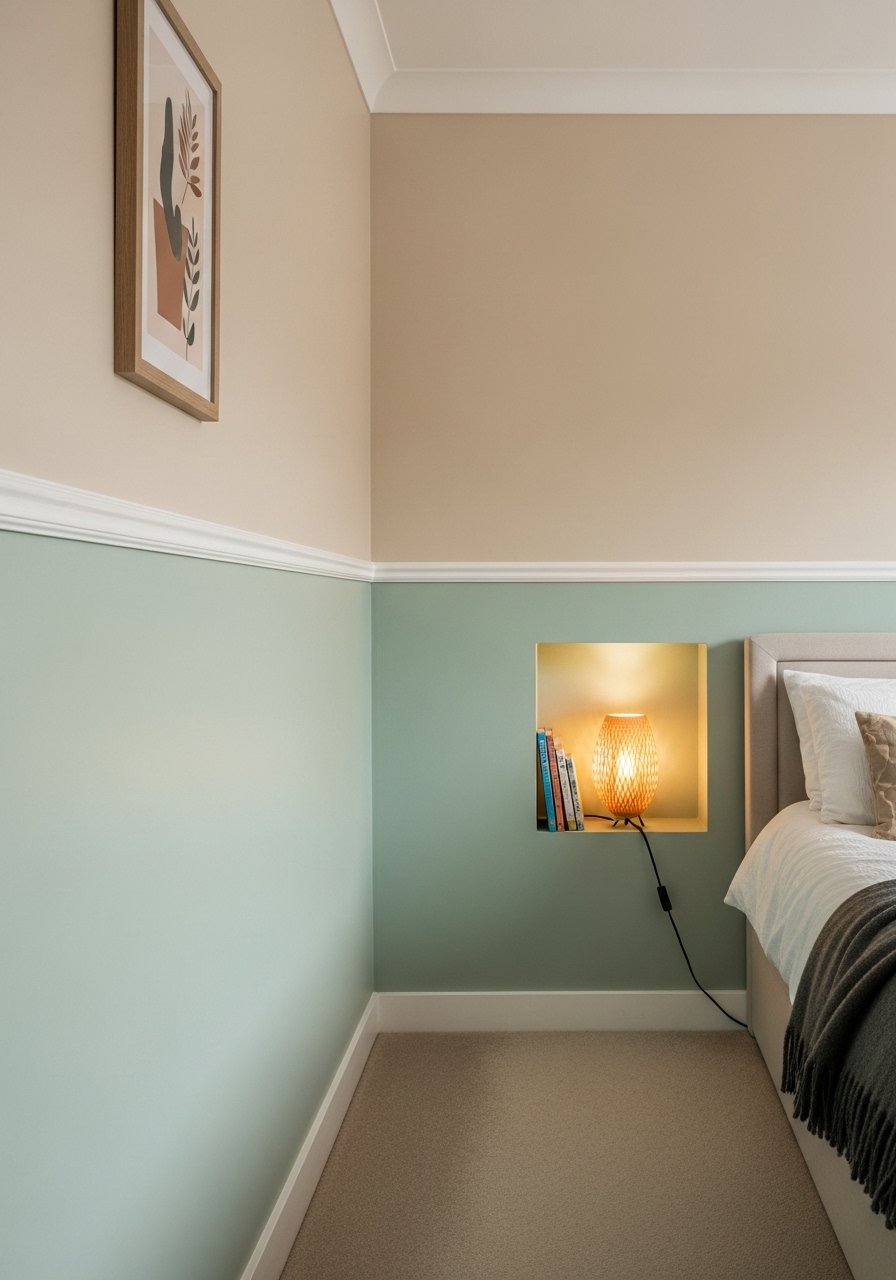
Splitting a wall at 36 inches creates interest without committing to a full repaint. Painting the lower half sage grounds furniture and shows off trim details. The chair rail hides uneven lower-wall wear, which was perfect in my older rental. Budget sits around $70 to $150 using sample pots and a removable adhesive rail if you do not want permanent trim. Common trouble: people pick two colors that clash. Try a warm beige above sage to avoid a cold pairing. For renters swap in washi tape as a temporary rail and use peel-and-stick wallpaper on the top half for pattern if you want more texture. This idea pairs nicely with the gallery wall idea for visual rhythm. Peel-and-stick chair rail kit made the install painless.
Sage Upholstered Headboard With Brass Details For a Collected Look
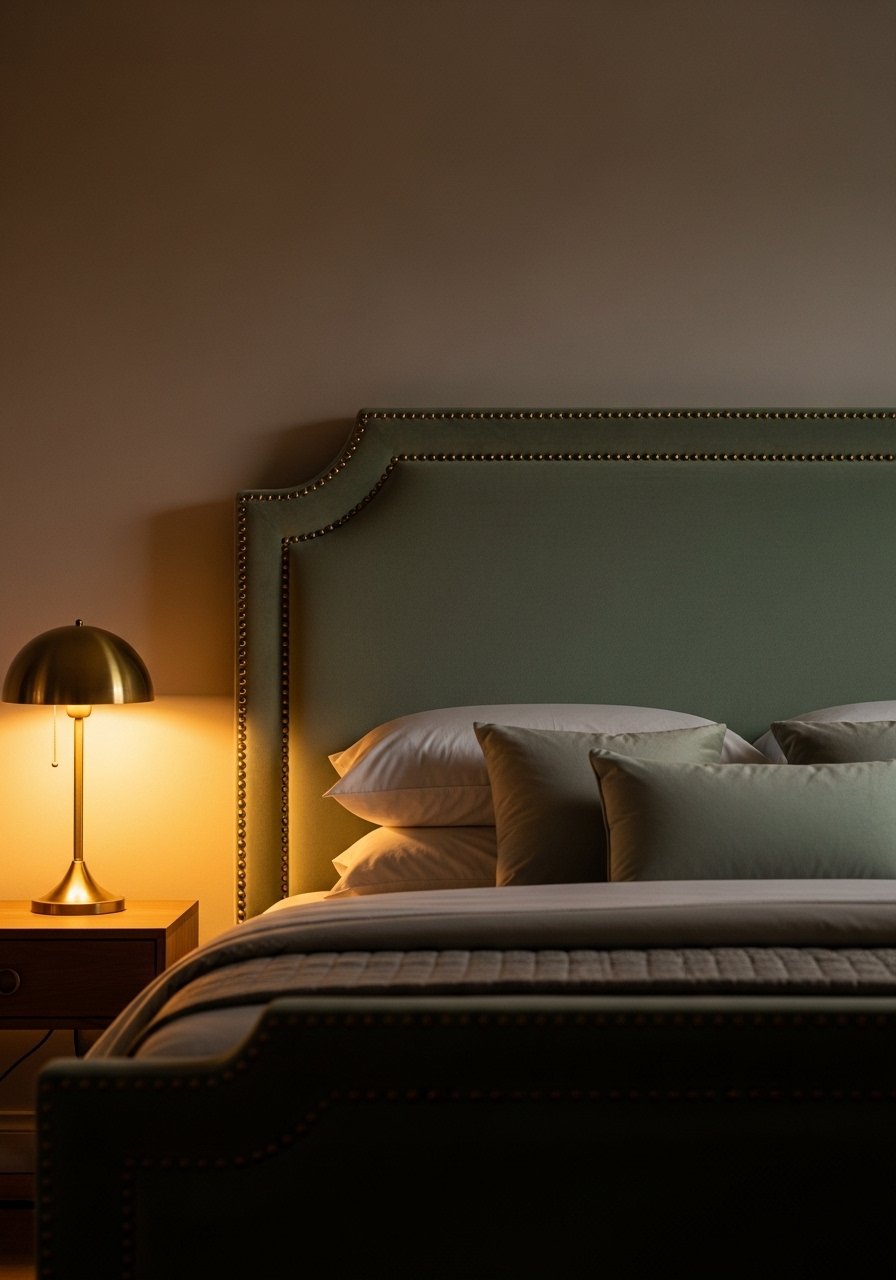
An upholstered headboard in sage immediately anchors the bed. I swapped a cheap wood headboard for a velvet one and it made the whole room feel softer. Budget ranges $120 to $250. Pairing brass hardware with the matte green warms up older wood furniture so nothing looks cheap. People often buy a headboard that is too wide or too low. Measure the bed and aim for the headboard to sit a few inches higher than pillows so the stack has a backdrop. If you have pets, pick a performance fabric or use a washable slipcover. Mounting can be tension-mount for renters. Sage upholstered headboard with brass trim is an easy upgrade.
Peel-And-Stick Wainscoting In Moody Sage For Texture
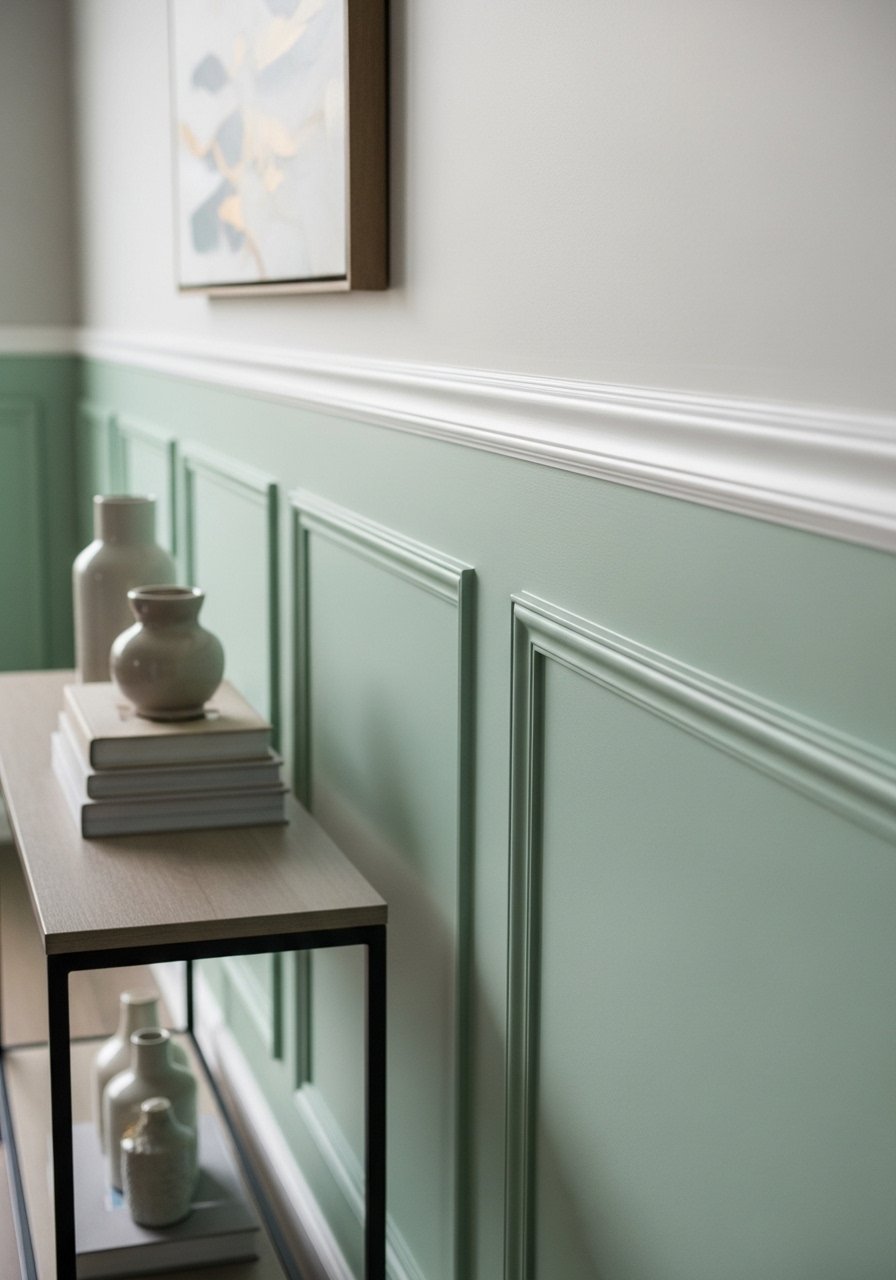
Wainscoting adds depth and makes a room read intentional. Peel-and-stick panels painted sage give that built-in look without tools or a long install. I used panels on a short hallway wall and it stopped the space from feeling anonymous. Expect $90 to $180 depending on kit size. Many articles skip this option but it is perfect for renters who cannot paint walls. One detail most guides miss is to paint panels before sticking them so edges match perfectly. Also use lighter sage for narrow hallways to avoid a boxed-in feeling. Pair this with brass hardware on nearby doors to echo the headboard idea. Peel-and-stick wainscoting panels in sage saved me time.
Gallery Wall With Sage Frames For Personal, Renter-Friendly Art
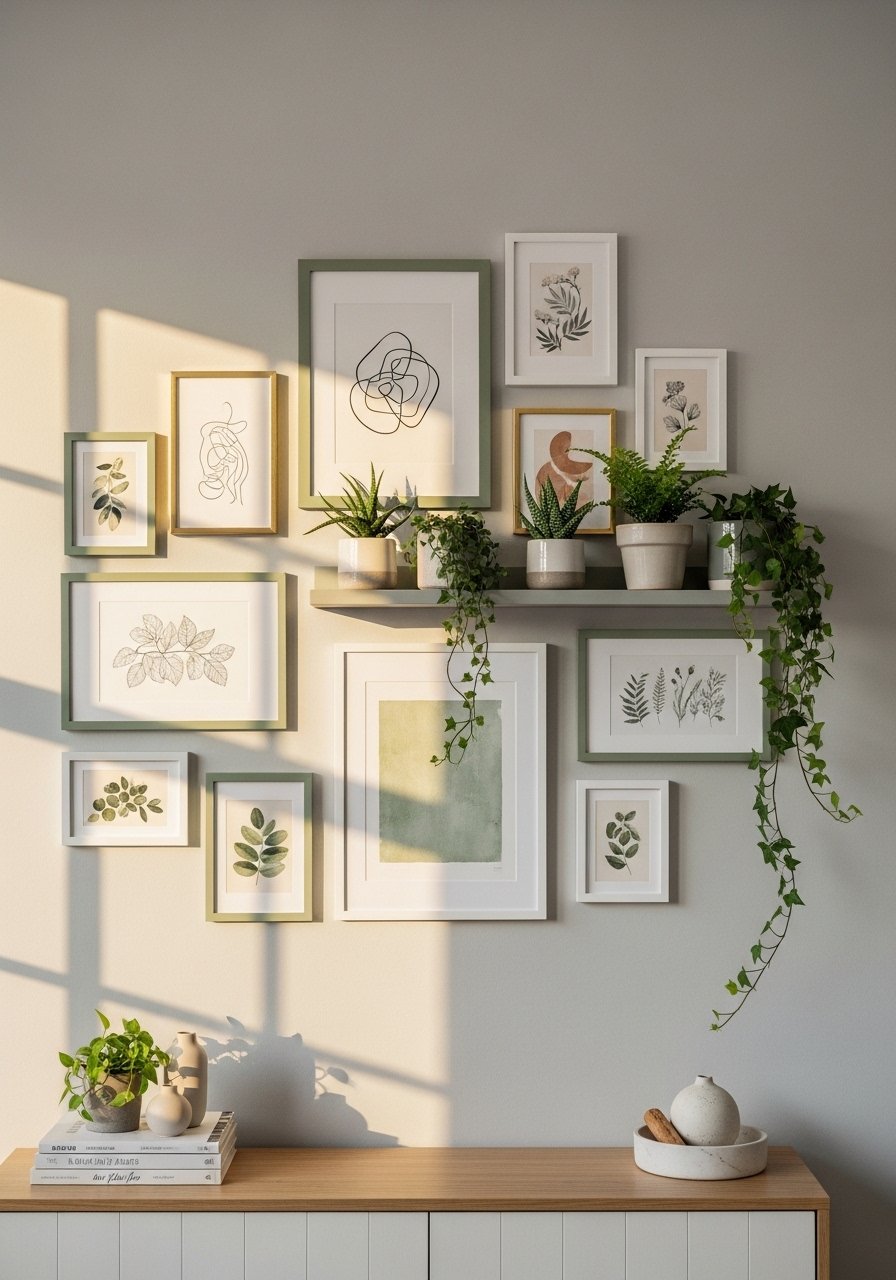
Gallery walls are great for personality but they often look messy. I solved that by using only three frame styles and a repeating sage frame for consistency. Command strips made this renter-friendly and kept holes to a minimum. A common mistake is grabbing random frame sizes and hanging them without a paper template. I trace frames on kraft paper first and tape the layout to the wall. For a calm feel aim for one dominant color and a couple of neutrals, keeping about 80 percent neutral and 20 percent sage. A thin brass picture ledge lets you swap art without new nails. Sage photo frames set made my wall feel curated, not cluttered.
Layered Throws And Pillows For The Sofa Or Bench
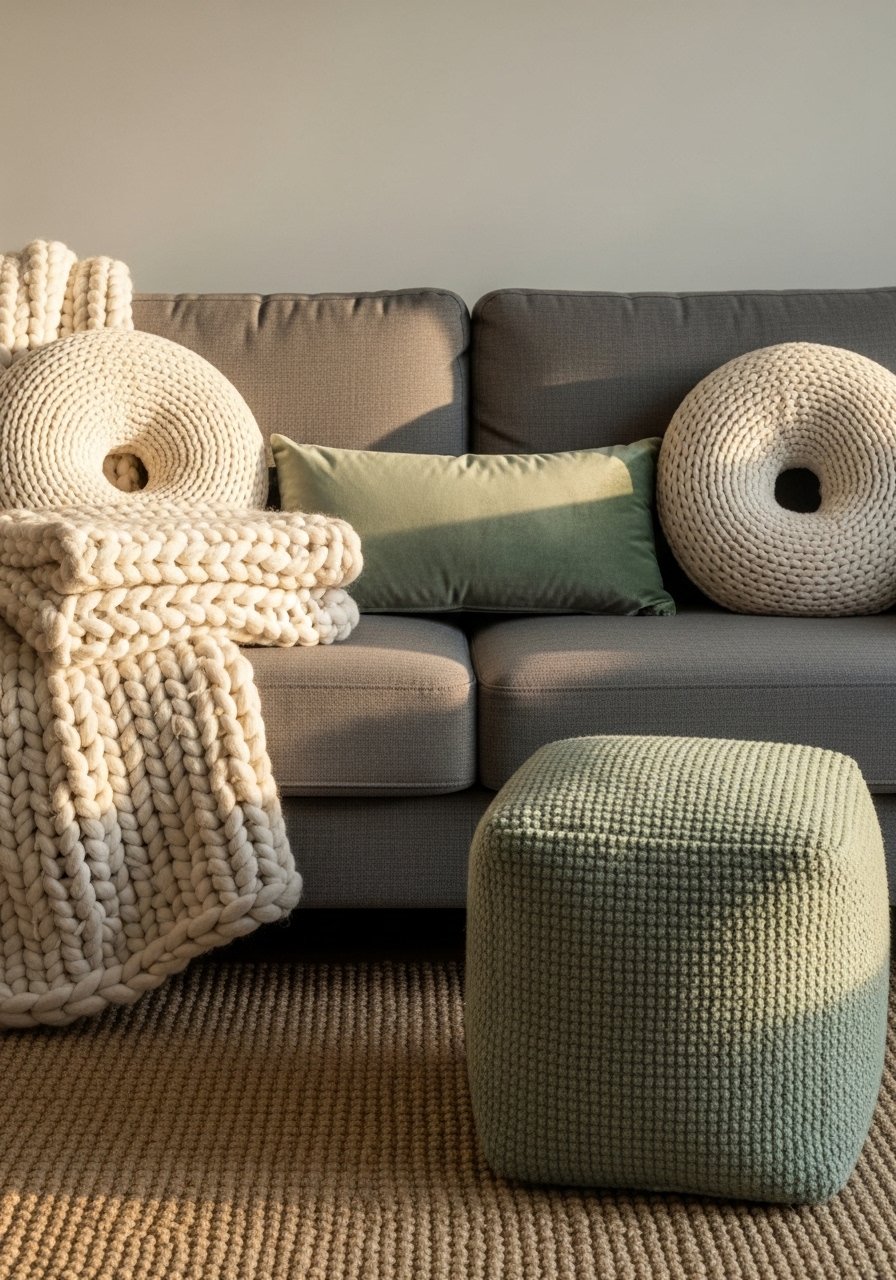
I bought a fancy coffee table and thought that would fix my living room. It did not. Folding a chunky knit throw over one arm and stacking a sage lumbar in front of two cream euros made the room invite people to sit. Layering throws in different textures prevents the sage from looking flat. Spend $30 to $80 on one good throw and a couple of pillow covers. A real-life tip other posts miss is rotating pillows weekly so fabric wear happens evenly, and using washable covers if you have kids or pets. This idea links back to the bedding layering section and works across sofas, benches, and window seats. Chunky cream knit throw blanket is my go-to.
Your Decor Shopping List
Textiles
- Honestly the best $45 I have spent. Sage linen duvet cover in queen size, breathable and renter-friendly
- For the curtain trick, you need length. 96-inch linen curtain panels (~$30 to $50 per panel)
Wall Decor
- Found these while hunting for frames. Sage photo frames set (~$20 to $40) for gallery walls
- Peel-and-stick wainscoting panels in sage (kit) for renters who want texture
Lighting & Hardware
- Brass table lamp (~$60 to $120) to pair with sage headboards
- Brass picture ledges (~$18 to $30) so you can swap art without new holes
Budget Finds
- 8×10 washable area rug in sage practical for real life
- Chunky knit throw blanket in cream (~$35 to $55) folds well over sofas and benches
Shopping Tips
White oak beats dark wood in 2026. Design feeds have shifted. White oak floating shelves anchor sage walls without dating the space.
Grab velvet pillow covers for $12 each. Swap them every few months and the whole room feels refreshed.
Curtains should puddle or kiss the floor, never hang halfway up. 96-inch panels work for standard 9-foot ceilings and make rooms read taller.
Everyone buys five small succulents. One single 6-foot fiddle leaf fig has ten times the visual impact if you need height without the maintenance.
Frequently Asked Questions
Q: Can I use sage in a north-facing room without it looking cold?
A: Yes. Pick an olive-leaning sage instead of a blue-leaning one. That warmer undertone keeps the color from reading dingy in low light. Pair with brass accents and cream textiles to bounce warmth back into the room.
Q: What rug size do I actually need for a bedroom?
A: Bigger than you think. For a standard bedroom go 8×10 so nightstands sit fully on the rug. If you have a narrow room, use a runner lengthwise under the bed.
Q: I rent and cannot paint. Which ideas still work?
A: Lots of them. Use peel-and-stick wainscoting, removable curtain rods with long panels, a sage upholstered headboard with a tension mount, and command-strip gallery frames. These give big visual change without permanent work.
Q: How do I stop sage decor from looking cheap next to old furniture?
A: Mix in warm metals and natural wood. Brass lamps or picture ledges next to matte sage pieces make the green appear richer. Also vary textures so velvet, linen, and wood read layered and collected.
Q: Should I worry about fabric shedding if I pick sage velvet or boucle?
A: Yes, if you have pets. Choose performance fabrics or buy washable slipcovers. Rotate cushions weekly and vacuum rugs often to avoid concentrated wear or visible fuzz.
Q: Can I mix dusty pink or mustard with sage without it clashing?
A: Yes. Use dusty pink as a soft companion for a coastal-grandma feeling and mustard as a small accent for warmth. Keep the 80 percent neutral and 20 percent color ratio so the room stays calm and not busy.