
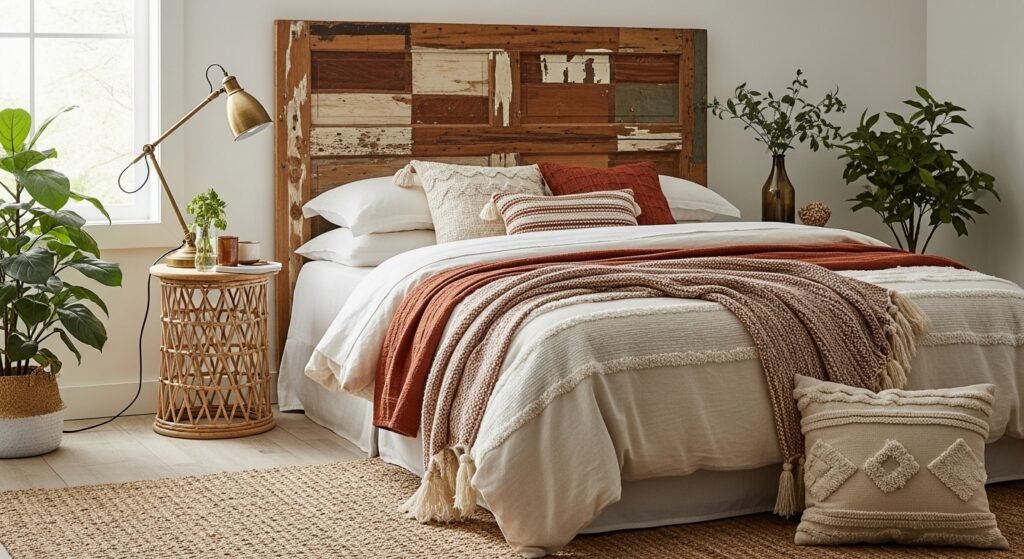
Spent $400 on a new bed frame once and the room still felt chilly. Spent $35 on a chunky throw and three candles. Suddenly everything clicked. That is exactly the sort of small swap these upcycled warm bedroom aesthetic ideas are built around, the fixes you can do in a weekend that make a room invite you to stay.
These ideas lean warm-modern and vintage-inspired. Most projects are under $75, with a few splurges around $100 to $150 if you want built-in quality. They work for primary bedrooms, guest rooms, or any small spare space that needs a softer, more lived-in feel.
Layered Neutrals With One Warm Accent For Bedrooms
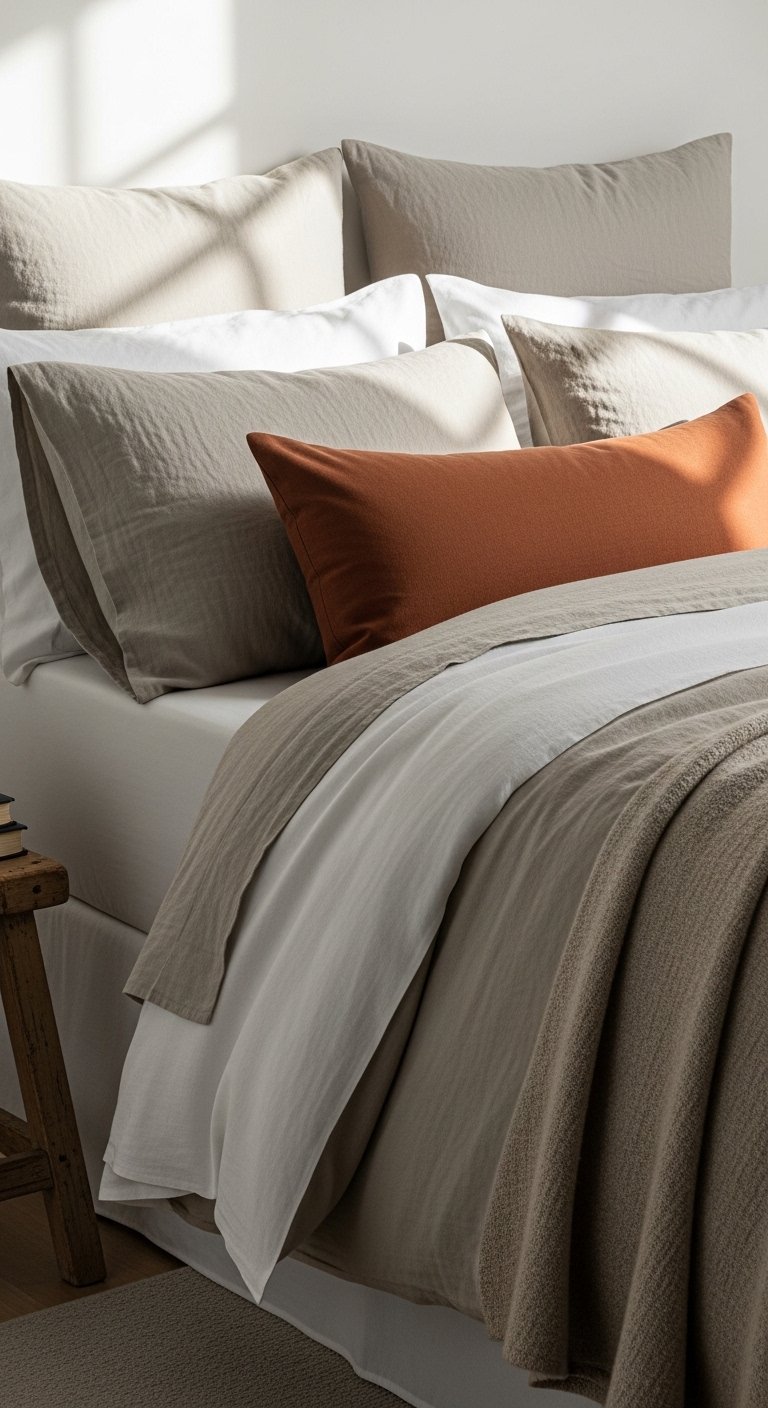
Start with 80 percent neutrals and 20 percent warm accent, that ratio keeps the room calm but not flat. I use three pillow sizes on my bed, 22-inch square backers, 18-inch mid pillows, and a 12×24 lumbar in a terracotta velvet to stop the whole thing from looking monochrome. That terracotta lumbar is a cheap swap that costs under $40 and instantly reads cozy. Try velvet pillow covers in an earthy color. Common mistake is matching every pillow. Mix one patterned pillow and two solids for balance. This pairs perfectly with the curtain height trick from idea nine.
Chunky Knit Throw For Instant Warmth
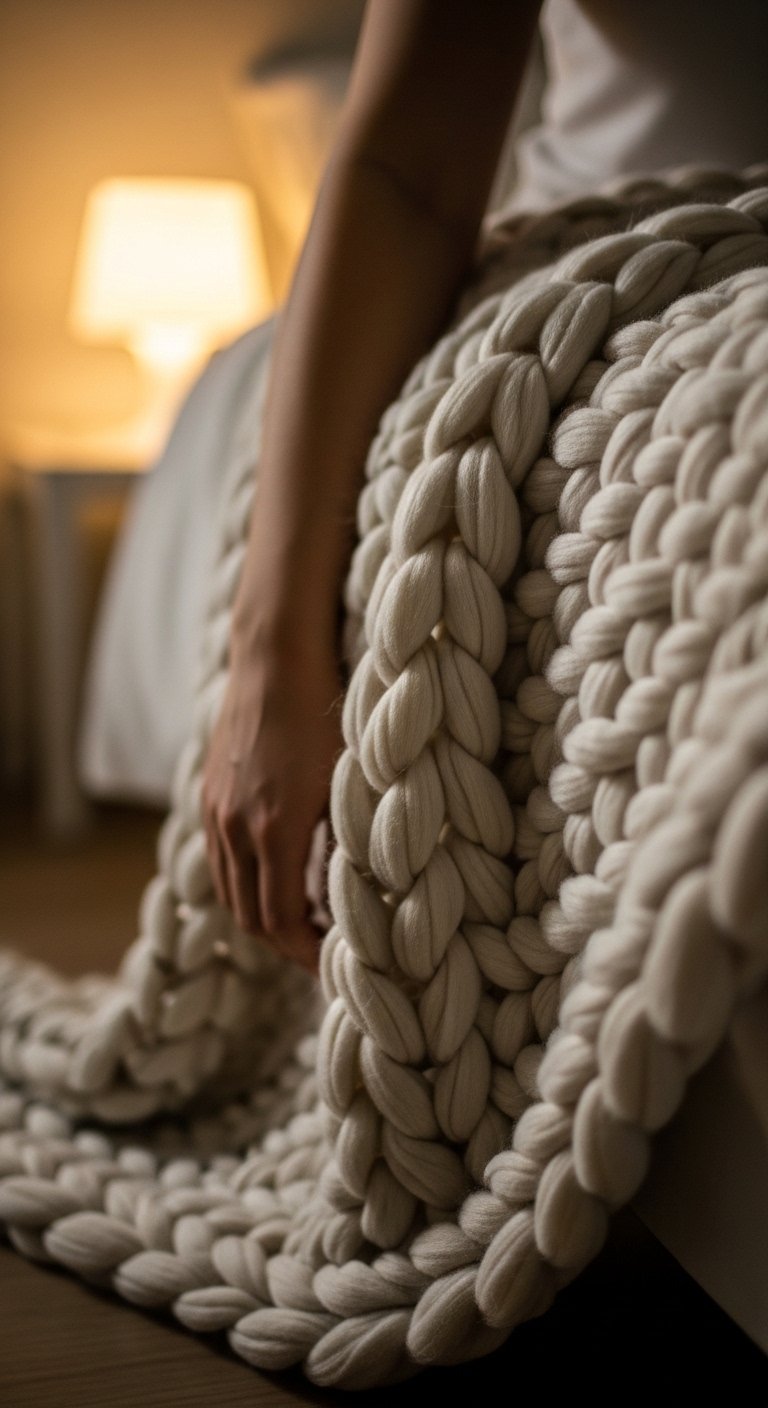
The moment I draped a chunky knit over my duvet, the room stopped feeling like furniture on display and started feeling like a place to curl up. Look for big gauge yarn and machine-washable blends so you actually use it. I paid about $45 for a cream piece that covers the foot of the bed and tucks over the side. Try a chunky knit throw in cream. Mistake people make is buying a throw that is too small. Aim for at least 50 by 60 inches so it puddles a little at the ends.
Milk Paint On A Thrifted Dresser For Soft Vintage Charm
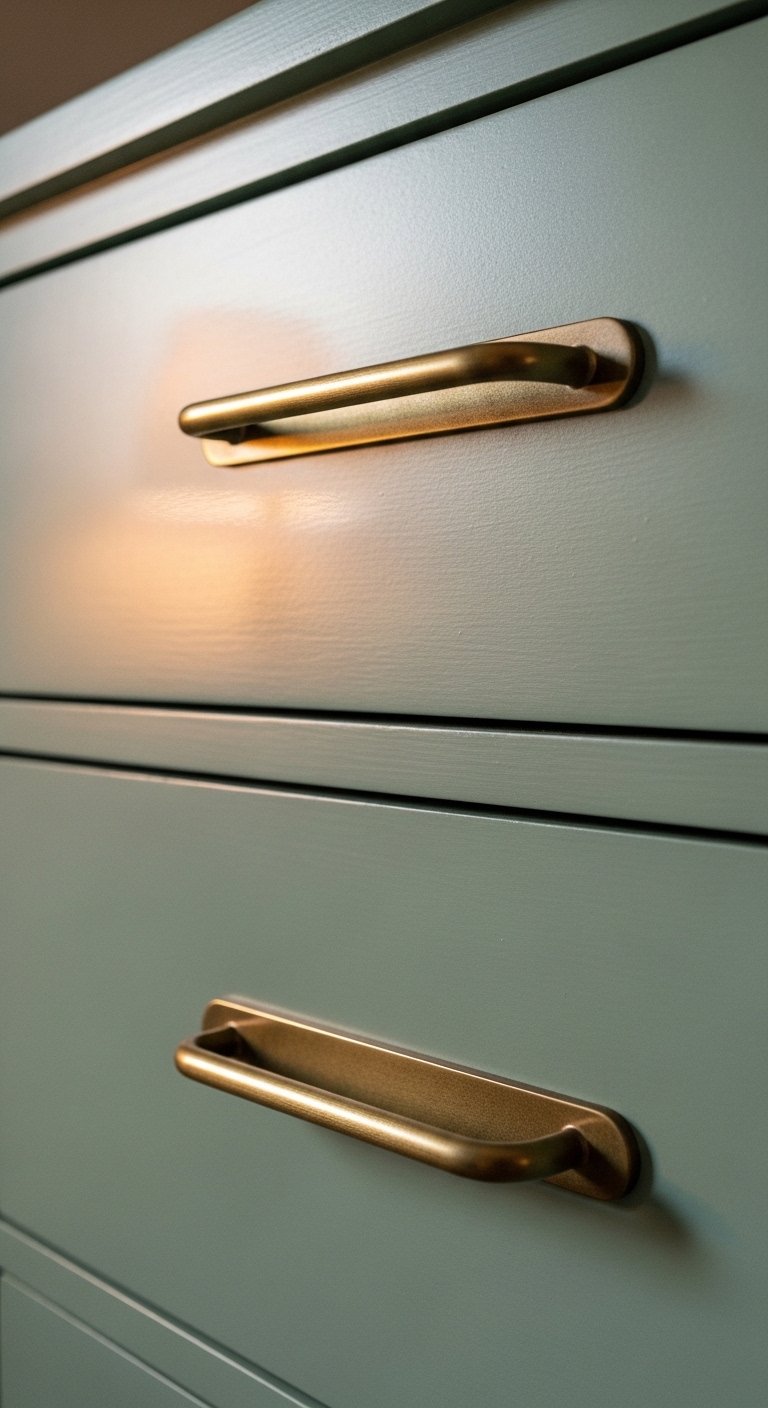
I took a craigslist dresser and gave it two coats of milk paint and new hardware, budget under $60. Milk paint gives that slightly worn edge that looks intentional, not cheap. Swap in aged brass pulls to warm the finish. People often sand away the character and end up with a flat surface. Leave some paint chips along corners for authenticity. If you want a cleaner look, use a topcoat. This approach works in small bedrooms and guest rooms where the dresser becomes a focal point.
Reclaimed Door Headboard For Height And Story
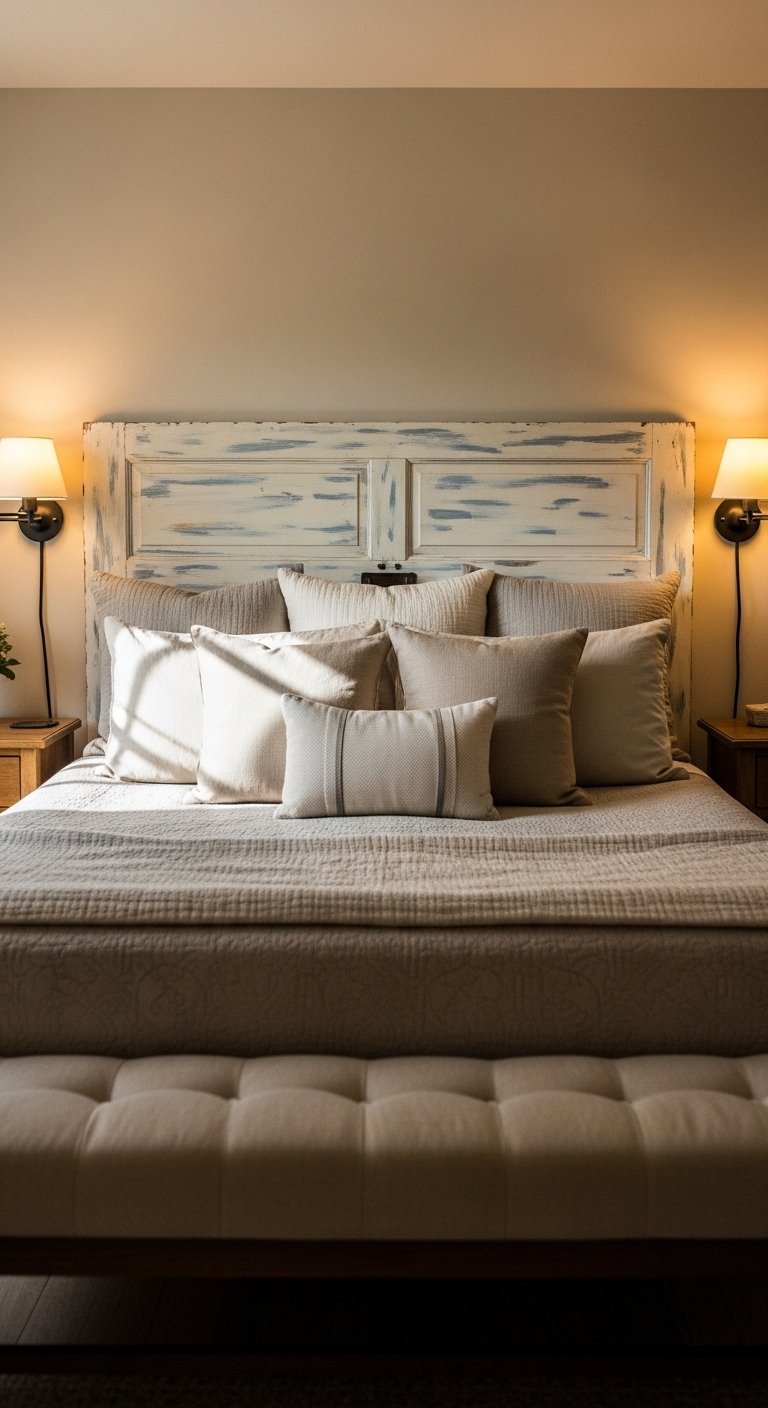
I converted an old door into a headboard and it anchored the room for less than $30 in materials. A headboard gives vertical weight so the bed reads like furniture, not a mattress on the floor. Mount the door so the top sits about 6 inches above your top pillow. If you are short on wall space, lean it instead, but secure with anti-tip hardware. For hardware inspiration try wall mounting brackets. Common mistake is a headboard that is too short. Aim for headboard height equal to at least two-thirds of your mattress thickness plus pillow height.
Thrifted Lamps With New Shades And Warm Bulbs
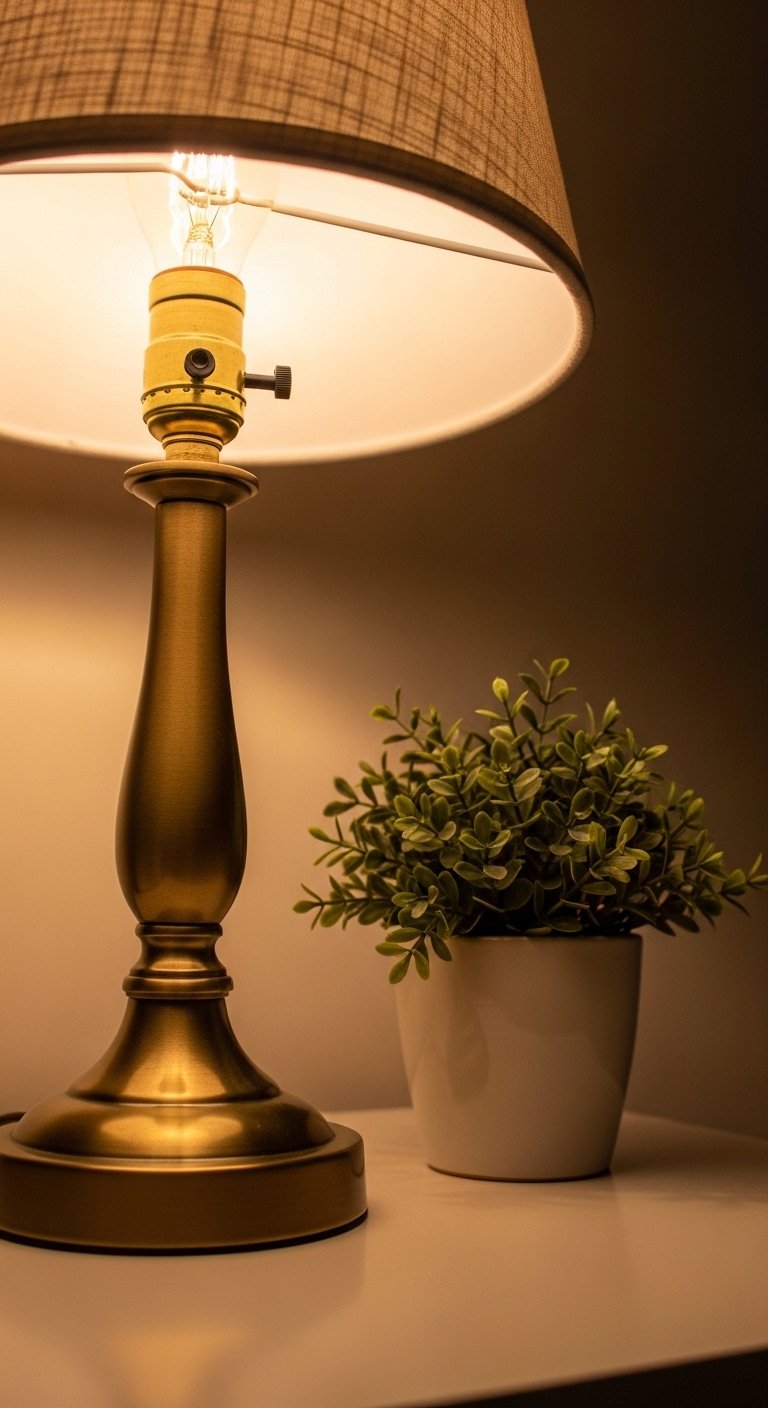
I found a pair of mismatched lamp bases at a thrift sale and swapped the shades and bulbs. New linen shades and 2700K bulbs make secondhand metal read warm, not dated. I use soft white LED bulbs and they cost under $10 each. Mistake is buying harsh cool bulbs that turn everything blue. Also avoid shades that are too narrow; the rule of thumb is shade diameter should match the lamp base width plus two inches. Put these on dimmers if you can for better bedside light layering.
Layered Rug Approach With Upcycled Textiles
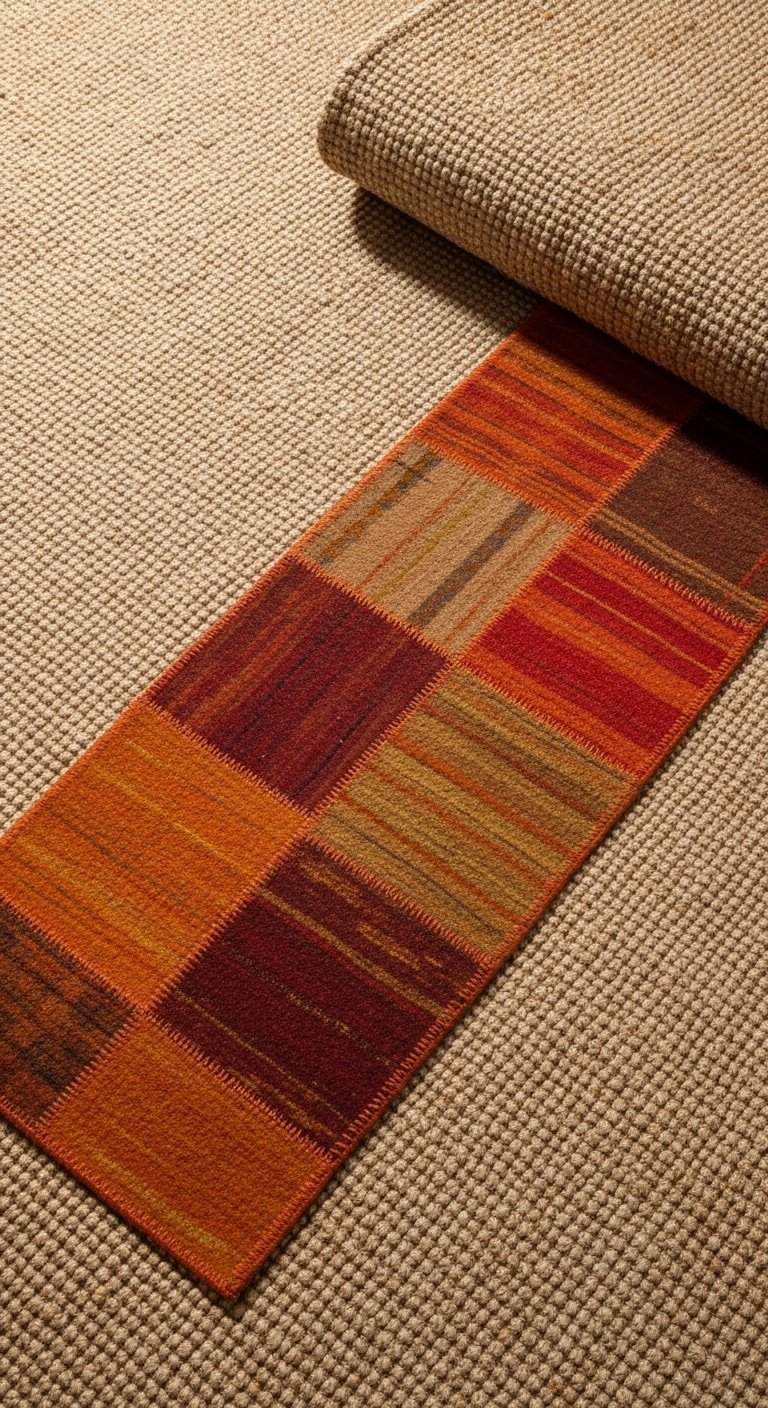
My bedroom had an IKEA rug that made the whole space feel thin. I layered a small patched wool runner over a larger jute rug and the space immediately felt grounded. A good rule is the top rug should cover two thirds of the base rug so you still see the texture underneath. I used a jute 8×10 rug under a smaller wool runner. Mistake people make is buying rugs that are too small for the bed. For a queen bed, aim for at least 8×10 so the rug reaches past the sides.
Repurpose A Ladder For An Easy Bedside Shelf
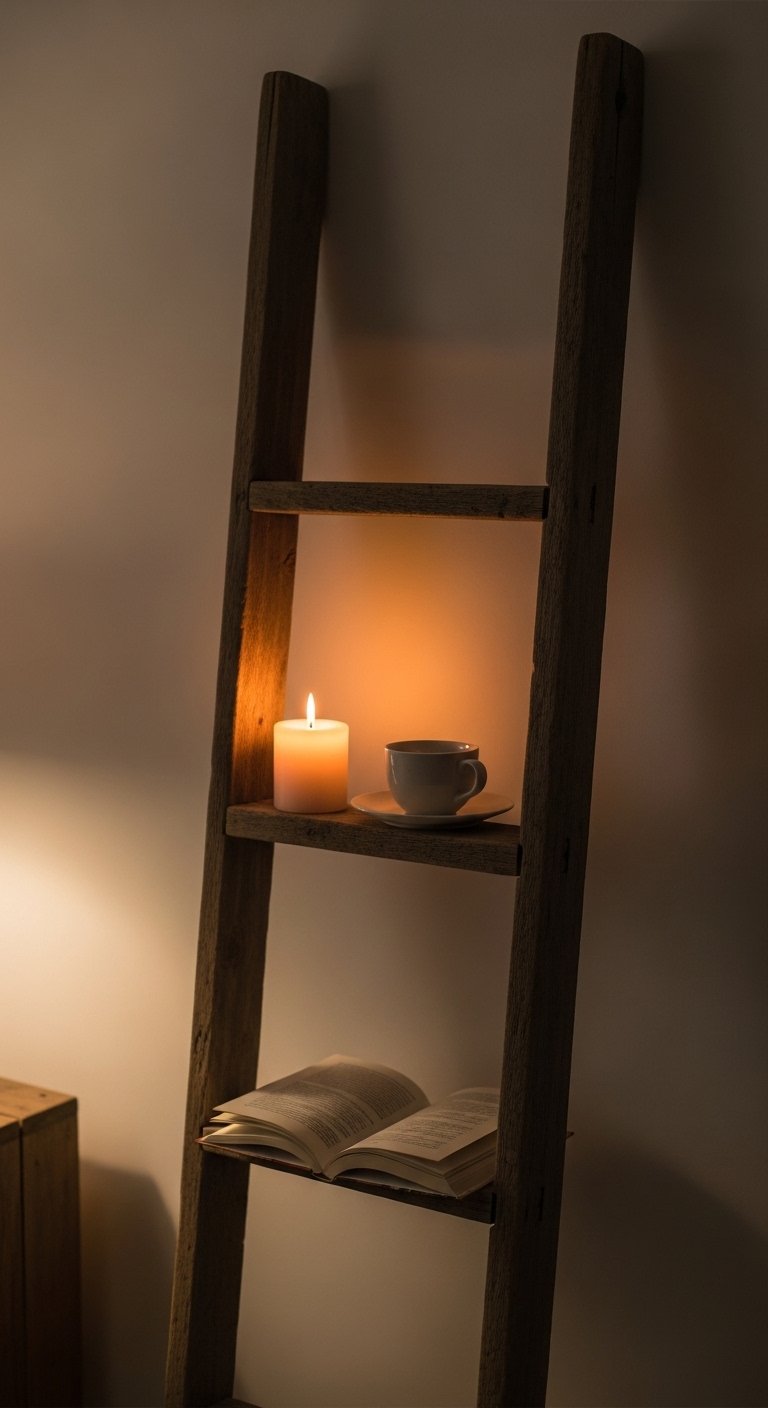
Instead of a nightstand, I leaned an old ladder and used the rungs for a cup, book, and a plant. It costs nothing if you already have a ladder and makes for a skinny solution in tight rooms. I added a thin wood shelf on one rung secured with brackets for a stable surface. If you need a flat spot for a lamp, attach a small board at 12 by 16 inches. Avoid putting heavy items on the top rung. For brackets try small L brackets to stabilize shelves.
Mixed Metals For Warmth, Not Chaos
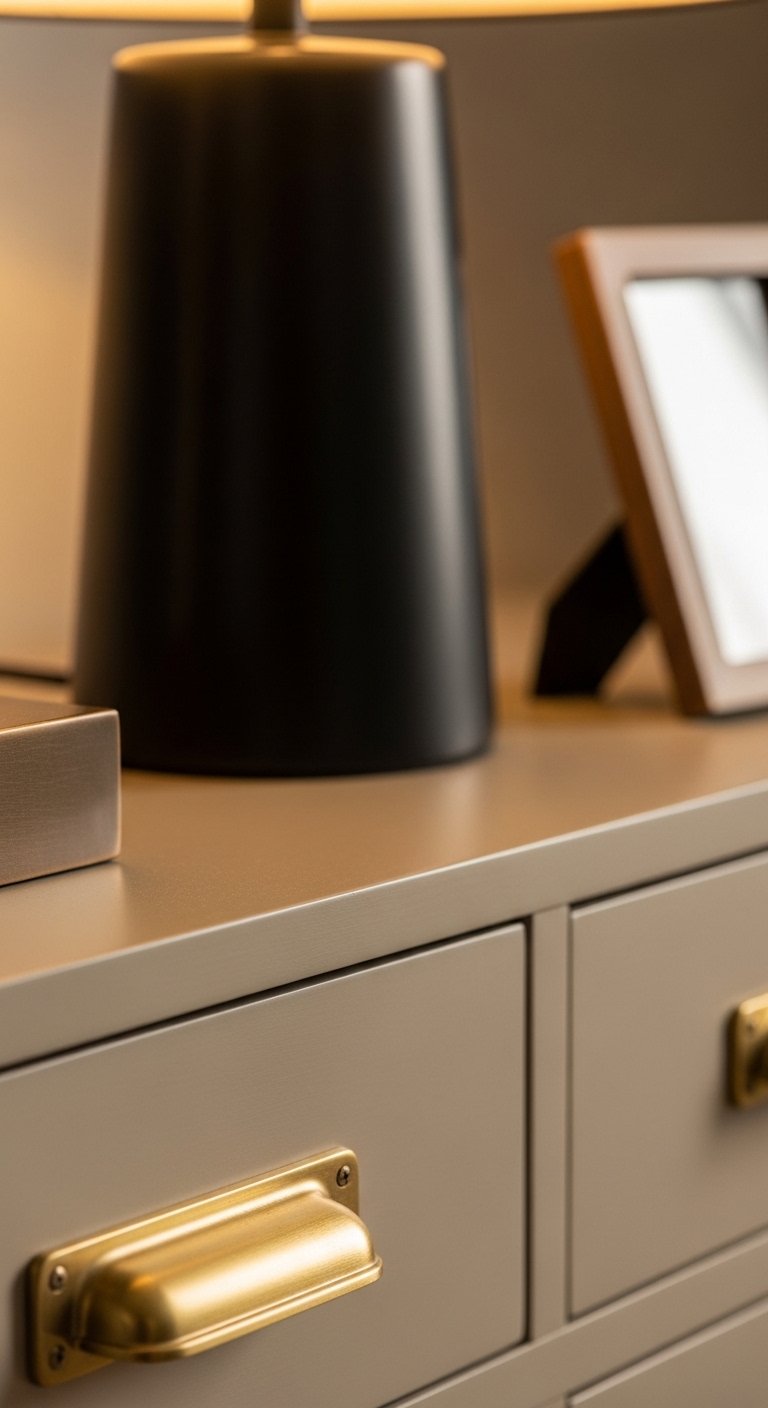
I used brass pulls, a black lamp base, and bronze picture frames in the same corner. Mixing metals works if you keep one metal dominant and let two others be accents. Pick one primary finish for large pieces, 60 to 70 percent, then sprinkle the rest. I keep brass as my main warm metal and use black for contrast. Mixed metal picture frames are an easy way to start. A mistake is having equal amounts of three metals which reads messy. This plays nicely with the dresser refresh from earlier.
Patchwork Textile Headboard For Soft Dimension
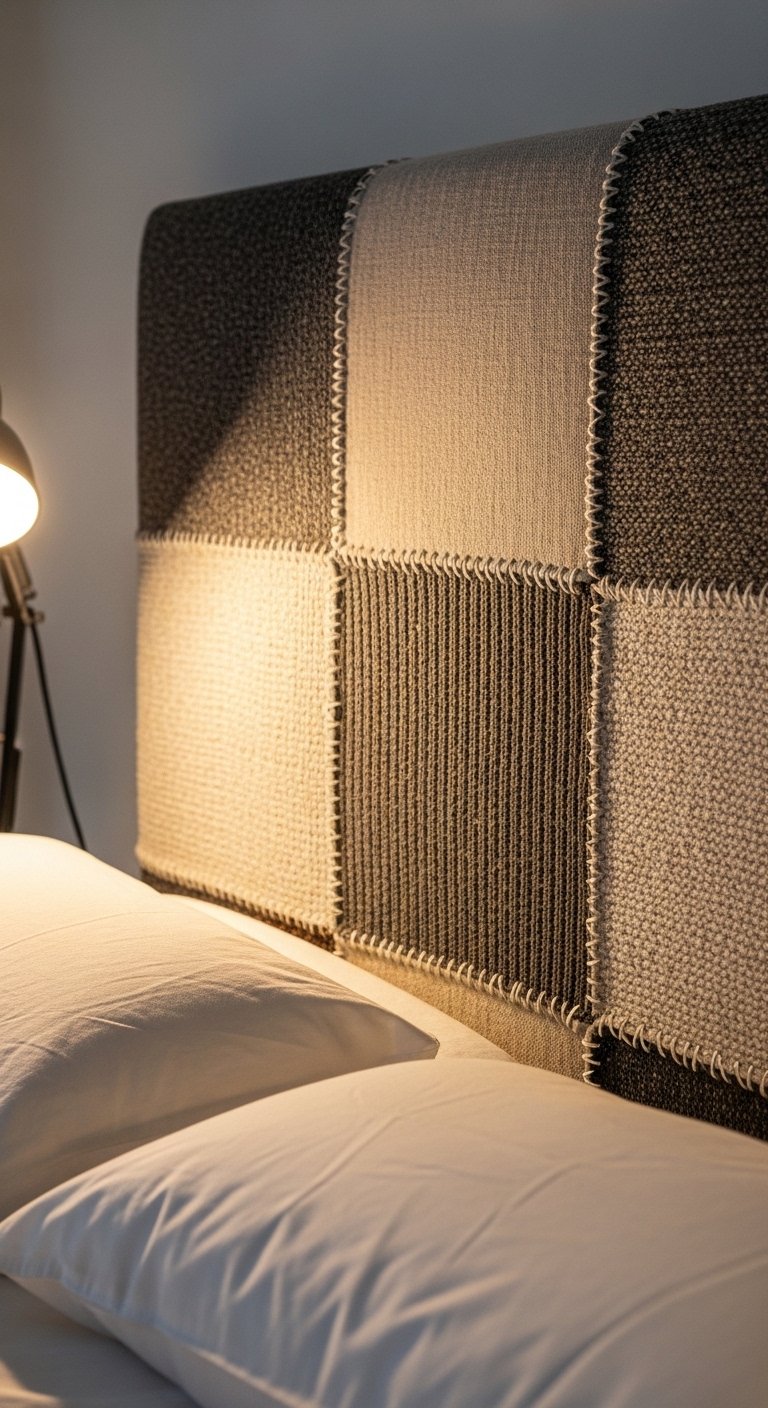
I sewed recycled sweater panels onto a plywood frame for a padded headboard. It cost under $40 and made the bed feel like the center of the room. Use a 1-inch thick foam backing and cover with cotton batting for comfort. For proportions, make the headboard width match the mattress plus 2 to 4 inches. If sewing is not your thing, use a heavy-duty fabric glue. To mimic this look without DIY, try a linen headboard cover. People forget to add foam and end up with a floppy panel. Padding is the detail that separates craft from costume.
Rework A Mirror Frame To Brighten Dark Corners
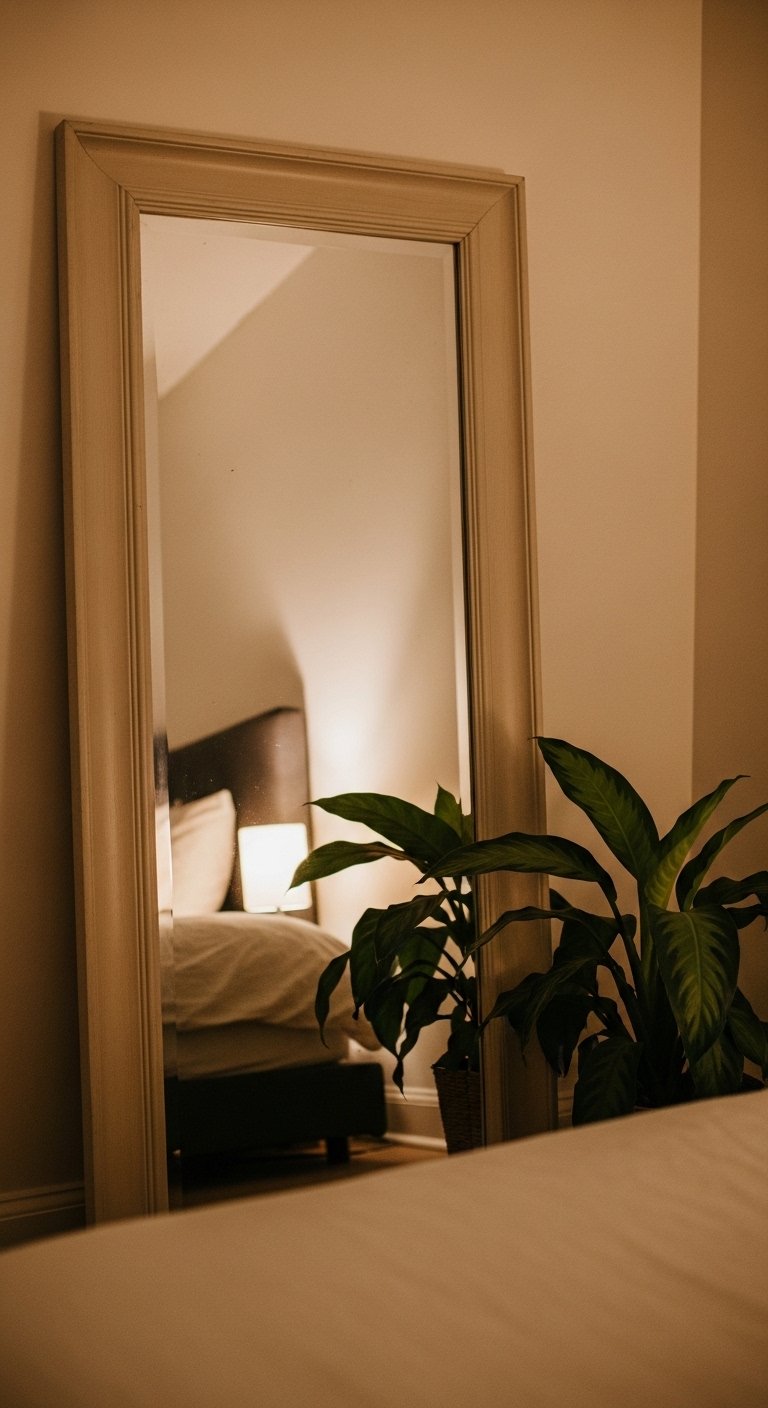
I painted a thrift mirror frame with a warm cream and it immediately bounced light into the corner. Mirrors make small bedrooms feel wider and warmer when they reflect soft light sources, not just windows. Size matters. For a bedroom corner, pick a mirror at least 24 by 36 inches. I used large decorative mirror options for similar scale. Mistake is hanging a tiny mirror and expecting a dramatic effect. Leaning adds a relaxed, upcycled vibe that laces into the layered textiles theme above.
Bedside Vignette That Tells A Story
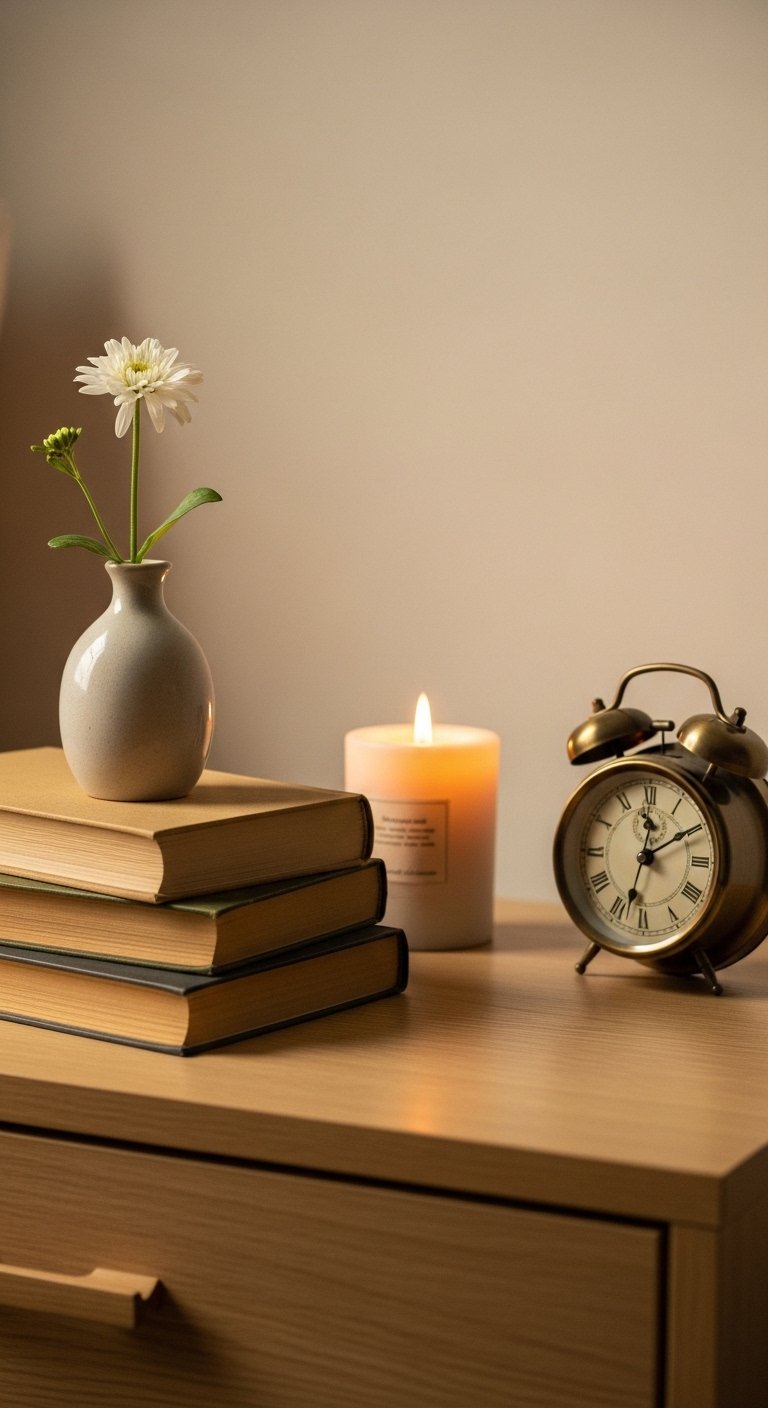
A friend texted me a photo of her bedroom asking why it felt cold. She had zero textiles. No throw, no layered pillows, nothing soft anywhere. After that I started staging my nightstand like a mini story. Use three objects of varying heights, a candle, and something inherited or worn to add soul. I rotate the candle seasonally and the result keeps the nightstand from feeling staged. For a small candle try soy travel candle. Common mistake is using lots of small objects that read cluttered. Stick to three to five items and that rule of three looks intentional.
Warm Window Treatments To Add Height And Softness
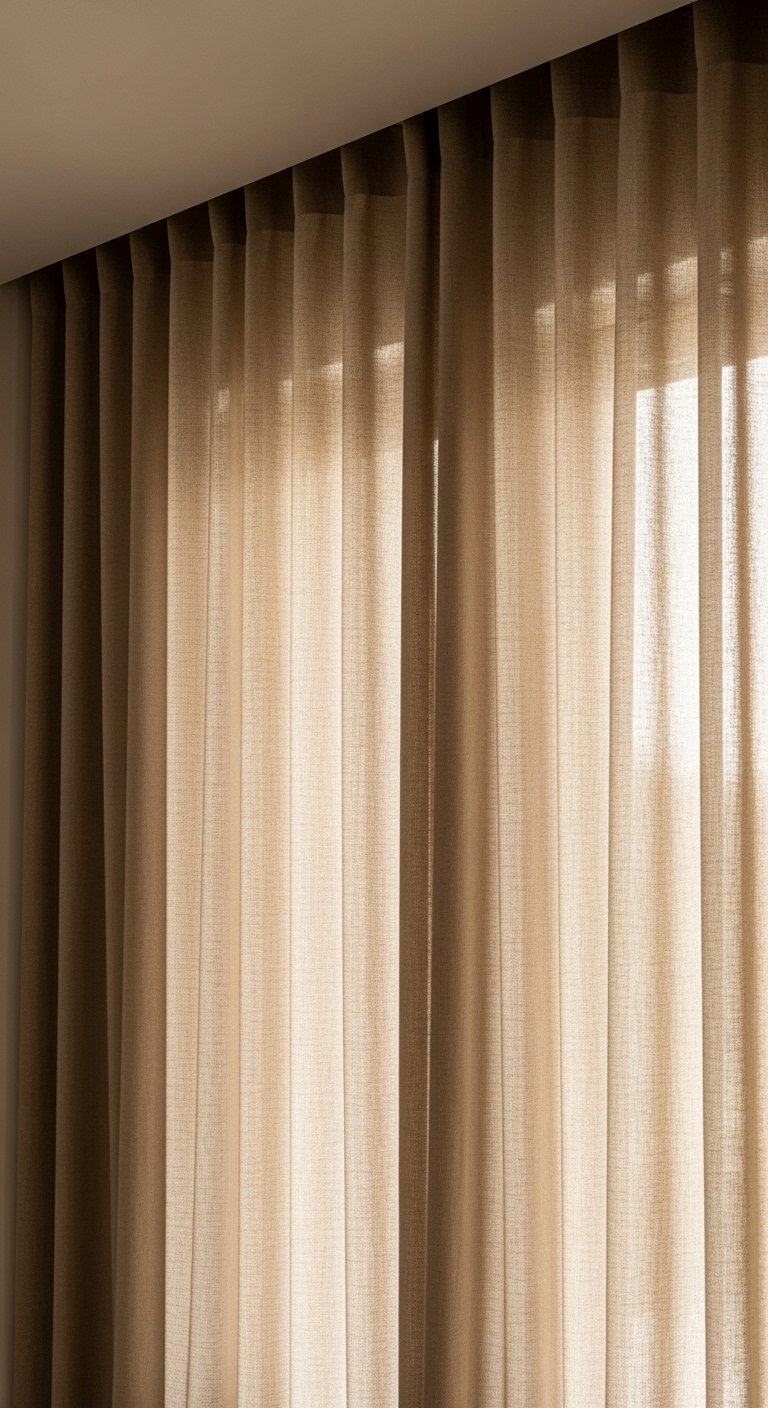
Most people hang curtains right at the window frame. That is why their rooms look shorter than they are. I always hang panels 4 to 6 inches above the frame and extend the rod 8 to 12 inches wider than the window so the fabric stacks off the glass. For 9-foot ceilings, I use 96-inch panels and linen curtain panels that puddle slightly. Mistake is choosing curtains that are too short or too narrow. This trick pairs well with the layered neutrals idea for a cohesive warm look.
Refinished Nightstand With Marble Tile Top For Tiny Luxe
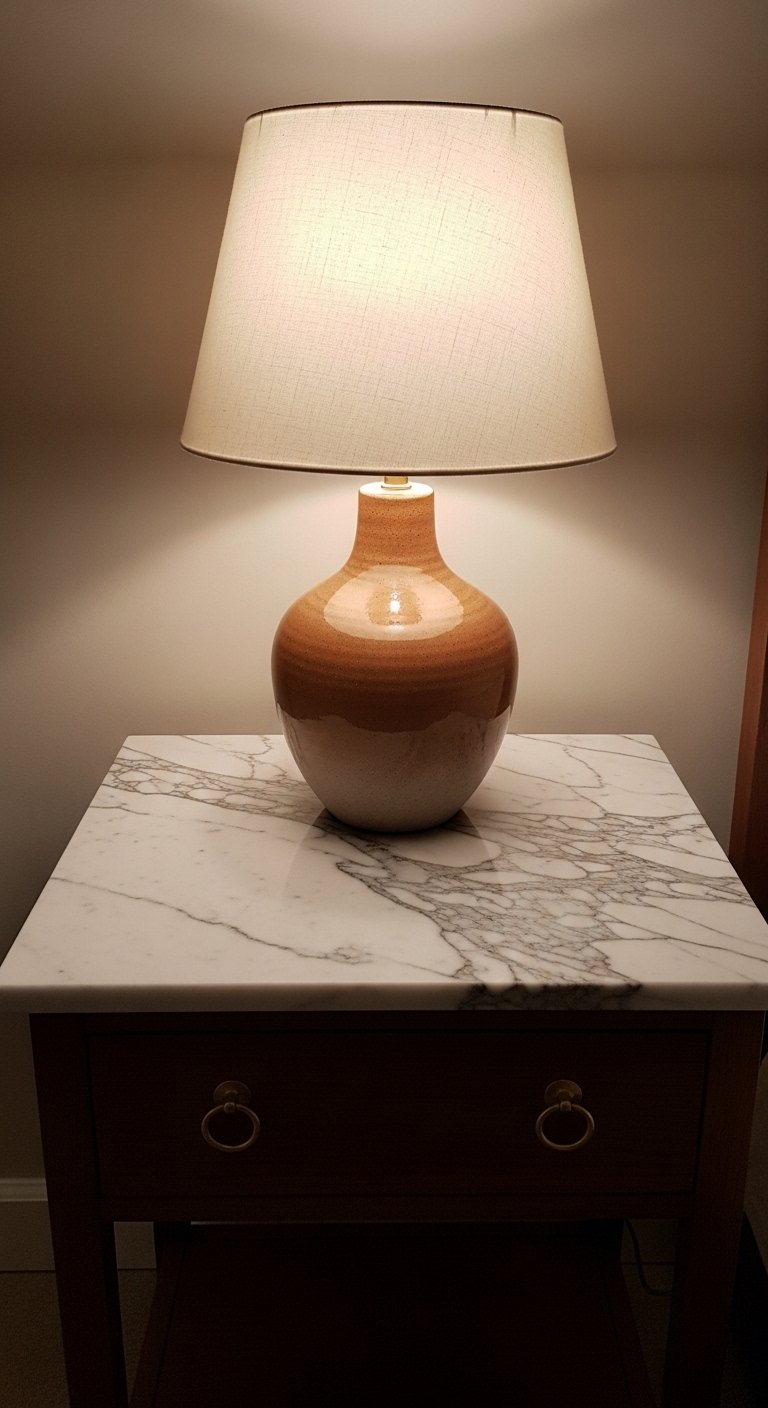
I updated a cheap nightstand by gluing a piece of marble tile to the top and swapping hardware for warm brass pulls. The marble gives a touch of polish without buying new furniture. Measure your nightstand surface and buy a tile that fits with a 1/8-inch grout border. Use strong construction adhesive and seal the grout for spills. For pulls try brass drawer pulls. People over-accessorize the top. Leave breathing room so the marble reads like quality, not clutter.
Your Decor Shopping List
Textiles
- Honestly the best $40 I have spent. Chunky knit throw in cream large enough to tuck under the mattress
- Velvet pillow covers set in rust and taupe, 22-inch for backing
- Linen curtain panels 96-inch good for 9-foot ceilings
Wall Decor
- Found these while looking for something else. Mixed metal picture frames set for an easy gallery
- Large decorative mirror 36×24 to brighten a corner
Lighting
- 2700K soft white LED bulbs to warm thrifted lamps
- Linen lamp shades medium for thrifted bases
Hardware and Tools
- Brass drawer pulls pack to refresh dressers
- Small L brackets set for ladder shelves
Budget Finds
- 8×10 jute rug sturdy base for layering
- Soy travel candle set seasonal scent rotation, similar at HomeGoods
Shopping Tips
White oak beats dark wood in 2026. Design feeds have shifted completely. White oak floating shelves look current, not dated.
Grab these velvet pillow covers for $12 each. Swap them every 3 months and the whole room feels different.
Curtains should puddle or kiss the floor, never hang halfway up. These 96-inch panels are right for standard 9-foot ceilings.
Everyone buys five small succulents. One single 6-foot fiddle leaf fig has ten times the visual impact.
Frequently Asked Questions
Q: Can I make a headboard from an old door and still have it look modern?
A: Yes. Paint it in a warm neutral, leave some edge wear, and mount it so the top sits about 6 inches above your pillows. If you want a softer look, add a thin mattress foam layer and wrap with linen. Use sturdy wall brackets and a heavy-duty mounting kit for safety.
Q: How do I make thrifted pieces feel cohesive in a bedroom?
A: Pick a dominant finish or color and repeat it in three places, that creates unity. For example, brass pulls, a brass lamp base, and one brass frame. Use textiles in the same color family to tie it together.
Q: What size rug should I buy for layering under a queen bed?
A: Go at least 8×10 so the rug reaches past the sides. For layered rugs, show two thirds of the base rug and let the top runner sit centered. Small rugs that stop at the bed edges make the room read smaller.
Q: Should I mix metals or match them?
A: Mix them but keep one metal dominant and the rest as accents. Aim for 60 to 70 percent in a primary finish and smaller bits in others. Start small with mixed metal frames to test the look.
Q: Are faux plants OK for a warm bedroom aesthetic?
A: Both work. Real plants add life if you can care for them. Faux plants are fine in low-light rooms. Use one large statement piece rather than several tiny ones. Try a realistic faux fiddle leaf fig if you want height without upkeep.
Q: How many pillows should I use on a bed so it looks inviting not overdone?
A: Three to five pillows is the sweet spot depending on bed size. Use larger shams behind, mid pillows in front, and one lumbar. Mix solid textures with one patterned piece and follow the 80/20 color ratio so the accent doesn't overwhelm.